
Federal tax policy is directing billions in direct air capture funding toward enhanced oil recovery, with industry leaders committing to rigorous monitoring standards. The 45Q tax credit creates different incentive pathways for permanent storage versus utilization projects, while companies pursue comprehensive measurement, reporting, and verification programs to validate carbon removal claims.
Key Policy Numbers
- $36/ton: 45Q credit for DAC with permanent storage
- $26/ton: 45Q credit for DAC with EOR utilization
- $500 million: DOE award to 1PointFive for South Texas DAC hub
- 500,000 tons/year: Capacity of Occidental's STRATOS facility
- 3,000+: CO2 injection wells operated by Occidental for EOR
How 45Q Tax Credits Shape Investment Flows
The federal 45Q tax credit creates different incentive structures that influence where DAC investments flow. Under current rates, direct air capture projects earn $36 per metric ton for permanent geologic storage, compared to $26 per metric ton when captured CO2 supports enhanced oil recovery. However, EOR projects often provide faster revenue streams and lower technical risks compared to permanent storage projects. Companies can sell the captured CO2 to oil producers immediately, while permanent storage requires extensive permitting, site preparation, and long-term monitoring. Key factors driving investment decisions include:
- Faster project timelines for EOR applications
- Established CO2 transport infrastructure in oil-producing regions
- Immediate revenue from CO2 sales versus future tax credit payments
- Lower regulatory barriers compared to Class VI injection wells
>> RELATED: Direct Air Capture: The Technology Racing to Scale Carbon Removal
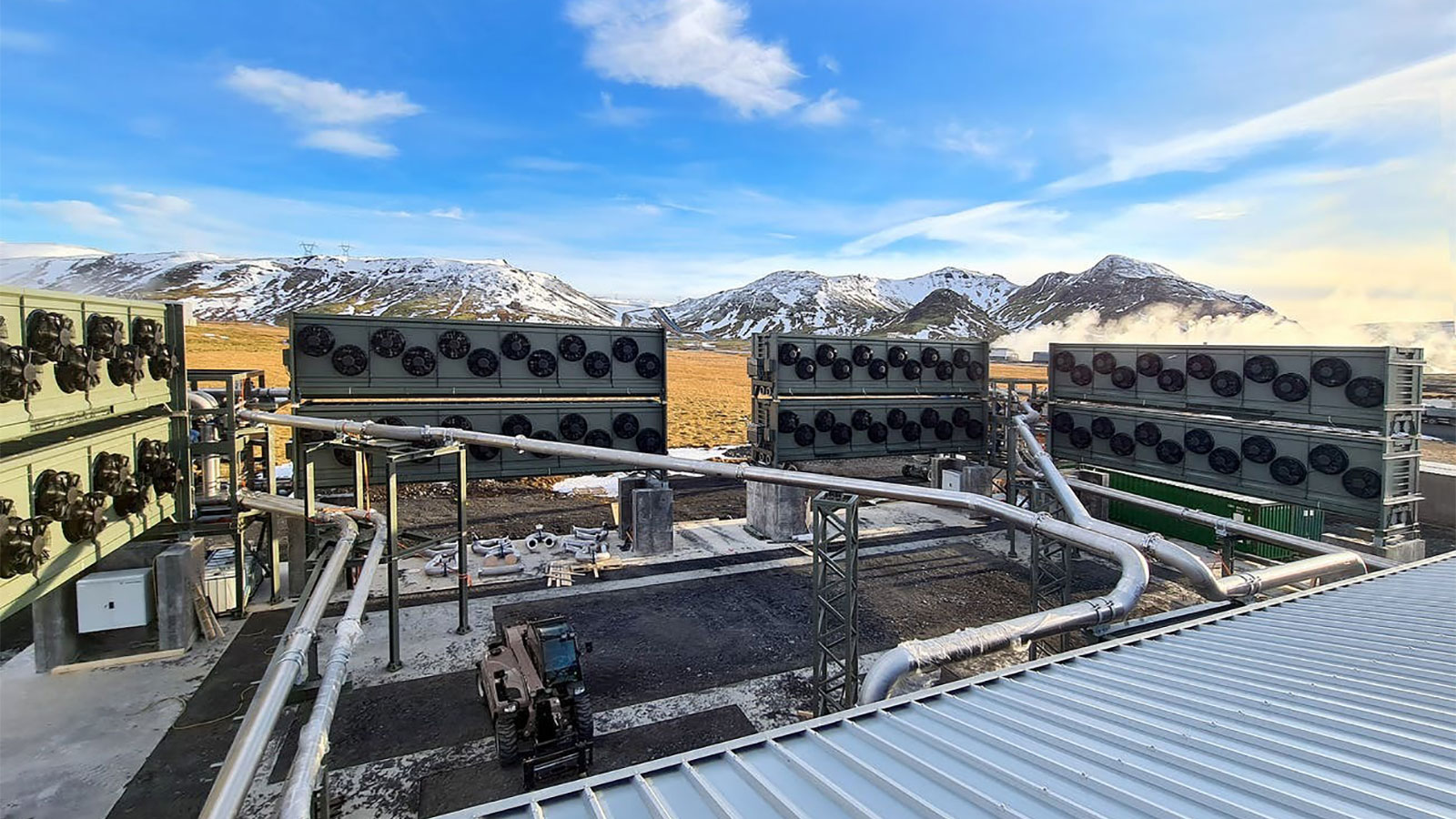
Industry Commitments to Carbon Measurement
Leading companies are investing heavily in monitoring, reporting, and verification systems to ensure DAC carbon removal projects deliver measurable climate benefits. These comprehensive tracking programs address concerns about carbon permanence while building industry standards for transparent accounting. Major operators have implemented EPA-approved monitoring plans and third-party verification protocols. The rigorous measurement requirements help distinguish between temporary CO2 utilization and permanent carbon removal, supporting long-term decarbonization objectives.
Major Projects Mixing DAC and Oil Recovery
Occidental Petroleum has emerged as the dominant player linking DAC technology with enhanced oil recovery operations. The company's 1PointFive subsidiary received up to $500 million from the Department of Energy for a South Texas DAC hub that will combine carbon removal with EOR applications.

"We appreciate the U.S. Department of Energy's leadership to advance Direct Air Capture and look forward to our partnership to deploy this vital carbon removal technology at climate-relevant scale."
Vicki Hollub, President and CEO, Occidental Petroleum
The company operates over 3,000 CO2 injection wells for EOR, nearly four times more than its closest competitor. This existing infrastructure creates natural synergies between DAC operations and oil recovery activities. Current DAC projects with EOR components include:
- STRATOS facility in West Texas, targeting 500,000 tons annually by 2025
- South Texas DAC Hub on King Ranch, designed for up to 1 million tons per year
- Planned expansion to 30 million tons annually across multiple facilities
Technical Differences in Carbon Storage
The permanence of carbon removal depends significantly on storage methodology, according to IRS guidance on lifecycle accounting. Permanent geologic storage targets indefinite CO2 retention, while EOR operations face requirements to verify net carbon benefits through comprehensive lifecycle analysis. Federal regulations require different monitoring approaches for various storage types. Projects must demonstrate compliance with EPA Underground Injection Control regulations and provide detailed reporting under 40 CFR Part 98 subpart RR requirements.

"Direct air capture technologies are promising but speculative. Their prospect as an affordable negative emissions option that can be deployed in large scale remains uncertain."
Dr. David Reiner, Energy Policy Research Group, University of Cambridge
Measurement, reporting, and verification (MRV) requirements also differ substantially:
- Permanent storage requires extensive monitoring for decades
- EOR projects focus on production optimization rather than climate impact
- Life-cycle analysis must account for emissions from extracted oil

>> In Other News: Sweetwater Carbon Storage Hub Completes Deepest Carbon Storage Well in the Nation
Policy Solutions to Preserve Durable Removal Incentives
Potential policy adjustments could maintain support for carbon removal while limiting incentives that expand fossil fuel production. These modifications would require careful balance to avoid undermining legitimate climate benefits while preventing counterproductive outcomes. Three practical policy fixes could address current concerns:
- Establish permanence requirements: Require DAC projects receiving federal funding to demonstrate net-negative emissions over full project lifecycles, accounting for any fossil fuel extraction enabled by captured CO2 (precedent: California's Low Carbon Fuel Standard permanence requirements).
- Create separate credit rates: Implement tiered 45Q credits based on storage permanence and additionality criteria, with highest rates reserved for verified permanent storage projects (precedent: Renewable Energy Certificate differentiation by technology type).
- Mandate lifecycle accounting: Require EOR-linked DAC projects to subtract downstream emissions from oil combustion when calculating net carbon removal benefits (precedent: EPA's greenhouse gas reporting program methodology).
What to Watch
- IRS 45Q guidance updates (expected Q4 2025): Treasury may clarify permanence requirements and lifecycle accounting standards for DAC projects receiving tax credits
- DOE hub project awards (ongoing through 2026): Four regional DAC hubs will demonstrate different approaches to carbon storage, providing real-world data on EOR versus permanent storage outcomes
- EPA Class VI permitting (2025-2027): Approval timelines for permanent storage permits will influence whether projects choose EOR alternatives for faster deployment
Verification Note:
Current 45Q rates confirmed through IRS Form 8933 instructions. DAC facility rates are $36/ton for permanent storage and $26/ton for EOR/utilization as of 2024.
Sources
- 45Q Tax Credit Rates: IRS Form 8933 Instructions for Carbon Oxide Sequestration Credit
- 1PointFive DOE Grant: Occidental Press Release, August 11, 2023
- DOE DAC Hubs Program: U.S. Department of Energy Office of Clean Energy Demonstrations
- Carbon Engineering Technology: Direct Air Capture Company Website
- Expert Analysis: Future Prospects of Direct Air Capture Technologies, Frontiers in Climate
- EPA Reporting Requirements: 40 CFR Part 98 Subpart RR Guidance
Subscribe to the newsletter
Daily decarbonization data and news delivered to your inbox
Follow the money flow of climate, technology, and energy investments to uncover new opportunities and jobs.
Companies
Latest issues
-
$600M If Carbon Crashes: Canada and Alberta's New Bet
Inside This Issue 🍁 Inside the $1.2 Billion Deal Derisking Alberta CCUS 🌍 Nine Countries Join CCSA-Led Forum To Coordinate CCUS Policies Across Europe 🌀 Deep Sky Delivers North America's First Cer...
-
Air Products Just Killed Its $4.5B Louisiana Hydrogen Project
Inside This Issue 🔋 Captura's $12.5M Raise Reveals a Lithium Play in Pasadena 🍁 Max Power Confirms Basin-Scale Natural Hydrogen Potential in Saskatchewan with Bracken Well, 325 Km from Lawson Disc...
-
Can AirCapture’s Microwaves Cut DAC’s Energy Cost?
Inside This Issue 🌬️ Aircapture's Patented Microwave Direct Air Capture Technology Wins Tencent CarbonX 2.0 Award 🗾 Fujifilm, Tokyo Gas and TGES Agree to Supply City Gas Linked to Biomethane Produ...
Company Announcements
-
VERDE HYDROGEN, world-leading zero-carbon hydrogen technology and solution provider, has officially secured a landmark supply contract with China Coal Energy Group, tasked with delivering a full se...
-
The Hydrogen Industry's Efficiency Problem May Have Just Met Its Fix
A team of researchers in Germany has discovered a highly efficient way to convert sunlight into hydrogen fuel, potentially solving some of the most critical challenges facing the green hydrogen sec...
-
STORD, Norway, July 2, 2026 /PRNewswire/ -- Höegh Evi and Nord Gas Solutions _(_formerly Wartsila Gas Solutions) have successfully completed performance testing for their ammonia-to-hydrogen cracki...
-
Rainbow Updates bioCCS Methodology to Align With EU's CRCF Framework
Rainbow, a European carbon registry approved by the ICVCM as CCP-eligible, has revised its biomass carbon removal and storage methodology to incorporate requirements from the European Union's Carbo...