
A New Wave of Innovation Is Making Carbon Capture More Affordable and Scalable
Once seen as prohibitively expensive, direct air capture (DAC) is now gaining traction thanks to startups that are combining smart science with sharp business models. As the global climate crisis deepens, investors and corporations are funneling support into DAC innovations that not only remove CO2 but also create useful byproducts like sustainable fuels, beverages, and clean hydrogen.
Companies like **Coca-Cola Europacific Partners, Aramco Ventures, and TDK Ventures are leading the charge**, putting their weight behind solutions that are durable, scalable, and aligned with net-zero goals. And with capture costs now dropping below the once-daunting $1,000 per ton mark, DAC is entering a new era of viability.
>> RELATED: Aramco Americas Joins Greentown Labs as Newest Terawatt Partner

What’s Driving the Momentum in Direct Air Capture?
Several key factors are converging to lower costs and increase adoption. According to the Global CCS Institute, modular system designs, low-cost renewable energy, and co-locating DAC hubs near storage infrastructure are key to unlocking scalability.
"$200 per tonne is the tipping point for voluntary market purchasing. By $100 per tonne, all the main purchasers are interested."
Alex Dewar, managing partner at Boston Consulting Group
Here's a look at eight DAC startups making serious moves in carbon removal—and in some cases, clean hydrogen production, too.
Airhive
London, UK | Founded: 2022
Airhive is using an innovative fluidisation method to capture CO2 from the atmosphere through high-speed air contact with a mineral-based sorbent. This turbulent interaction significantly increases surface area, making the process faster and more efficient. Their fully electric, modular units are designed to be powered entirely by renewable energy, making the system both scalable and environmentally sustainable. Airhive is also unique in its ability to repurpose captured CO2 for beverage carbonation, decaffeination, and sustainable fuels. It is currently piloting its technology with Coca-Cola Europacific Partners and is backed by AP Ventures and Collaborative Fund.
ZeoDac
Georgia, US | Founded: 2023
ZeoDac, a Caltech spinout, has created a sorbent system using zeolites—naturally occurring, porous crystalline materials that don’t degrade with oxygen exposure like traditional amine-based absorbents. Their technology offers a cleaner, more durable alternative that doesn’t release volatile organic compounds. What sets ZeoDac apart is its ability to co-harvest water as a byproduct, making it highly valuable for water-scarce environments. The startup raised a $4 million seed round in 2024 from Global Brain and Coca-Cola Europacific Partners to scale its operations.

>> In Other News: Plug Power’s GenEco Electrolyzers Power Live Customer Demos at The Green Box Innovation Hub
Noya
San Francisco, US | Founded: 2020
Noya has built a low-energy, renewable-powered DAC system that can be deployed in modular configurations across various industries. The company offers verifiable carbon removal credits audited by third parties, helping corporations meet sustainability goals. It also recycles excess water produced during the capture process, which is especially useful in drought-prone regions. With $11 million raised in its Series A, led by Union Square Ventures and Collaborative Fund, Noya is quickly becoming a go-to solution for scalable, affordable carbon capture.
Spiritus
US | Founded: 2022
Spiritus utilizes a passive air contact approach, known as the "Carbon Orchard," to capture CO2 without the need for energy-intensive fans. The process relies on a proprietary solid sorbent that operates at low temperatures, minimizing energy use while maximizing scalability. Spiritus has gained traction globally, including a partnership with Saudi Arabia to pilot the technology regionally. Backed by a $30 million Series A round led by Aramco Ventures, Mitsubishi Heavy Industries, and TDK Ventures, the company is focused on rapid deployment and commercialization.
Mission Zero Technologies
London, UK | Founded: 2020
Mission Zero is pioneering electrochemical carbon capture that mimics the human body’s method of processing CO2. Their solution uses a membrane-based process powered by renewable energy to separate CO2 from air and mineralize it into rock. The startup has partnered with Deep Sky to demonstrate its technology in Quebec and is developing containerized DAC systems that can scale from hundreds to millions of tonnes per year. Recent funding of $27.6 million from firms like Fortescue, Siemens, and Breakthrough Energy Ventures has enabled Mission Zero to open a commercial demonstration plant in Norfolk, UK.
Octavia Carbon
Nairobi, Kenya | Founded: 2023
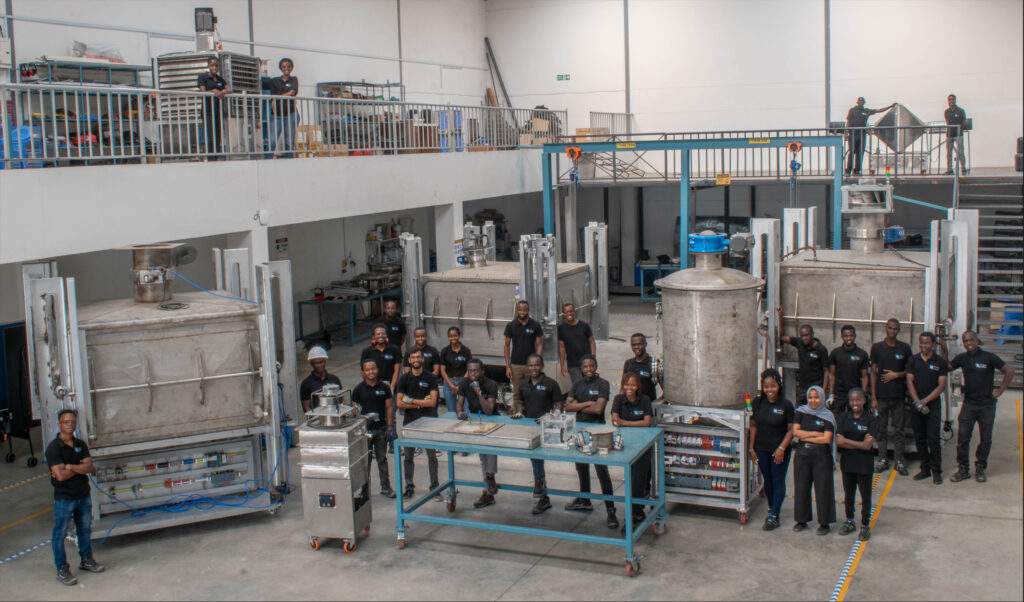
Octavia Carbon stands out as Africa’s first end-to-end DAC company. Their systems use vacuum-based filters powered by Kenya’s 93% renewable energy grid, capturing CO2 that is then injected into basalt formations in the Great Rift Valley for permanent storage. Kenya's geothermal energy sources and basalt-rich terrain make it an ideal location for scalable carbon sequestration. The company raised $5 million in 2024 and is backed by firms including Launch Africa Ventures and Lateral Frontiers.
Phlair
Munich, Germany | Founded: 2022
Phlair has developed a hydrolyser-based DAC system that significantly reduces energy requirements compared to thermal systems. Their technology uses acid-base reactions powered by renewables to absorb and release CO2 in a closed loop, offering a highly efficient carbon removal pathway. Phlair has secured pilot projects in Germany, the Netherlands, and Canada, partnering with Shopify, Klarna, and Stripe to provide verified carbon credits. The company raised €14.5 million in 2024 with support from Extantia Capital and Planet A.
Parallel Carbon
US | Founded: 2021
Parallel Carbon is redefining carbon removal by producing clean hydrogen as a byproduct of its DAC process. The company uses calcium hydroxide and renewable-powered electrolysis to both capture CO2 and create hydrogen fuel at target prices of $1/kg. Their approach offers a dual benefit—decarbonizing industry while supporting the clean energy transition. With a $3.6 million seed round led by Aramco Ventures and others, Parallel Carbon is focused on expanding its impact across energy and industrial sectors.
Why These Startups Matter
What makes these companies stand out is not just their technology—it’s their ability to move the needle on affordability and scalability. Many of these solutions now operate at or near the \$100/ton threshold that unlocks major buyer interest, especially from large corporations aiming to meet net-zero targets.
This shift is happening not in isolation but with broad, cross-sector support—from energy giants and mining firms to beverage companies and logistics leaders.
As Christoph Gebald, co-founder of Climeworks, said in a recent panel: "There is no silver bullet for climate change, but permanent carbon removal is a key part of the solution."
Scaling Climate Tech Without Slowing Down
What’s clear is that carbon removal is no longer a science experiment or side project—it’s a fast-evolving pillar of climate strategy. With cost curves bending and serious players investing, these startups are laying the foundation for a low-carbon economy.
From Europe to East Africa and the U.S., the momentum is real—and it's just getting started.
Subscribe to the newsletter
Daily decarbonization data and news delivered to your inbox
Follow the money flow of climate, technology, and energy investments to uncover new opportunities and jobs.
Companies

Latest issues
-
The US Hasn't Made Heavy Water Since 1982
Inside This Issue ⚛️ Aternium Completes FEED Studies for US Hydrogen, Heavy Water Project 🐄 Google, McKinsey Strike Brazil Carbon Removal Deal With Silvopasture Project 🔧 Cummins Selects Stargate ...
-
Why Colorado’s Koloma Has Japan’s Largest Utility Hooked
Inside This Issue ⚡ JERA Invests in Koloma to Explore Natural Hydrogen as a Future Low-Carbon Energy 🔬 New CATF Tool Provides Framework for Self-Assessment and Strengthening of Biomass Carbon Remo...
-
LNK Energies Targets $6.50 Hydrogen With No Federal Subsidies
Inside This Issue 🚛 MIT Startup Says It Can Turn Diesel Trucks Into Cheaper Hydrogen Haulers, See It at Disrupt 🏭 Baytown City Council Briefs: ExxonMobil Blue Hydrogen Agreement Approved 🌎 Colorad...
Company Announcements
-
A new interactive tool from Clean Air Task Force (CATF) provides a practical framework for the self-assessment and strengthening of biomass carbon removal (BiCRS) protocols to help ensure that carb...
-
LanzaJet Secures Financing to Scale SAF Production and Supply Global Customers
CHICAGO, Oct. 15, 2026 (GLOBE NEWSWIRE) -- LanzaJet, Inc., a leading next-gen fuels technology company and fuels producer, today announced fully committed new financing of at least $20 million to s...
-
44.01 and Frontier Advance Permanent CO₂ Storage Through In-Situ Mineralization
44.01's in-situ mineralization (ISM) process turns CO₂ into solid rock underground in a few years, after which the risk of reversal is functionally zero. >> In Other News: JERA Invests in ...
-
JERA Invests in Koloma to Explore Natural Hydrogen as a Future Low-Carbon Energy
JERA Co., Inc. (JERA), through its corporate venture capital arm JERA Ventures, has invested in Koloma, Inc. (Koloma), a U.S.-based natural hydrogen exploration and development company. The invest...