
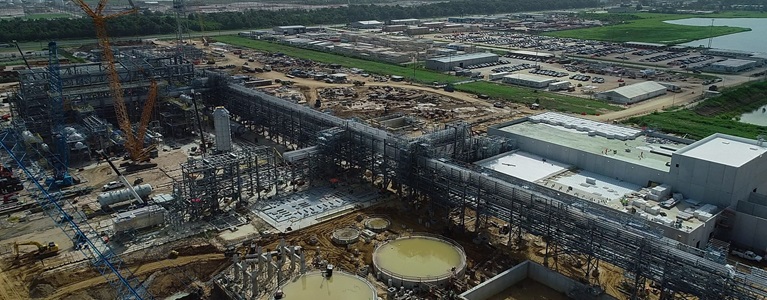
The U.S. is about to hit a major milestone that many thought was still years away. Woodside Energy just announced its 1.1 million tonnes per annum Beaumont New Ammonia Project has reached 97% completion, with first ammonia production targeted for late 2025.
This isn't another announcement or another FID. This facility in Beaumont, Texas is actually weeks away from producing the first large-scale blue ammonia in the United States. Key systems are now operational, catalyst loading has begun, and commissioning activities are underway.
What makes this project stand apart is its design. The Beaumont facility is the world's first ammonia plant paired with autothermal reforming (ATR) and a 95% CO2 capture rate, setting a new benchmark for how blue ammonia gets produced at commercial scale.
The Supply Chain Model Everyone's Watching
The Beaumont project represents a new approach to blue ammonia production. Rather than building everything in-house, Woodside is relying on a collaborative supply chain model with two industry giants handling critical functions.
Linde will own and operate an adjacent hydrogen production facility, supplying low-carbon hydrogen feedstock starting in 2026. ExxonMobil will handle all carbon capture and storage services, permanently sequestering the CO2 produced during hydrogen production.
>> RELATED: Texas Emerges as Blue Ammonia Capital in $5B Investment Wave

Beaumont’s $2.35B low-carbon ammonia project nears completion, targeting first production by late 2025 with a 95% CO₂ capture rate.
Why This Project Matters for the Industry
Blue ammonia projects have been announced and reached FID across the globe for years. But very few have crossed the finish line into commercial production. Beaumont changes that narrative.
The project was originally developed by Netherlands-based OCI Global before Woodside acquired it in September 2024 for $2.35 billion. OCI managed construction while Woodside prepared for operations.

"We are exceptionally proud to have put in motion on a global scale the first FID'd blue ammonia project, with first production expected in less than a year from now. This pioneering investment will contribute to the global availability of low-carbon intensity ammonia, with significant potential to reduce carbon emissions in hard-to-abate sectors."
Nassef Sawiris, Executive Chairman of OCI
A Two-Phase Approach to Production
The project's rollout follows a carefully staged timeline that reflects the complexity of integrating carbon capture into ammonia production:
Phase 1: Conventional Ammonia (Late 2025)
Initial production will use natural gas feedstock from multiple Gulf Coast suppliers. The facility will produce conventional ammonia to serve traditional markets while the carbon capture infrastructure comes online.
Phase 2: Lower-Carbon Ammonia (2026)
Once Linde's hydrogen facility and ExxonMobil's CCS operations become fully operational, the plant will transition to producing lower-carbon ammonia. This product will primarily target European customers subject to the Carbon Border Adjustment Mechanism (CBAM).

A visual breakdown of the staged timeline. Phase 1 launches with conventional ammonia in late 2025, moving into Phase 2's lower-carbon production and carbon capture integration by 2026.
The facility is also designed to accommodate a second 1.1 million tonnes per year production train. Woodside is targeting FID readiness for Phase 2 expansion in 2026, which would double total capacity.

"Our Beaumont New Ammonia Project is 97% complete, with key systems now operational and commissioning activities underway. We continue to target first ammonia production in late 2025."
Meg O'Neill, CEO of Woodside Energy
>> In Other News: Chevron CEO Sees Growing Potential In Biofuels And Geothermal Energy
Strategic Positioning in a Growing Market
Global ammonia demand is forecast to double by 2050, with lower-carbon ammonia expected to make up nearly two-thirds of total demand. The potential applications extend beyond traditional fertilizer uses:
- Marine fuels for zero-carbon shipping
- Power generation as a coal and natural gas alternative
- Industrial feedstock for chemical manufacturing
Beaumont's Gulf Coast location gives it direct access to deepwater ports and extensive pipeline infrastructure. This positions Woodside to serve both domestic customers and international markets in Europe and Asia, where investment in blue ammonia continues to accelerate.
What Beaumont Means for Projects in the Pipeline
The next few weeks in Beaumont will be closely watched by every company with a blue ammonia project in development. Each milestone will provide real-world data on what it takes to bring a large-scale facility online.
For Woodside, this represents a material step toward its Scope 3 emissions targets and a chance to establish itself as a first mover. For the broader industry, it's proof that blue ammonia isn't just a concept on paper. What happens in Texas will shape how North America builds out its clean hydrogen and ammonia infrastructure.
Subscribe to the newsletter
Daily decarbonization data and news delivered to your inbox
Follow the money flow of climate, technology, and energy investments to uncover new opportunities and jobs.
Companies
Latest issues
-
The US Hasn't Made Heavy Water Since 1982
Inside This Issue ⚛️ Aternium Completes FEED Studies for US Hydrogen, Heavy Water Project 🐄 Google, McKinsey Strike Brazil Carbon Removal Deal With Silvopasture Project 🔧 Cummins Selects Stargate ...
-
Why Colorado’s Koloma Has Japan’s Largest Utility Hooked
Inside This Issue ⚡ JERA Invests in Koloma to Explore Natural Hydrogen as a Future Low-Carbon Energy 🔬 New CATF Tool Provides Framework for Self-Assessment and Strengthening of Biomass Carbon Remo...
-
LNK Energies Targets $6.50 Hydrogen With No Federal Subsidies
Inside This Issue 🚛 MIT Startup Says It Can Turn Diesel Trucks Into Cheaper Hydrogen Haulers, See It at Disrupt 🏭 Baytown City Council Briefs: ExxonMobil Blue Hydrogen Agreement Approved 🌎 Colorad...
Company Announcements
-
A new interactive tool from Clean Air Task Force (CATF) provides a practical framework for the self-assessment and strengthening of biomass carbon removal (BiCRS) protocols to help ensure that carb...
-
LanzaJet Secures Financing to Scale SAF Production and Supply Global Customers
CHICAGO, Oct. 15, 2026 (GLOBE NEWSWIRE) -- LanzaJet, Inc., a leading next-gen fuels technology company and fuels producer, today announced fully committed new financing of at least $20 million to s...
-
44.01 and Frontier Advance Permanent CO₂ Storage Through In-Situ Mineralization
44.01's in-situ mineralization (ISM) process turns CO₂ into solid rock underground in a few years, after which the risk of reversal is functionally zero. >> In Other News: JERA Invests in ...
-
JERA Invests in Koloma to Explore Natural Hydrogen as a Future Low-Carbon Energy
JERA Co., Inc. (JERA), through its corporate venture capital arm JERA Ventures, has invested in Koloma, Inc. (Koloma), a U.S.-based natural hydrogen exploration and development company. The invest...