
American Chemist, Omar M. Yaghi, Receives the 2024 Tang Prize in Sustainable Development
Published by Todd Bush on June 19, 2024
TAIPEI, June 19, 2024 /PRNewswire/ -- The Tang Prize, a biennial award established in 2014, has honored five cycles of laureates across various fields. Today (June 18th), the Tang Prize Foundation announced Omar M. Yaghi, an esteemed American chemist, as the recipient of the 2024 Tang Prize in Sustainable Development.
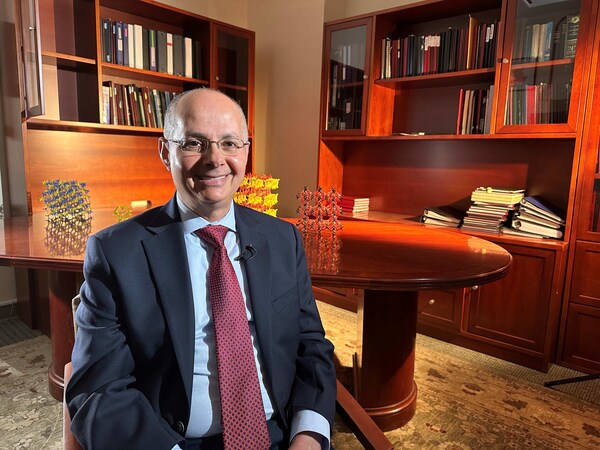
American Chemist, Omar M. Yaghi, Receives the 2024 Tang Prize in Sustainable Development
>> In Other News: energyRe Secures Contracts to Supply Clean Power to U.S. Department of Defense Facilities
Prof. Yaghi is awarded for his extraordinary contributions to sustainable development, particularly his pioneering work with Metal-Organic Frameworks (MOFs) and other ultra-porous frameworks that can be tailored for carbon capture, hydrogen and methane storage, and water harvesting from desert air. Prof. Yaghi's research has revolutionized the field of chemistry and materials science, offering transformative solutions for sustainable development through the creation of customizable materials with exceptional properties.
Prof. Yaghi is currently the James and Neeltje Tretter Chair Professor of Chemistry, Department of Chemistry, University of California, Berkeley, a Faculty Scientist Affiliate at Lawrence Berkeley National Laboratory, and the Founding Director of the Berkeley Global Science Institute.
Prof. Yaghi has introduced a new method for controlling four of the smallest gas molecules in the atmosphere that significantly impact our planet's sustainable development: carbon dioxide, hydrogen, methane, and water. This was made possible through his pioneering development of a new field of chemistry known as reticular chemistry. Reticular chemistry is a new approach to creating materials by linking organic and inorganic units into strong, porous crystalline structures called metal-organic frameworks (MOFs) and covalent organic frameworks (COFs). Prof. Yaghi demonstrated how these novel framework materials can trap, concentrate, and manipulate hydrogen, methane, carbon dioxide, and water from the air, offering innovative solutions to pressing issues related to the United Nations' Sustainable Development Goals (SDGs), including energy, environment, and water resources.
As a pioneer of MOFs and COFs, Prof. Yaghi is the first scientist to apply these innovative materials to the field of sustainable development, demonstrating tangible and impressive results. His pioneering work has yielded impressive results. For example, he demonstrated that incorporating one of his MOFs increases the carbon dioxide storage capability at room temperature by 18 folds. Furthermore, chemically modified MOFs and COFs can selectively capture voluminous amounts of carbon dioxide from combustion gases. In the context of methane storage, a fuel tank filled with MOFs can triple the amount of methane stored at room temperature and safe pressures compared to a tank without MOFs under the same conditions. This achievement allows automobiles to triple the distance traveled without refueling. Additionally, for hydrogen storage, MOF and COF materials can store up to twelve weight percent of hydrogen (at 77 K and 100 bar) in a tank filled with MOFs, making this technology relevant to the safe and stationary storage of hydrogen.
Using just a kilogram of MOF materials, Prof. Yaghi can harvest water in water-scarce areas with low humidity, such as deserts, using only ambient sunlight. The water is concentrated in the pores of MOFs, and its quality exceeds the standards for drinking water set by the U.S. Food and Drug Administration (FDA) and the Environmental Protection Agency (EPA). In collaboration with industrial companies including General Electric and startups in the past few years, he has developed portable MOFs water harvesters capable of producing hundreds of liters of water per day in an energy-efficient and cost-effective manner, sufficient for meeting the needs of a family.

Subscribe to the newsletter
Daily decarbonization data and news delivered to your inbox
Follow the money flow of climate, technology, and energy investments to uncover new opportunities and jobs.
Latest issues
-
Honeywell's Methanol-to-Jet Pathway Just Cleared Its Biggest Gate
Inside This Issue 🛫 Methanol-to-Jet Clears the ASTM Gate. What Changes Now? 🌿 InPlanet Selected as the Brazilian Supplier in Whirlpool Corporation's Durable Carbon Removal Portfolio 🧲 Climeworks A...
-
How Montana Renewables Cut $1B Out of Its SAF Budget
Inside This Issue 🌿 How Montana Renewables Cut MaxSAF Capex 89% 📋 IRS Issues Notice on 45Z Clean Fuel Production Tax Credit to Support Domestic Biofuel Production and American Agriculture 🌊 Natura...
-
Can Carba Really Remove Carbon Under $100?
Inside This Issue 🌬️ U.S. Bank Makes First Carbon Removal Purchase with Carba's Minnesota Biochar Project 🏭 Michigan's CCS Primacy Bid Could Reshape Great Lakes Industry 🏗️ Europe's Largest Carbo...
Company Announcements
-
In the largest rice methane offtake to date, Mitti Labs will deliver one million high-integrity credits to Google by 2030 BENGALURU, India and SAN FRANCISCO, Sept. 10, 2026 /PRNewswire/ -- Deep-t...
-
Climeworks Announces Key Performance Improvements at Mammoth
Over the past 18 months, technology upgrades have more than doubled CO₂ capture performance in upgraded collector containers while reducing operating costs by more than 50%. Zurich, Switzerland | ...
-
A team member at one of InPlanet’s partner farms inspects freshly harvested citrus fruit to assess its quality Remineralizer integrated into the soil following field application, beginning the enh...
-
Methanol-to-Jet Clears ASTM Gate. What Changes Now?
Methanol-to-jet has crossed a critical technical gate for commercial aviation fuel. ASTM D7566-26a, the active specification updated July 30, 2026, incorporates methanol into the Annex A5 alcohol-t...