
U.S.-based provider of ammonia-to-power solutions Amogy and compatriot science, technology, and engineering company KBR have signed a memorandum of understanding (MoU) to advance ammonia-to-hydrogen solutions.
As disclosed, the collaboration will focus on evaluating and advancing ammonia cracking catalyst applications to accelerate ammonia’s role as a hydrogen carrier.
Under the agreement, Amogy’s proprietary ruthenium ammonia cracking catalysts will reportedly be evaluated within KBR’s hydrogen production platforms for potential commercial deployment, including offshore and industrial applications.
>> In Other News: Eaton to Showcase Technologies for Hydrogen-Powered Commercial Vehicles at IAA Transportation 2024
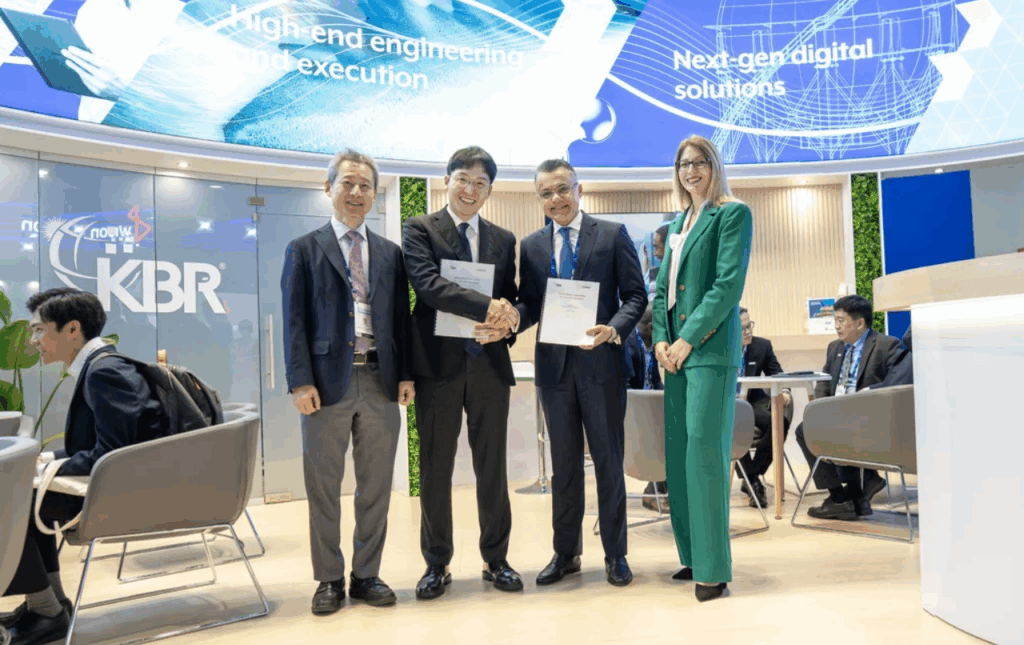
The collaboration is also expected to include regular knowledge exchange, joint exploration of new market opportunities, and cooperative efforts to demonstrate Amogy’s catalysts integrated into KBR’s systems.
According to Amogy, its catalyst portfolio enables “highly efficient ammonia conversion into hydrogen.” Available through licensing or direct sales, the catalysts are said to increase hydrogen production rates at lower operating temperatures.
KBR provides technologies for both green and blue hydrogen production. As informed, its portfolio includes H2KPlus for blue hydrogen via steam methane reforming (SMR) and H2ACT for producing hydrogen from ammonia.
Commenting on the collaboration, Seonghoon Woo, CEO of Amogy, stated: “KBR’s leadership in hydrogen technology makes them an ideal partner as we work to scale ammonia’s role as a global hydrogen carrier. Together, we are committed to advancing the hydrogen economy with innovative solutions. By combining Amogy’s catalyst expertise with KBR’s world-class technology platforms, we can unlock new opportunities for clean, scalable energy.”
It is worth mentioning that in 2025, Amogy also partnered with Japanese engineering company JGC to advance large-scale ammonia cracking technology for low-carbon hydrogen production.
Specifically, JGC selected Amogy’s low ruthenium content catalyst for use in its ammonia cracking demonstration project as part of its participation in a broader initiative by the New Energy and Industrial Technology Development Organization (NEDO) to establish a competitive hydrogen supply chain.
Overall, JGC’s goal is to enable the large-scale deployment of hydrogen production from ammonia, aligning with Japan’s national strategy to accelerate the adoption of hydrogen as a key energy source by 2030.
As for KBR, the company entered into a binding alliance agreement with Australian technology company Hazer to commercialize and license Hazer’s proprietary methane pyrolysis technology in the ammonia and methanol markets. Moreover, the parties agreed to pursue licensing opportunities in decarbonizing hydrogen markets.
Subscribe to the newsletter
Daily decarbonization data and news delivered to your inbox
Follow the money flow of climate, technology, and energy investments to uncover new opportunities and jobs.
Latest issues
-
Honeywell's Methanol-to-Jet Pathway Just Cleared Its Biggest Gate
Inside This Issue 🛫 Methanol-to-Jet Clears the ASTM Gate. What Changes Now? 🌿 InPlanet Selected as the Brazilian Supplier in Whirlpool Corporation's Durable Carbon Removal Portfolio 🧲 Climeworks A...
-
How Montana Renewables Cut $1B Out of Its SAF Budget
Inside This Issue 🌿 How Montana Renewables Cut MaxSAF Capex 89% 📋 IRS Issues Notice on 45Z Clean Fuel Production Tax Credit to Support Domestic Biofuel Production and American Agriculture 🌊 Natura...
-
Can Carba Really Remove Carbon Under $100?
Inside This Issue 🌬️ U.S. Bank Makes First Carbon Removal Purchase with Carba's Minnesota Biochar Project 🏭 Michigan's CCS Primacy Bid Could Reshape Great Lakes Industry 🏗️ Europe's Largest Carbo...
Company Announcements
-
In the largest rice methane offtake to date, Mitti Labs will deliver one million high-integrity credits to Google by 2030 BENGALURU, India and SAN FRANCISCO, Sept. 10, 2026 /PRNewswire/ -- Deep-t...
-
Climeworks Announces Key Performance Improvements at Mammoth
Over the past 18 months, technology upgrades have more than doubled CO₂ capture performance in upgraded collector containers while reducing operating costs by more than 50%. Zurich, Switzerland | ...
-
A team member at one of InPlanet’s partner farms inspects freshly harvested citrus fruit to assess its quality Remineralizer integrated into the soil following field application, beginning the enh...
-
Methanol-to-Jet Clears ASTM Gate. What Changes Now?
Methanol-to-jet has crossed a critical technical gate for commercial aviation fuel. ASTM D7566-26a, the active specification updated July 30, 2026, incorporates methanol into the Annex A5 alcohol-t...