
Avnos Bets on Modular Manufacturing to Speed Up DAC Deployment
Published by Todd Bush on September 24, 2026
Direct air capture is borrowing a page from the clean-energy playbook: build standardized units in a factory, test them before shipping, and deploy multiple modules instead of redesigning every project from scratch. Avnos, the Los Angeles-based developer of Hybrid Direct Air Capture (HDAC) technology, is building toward a model where repeatable manufacturing, not just larger facilities, drives scale.
Key Facts
- Project Brighton in Bridgewater, New Jersey, entered operations in 2026 and is designed to capture up to 450 tons of atmospheric CO2 annually while producing approximately 475,000 gallons of clean water each year (Avnos, August 2026)
- Project Cedar will deploy four factory-built HDAC modules with combined capacity of 3,000 metric tons of CO2 per year and more than 6,000 tons of clean water annually
- Cedar is backed by up to $17 million in project financing from Shell US Gas and Power and Mitsubishi Corporation (Americas), announced November 2025
- Avnos has secured more than $100 million in combined public and private funding from Shell, Mitsubishi, NextEra Energy Resources, ConocoPhillips, JetBlue Ventures, the U.S. Department of Energy, and the U.S. Department of Defense
- Avnos' HDAC technology produces five to ten tons of clean water per ton of CO2 captured and requires no external heat input
- CEO Will Kain has cited a pathway to plants in the 50,000 to 100,000 ton per year range at under $250 per ton, with a longer-term target below $100 per ton (Axios, November 2025)
>> In Other News: RepAir and University of Delaware Show Battery-Based DAC Path Below $100 Per Tonne
Why Is Modular Manufacturing a Different Kind of DAC Scaling?
Modular manufacturing scales direct air capture by multiplying standardized units rather than enlarging single plants. Avnos' HDAC Module is built and tested in a factory before it ships to site.
Most of the conversation around scaling DAC has focused on building progressively larger facilities. Bigger plants spread fixed costs over more captured carbon. That logic still holds.
There is a second approach. Manufacture standardized units in a controlled environment, verify performance before shipment, then deploy several modules at one site.
Avnos designed the HDAC Module for repeatable deployment across three settings: data centers, geologic carbon storage hubs, and next-generation fuel production. The same unit serves each configuration.
Repeatable engineering reduces site-specific design work. Factory quality control replaces field fabrication uncertainty. Higher production volumes open the door to automation and bulk component procurement.
The DAC cost reduction pathway remains one of the defining challenges in carbon removal. Removal costs across the industry currently run from roughly $500 to $1,000 per ton. The widely cited commercial viability threshold sits below $100 per ton.
How Has Avnos Moved From Pilot to Repeatable Deployment?
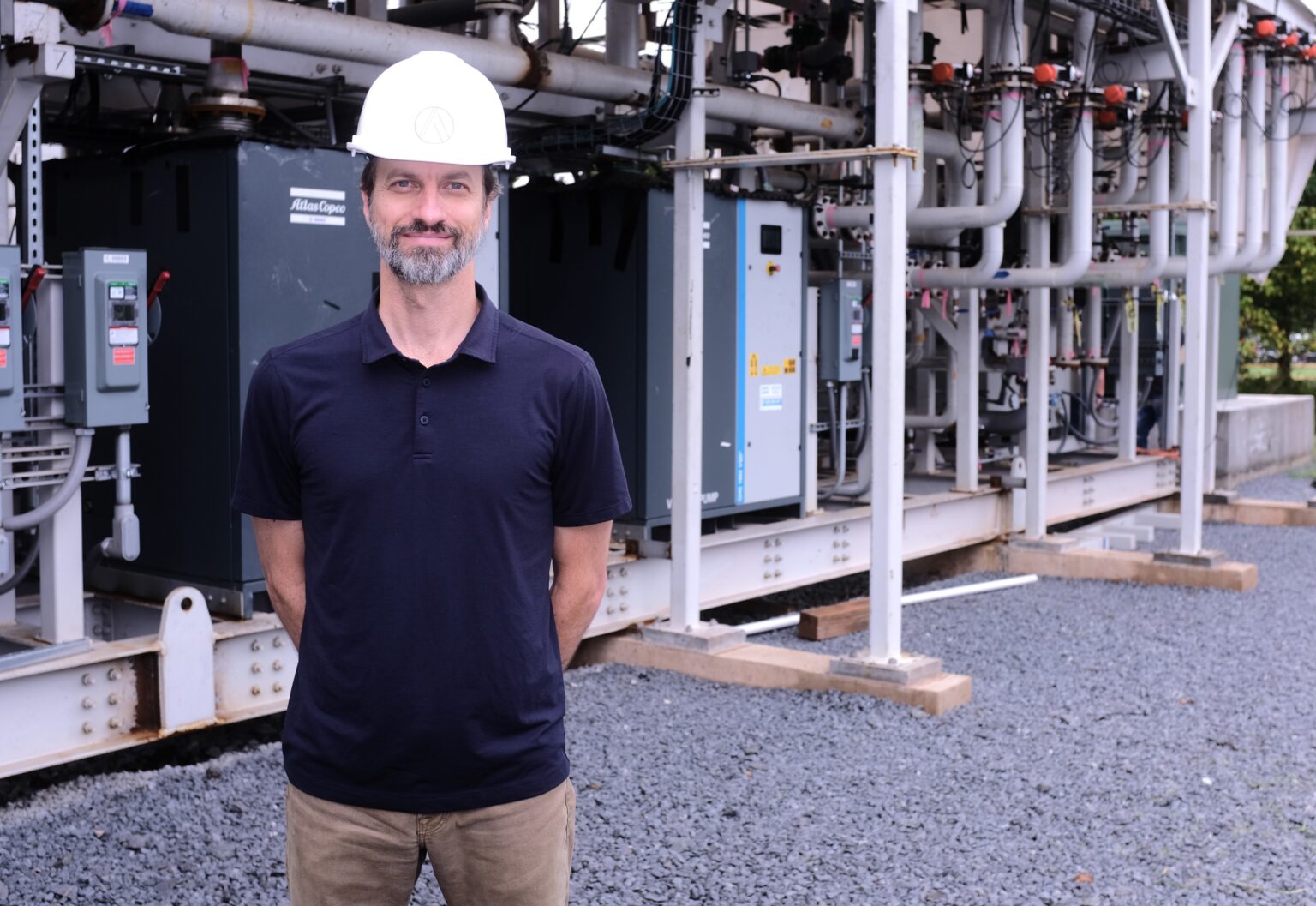
Avnos progressed from a 30-ton pilot in California to a 450-ton demonstration in New Jersey in roughly three years. Each step validated the technology at a larger scale.
The company's first field deployment was a pilot in Bakersfield, California, run alongside SoCalGas with U.S. Department of Energy funding. That unit captured approximately 30 tons of CO2 annually.
Bakersfield validated the core process. HDAC captures atmospheric CO2 while simultaneously producing clean water, with no external heat input required.
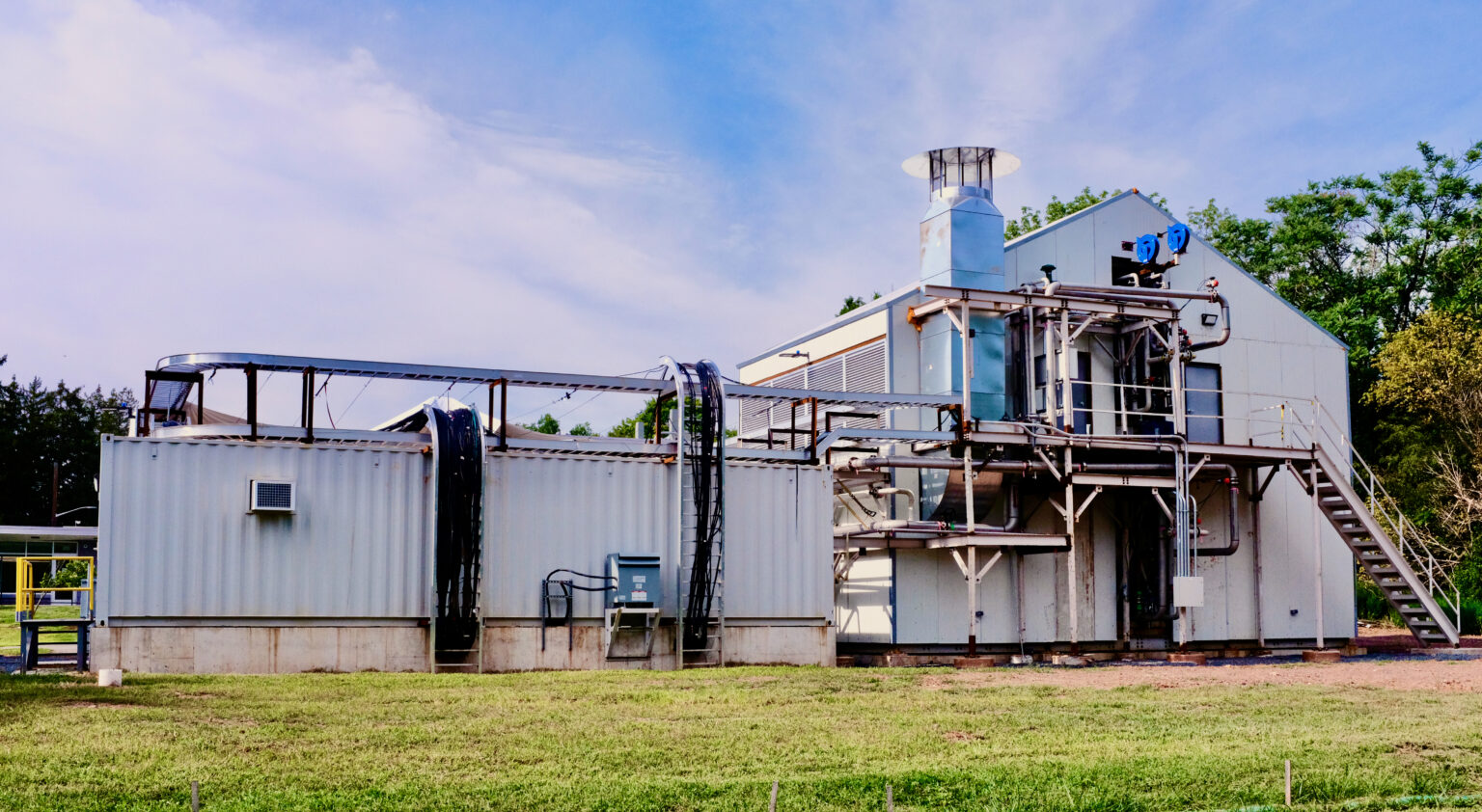
Project Brighton in Bridgewater, New Jersey, is the company's largest operating deployment. Brighton is designed to capture up to 450 tons of atmospheric CO2 annually and produce approximately 475,000 gallons of clean water each year.
The U.S. Office of Naval Research funded Brighton. The project supports Avnos' work piloting DAC-sourced CO2 for sustainable aviation fuel production.
Brighton sits alongside Avnos' Technology Development Center on Milltown Road, putting research, testing, and product development on one campus.
"Brighton is our largest operating deployment to date and demonstrates our ability to deliver infrastructure at increasing scale."
Will Kain, Founder and CEO of Avnos
>> RELATED: Exclusive: Shell Backs Plan to Scale Direct Air Capture Project
What Does Project Cedar Show About Modular Scaling?
Project Cedar will capture 3,000 metric tons of CO2 per year using four HDAC modules. The module count matters as much as the capacity figure.
Cedar will also produce more than 6,000 tons of clean water annually. The project is funded through up to $17 million from Shell US Gas and Power, LLC and Mitsubishi Corporation (Americas).
Avnos has not yet announced the site. Construction is expected to finish by the end of 2026, with operations starting in early 2027.
Four standardized units deliver the full 3,000 metric tons. Engineers deploy and connect modules of a type already proven at Brighton rather than designing a new plant.
That distinction defines the scaling model. Developers add manufactured units instead of continually redesigning larger bespoke facilities.
Kain told Axios that Cedar "puts us on our pathway" to plants in the 50,000 to 100,000 ton per year range with removal costs under $250 per ton. "Then, we've got really good line of sight to getting to that less than $100 per ton of CO2 target," he said.
| Project | Location | Annual CO2 Capacity | Configuration and Status |
|---|---|---|---|
| Bakersfield Pilot | Bakersfield, California | Approximately 30 tons | Pilot unit with SoCalGas, complete |
| Project Brighton | Bridgewater, New Jersey | Up to 450 tons | Demonstration, operational 2026 |
| Project Cedar | United States, site to be announced | 3,000 metric tons | Four HDAC modules, operations early 2027 |
How Could Factory Production Affect DAC Project Economics?
Factory production creates the conditions for cost reduction rather than guaranteeing it. The mechanism is repeatable engineering applied across successive units.
Building the same unit under controlled conditions means engineers stop re-solving identical design problems. Standardized components make procurement more efficient as order volumes rise.
Each additional unit generates production data that feeds refinement. Work that once happened on-site, with its weather exposure and field labor costs, moves indoors.
Avnos has tied its manufacturing strategy directly to this roadmap. The company plans to develop high-speed, highly automated manufacturing capabilities.
Kain has said this approach "will allow us to come up the maturity curve and down the risk and cost curve quite quickly." That describes company strategy, not cost reductions already achieved.
The solar and battery analogy is useful with caveats. Both technologies achieved steep declines through manufacturing scale, but also through mass-market demand, commodity supply chains, and decades of accumulated learning that DAC has not yet built.
HDAC carries one more economic distinction. Most DAC systems consume several tons of water per ton of CO2 captured, while Avnos produces five to ten tons of clean water per ton removed. The water co-product shifts a cost line toward a potential revenue line.

"It is not only more climate friendly, but it's also a cheaper way to pull carbon from the air and actually produce a feedstock for the future for sustainable aviation fuel."
Amy Burr, President, JetBlue Ventures
JetBlue Ventures has backed Avnos since the company's earlier funding rounds. Lower-cost atmospheric CO2 is a direct input to power-to-liquid aviation fuel, which makes DAC economics an aviation industry concern.
Who Is Backing Avnos and What Does That Signal?
Avnos has secured more than $100 million in combined public and private funding. The backer list spans energy majors, aviation investors, a large U.S. utility, and two federal departments.
Its supporters include Mitsubishi Corporation (Americas), Shell US Gas and Power, NextEra Energy Resources, ConocoPhillips, JetBlue Ventures, the U.S. Department of Energy, and the U.S. Department of Defense.
Shell and Mitsubishi are financing Cedar directly. ConocoPhillips and JetBlue Ventures joined as strategic partners in 2023, and NextEra Energy Resources led the Series A round.
Each backer points to a different end market for the same hardware. Carbon storage, aviation fuel, and data center integration all draw on one module design.
That breadth matters for manufacturing economics. Cross-sector demand is what allows production volumes to grow fast enough for learning effects to show up in installed costs.
Avnos founder Will Kain explains Hybrid Direct Air Capture (HDAC): the process captures atmospheric CO2 while producing clean water and does not require external heat.
The Numbers That Will Settle It
Cedar's four modules and 3,000 metric tons of annual capacity make it the near-term test of the modular thesis. Operations begin in early 2027.
The question that follows Cedar is measurable. Do higher production volumes deliver lower installed capital costs, shorter construction schedules, and more aggregate capture capacity per dollar?
Avnos is not alone in betting on this model. CarbonCapture Inc. signed a lease in 2024 for an 83,000 square-foot plant in Mesa, Arizona, projected at full capacity to build 4,000 modules per year, equal to two megatons of removal capacity.
Svante took a parallel route in filter production, commissioning a 141,000 square-foot gigafactory in Burnaby, British Columbia, in May 2025. Standardization and automation are the stated cost levers in both cases.
Avnos has working technology, an operating 450-ton facility, commercial financing, and a four-module project underway. The manufacturing-first approach is among the more coherent strategies for making carbon removal repeatable. Cedar will supply the first real data on whether it works.
Frequently Asked Questions
What makes Avnos' HDAC technology different from conventional direct air capture?
Conventional DAC systems need external heat to release CO2 from their sorbents, and most consume several tons of water per ton of CO2 captured. Avnos' Hybrid Direct Air Capture uses a moisture-swing process that needs no external heat and produces five to ten tons of clean water for every ton of CO2 removed. That combination lowers energy costs, widens the range of viable deployment locations, and creates a saleable water co-product.
When will Project Cedar begin operations and what will it capture?
Construction is expected to finish by the end of 2026, with operations starting in early 2027. Cedar will deploy four factory-built HDAC modules capturing a combined 3,000 metric tons of CO2 annually and producing more than 6,000 tons of clean water each year. The U.S. site has not been publicly announced. Funding comes from up to $17 million provided by Shell US Gas and Power and Mitsubishi Corporation (Americas).
Will modular DAC manufacturing follow the same cost curve as solar panels?
Not automatically. Solar and battery costs fell through a combination of manufacturing scale, mass-market demand, commodity supply chains, and decades of cumulative production. DAC has not yet reached comparable volumes. What factory-built modular DAC does provide is the structural setup for learning-curve gains: standardized components, repeatable engineering, controlled quality, and room for automation. Whether those conditions produce solar-like declines depends on how quickly deployment volumes grow and how consistently each production run improves on the last.
For ongoing coverage of carbon removal, BECCS, and corporate CDR procurement, subscribe to Decarbonfuse.com.
Subscribe to the newsletter
Daily decarbonization data and news delivered to your inbox
Follow the money flow of climate, technology, and energy investments to uncover new opportunities and jobs.
Latest issues
-
Spiritus Lands 3 Million Tonnes of CO₂ Demand
Inside This Issue 🌬️ Spiritus Signs First Three Letters of Intent With U.S. Oil Producers for On-Site CO₂, Representing More Than 3 Million Tonnes of Annual Demand ✈️ Germany's Uniper Signs Offtak...
-
North America's RNG Food Waste Giant Just Got Bigger
Inside This Issue ♻️ Vanguard Renewables and Generate Upcycle Unite to Create North America's Largest Food Waste-to-RNG Platform 🌍 Google Is Buying Climate Impact on Two Clocks at Once ✈️ Infinium...
-
Europe's First Full-Scale CO2 Storage Is Now Live
Inside This Issue 🌊 EU's First Full-Scale Carbon Storage Site Goes Live as INEOS Greensand Begins Operations ⚡ IRS 45Z Guidance Reshapes U.S. Biofuel Economics 🏭 Avnos Introduces the Avnos HDAC Mo...
Company Announcements
-
Jacobs Extends Role on German Hydrogen-Capable Direct Reduction Plant
DALLAS – Jacobs (NYSE: J) was selected to extend its role on thyssenkrupp Steel's direct reduction plant in Duisburg, Germany, continuing to provide project management office (PMO), construction ma...
-
Federal Government Developing Framework for Greater International Cooperation on Carbon Markets
OTTAWA, ON, Sept. 24, 2026 /CNW/ -- With world-class industrial expertise, geology, clean power, abundant natural resources, and a strong policy foundation, Canada has an opportunity to build a glo...
-
Growth investment supports Xpansiv’s M&A strategy, international expansion, and product development LONDON — 22 September 2026 — Xpansiv, the leading infrastructure provider for the global ene...
-
Avnos Bets on Modular Manufacturing to Speed Up DAC Deployment
Direct air capture is borrowing a page from the clean-energy playbook: build standardized units in a factory, test them before shipping, and deploy multiple modules instead of redesigning every pro...