
Braskem Expands Its Biopolymer Production by 30% Following an Investment of US$ 87 Million
Published by Todd Bush on July 24, 2023
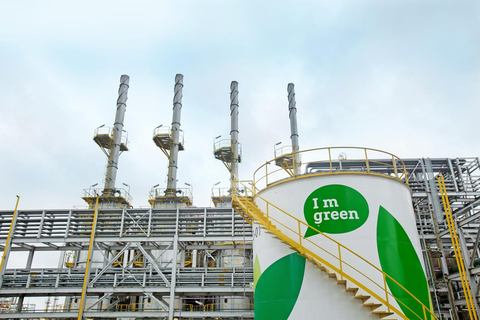
SÃO PAULO--(BUSINESS WIRE)--In June, Braskem concluded a 30% increase in the production capacity of its bio-based ethylene plant, located in the Petrochemical Complex of Triunfo, Rio Grande do Sul, Brazil. The US$ 87 million investment aims to meet the growing global demand for sustainable products. The plant now operates at an increased capacity, from 200,000 to 260,000 tons/year. Braskem’s bio-based ethylene is made from sustainably sourced, sugarcane-based ethanol which removes CO2 from the atmosphere and stores it in products for daily use.
The initiative is an important advance in the company's ambition to increase the production of biopolymers to one million tons by 2030, and to become carbon neutral by 2050.
>> In Other News: Braskem America Awarded International Sustainability & Carbon Certification PLUS (ISCC PLUS) for all U.S. Production Facilities
"The expansion of bio-based ethylene capacity reinforces Braskem’s commitment to sustainable development and innovation and proves the success of the strategy we engaged in thirteen years ago, when we launched the world’s first bio-based polyethylene production at industrial scale, with proprietary technology. We want to meet society's and customers' demand for products with less impact on the environment,” explains Walmir Soller, O/P VP for Europe and Asia and responsible for the I’m greenTM bio-based business globally.
Each ton of plastic resin made from renewable feedstock represents the removal of 3 tons of CO2 from the atmosphere. Since the plant's beginning in 2010, more than 1.2 million tons of I’m greenTM bio-based polyethylene has been produced. The recent increase in production capacity will remove approximately 185,000 tons of CO2 equivalent per year.
Braskem is the world leader in the production of biopolymers. Today, the portfolio of bio-based resins is exported to more than 30 countries and is used in products from more than 250 major brands, such as Allbirds, DUO UK, Grupo Boticário, Johnson&Johnson, Natura & Co, Nissin, and Tetra Pak. These bio-based resins are used to manufacture packaging, bags, toys, housewares, industrial cables and wires, packaging films, hockey fields, and reusable water bottles among many other products.
The development and production of ethylene and resins from bio-based sources is the result of Braskem's continued investment in disruptive innovation and technology. Research, digital transformation, and bold partnerships are the foundations upon which Braskem searches for, and scales, sustainable solutions for society and the environment. Braskem’s current sustainability commitments include improving the circularity of plastics, promoting human-centric development, and leading the revolution in bio-based materials.
>> In Company Spotlight: Braskem
ABOUT BRASKEM
With a global vision of the future oriented toward people and sustainability, Braskem is committed to contributing to the value chain for strengthening the Circular Economy. The petrochemical company’s almost 9,000 team members dedicate themselves every day to improving people’s lives through sustainable chemicals and plastics solutions. Braskem has an innovative DNA and a comprehensive portfolio of plastic resins and chemical products for diverse segments, such as food packaging, construction, manufacturing, automotive, agribusiness, healthcare, and hygiene, among others. With 40 industrial units in Brazil, the United States, Mexico, and Germany, and exports its products to clients in more than 70 countries.
Subscribe to the newsletter
Daily decarbonization data and news delivered to your inbox
Follow the money flow of climate, technology, and energy investments to uncover new opportunities and jobs.
Companies
Latest issues
-
Why Is Wyoming Giving 650,000 Acres to Carbon Storage?
Inside This Issue 🪨 Inside Blm's 650,000-Acre Bet on Wyoming Carbon Storage 🏭 California Advances Carbon Capture and Removal Regulations Under SB 905 ⚡ Why a Japanese Power Giant Is Betting on Den...
-
Colorado Joins the 7-State CCS Permit Fast Lane
Inside This Issue ⚖️ Colorado Takes Over Class VI Permits: What Changes for CCS? 🏭 Hebei Shoulang Facility Using LanzaTech Technology Achieves World’s First ISCC EU RCF Certification for Ethanol P...
-
The US Hasn't Made Heavy Water Since 1982
Inside This Issue ⚛️ Aternium Completes FEED Studies for US Hydrogen, Heavy Water Project 🐄 Google, McKinsey Strike Brazil Carbon Removal Deal With Silvopasture Project 🔧 Cummins Selects Stargate ...
Company Announcements
-
Citi Closes $72 Million Carbon Removal-Linked Note to Support Applied Carbon Biochar Project
HIGHLIGHTS Citi structured an innovative $72 million carbon removal-linked note to provide upfront capital for Applied Carbon's biochar project, marking a first-of-its-kind "outcome bond" for ver...
-
New platform opens access to the same rigorous project evaluations trusted by the world's leading carbon removal procurement programs Today, Relae (formerly Carbon Direct) launched The Diligence C...
-
Inside BLM's 650,000-Acre Bet on Wyoming Carbon Storage
The Bureau of Land Management has offered right-of-way grants covering about 649,438 acres of federal pore space in southwest Wyoming. The September 21, 2026 offers went to Moxa Carbon Storage LLC ...
-
NEW YORK, BUSINESS WIRE, SWITCH Maritime (Switch), a leading developer of zero-emission vessels, secured a Design Basis Agreement (DBA) with the United States Coast Guard (USCG) for the SWITCH-150,...