
A 3D seismic survey in Saskatchewan has revealed that Canada's first confirmed natural hydrogen system is far larger than a single discovery well suggested. No electrolysis. No steam reforming. No carbon capture required. This is hydrogen that already exists underground, and new data shows it is sitting inside a structure nearly twice the size anyone initially mapped.
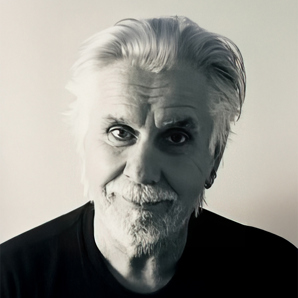
"The 3D Seismic Survey is transformational for our understanding of how big the prize could be in just this one part of the 475-km Genesis Trend. To use an analogy, with the 2D seismic that was used to select the initial Lawson drill target we were seeing a solar system. Now, after the Lawson discovery and the 3D seismic data we're seeing an entire galaxy. That's the best way to describe the significance of this."
Steve Halabura, Chief Geoscientist, MAX Power Mining Corp.
>> In Other News: Aviva Investors Partners With Climate Impact Partners To Invest In Colombian Afforestation Project
What Did the 3D Seismic Survey Actually Find?
MAX Power Mining Corp. (CSE: MAXX; OTC: MAXXF), a Canadian mineral and energy exploration company focused on the shift to decarbonization, released preliminary results from a high-resolution 3D seismic survey on April 21, 2026. The survey covered 47 square kilometres over its Lawson Natural Hydrogen system near Central Butte, Saskatchewan.
The results delineated a coherent structural closure covering approximately 14.2 square kilometres. That area defines a newly designated zone called "Lawson Central," which encompasses the original Lawson 15-19 discovery well. Beyond that, the survey also outlined a broader "Lawson Complex" spanning approximately 28 square kilometres, nearly double the primary closure.
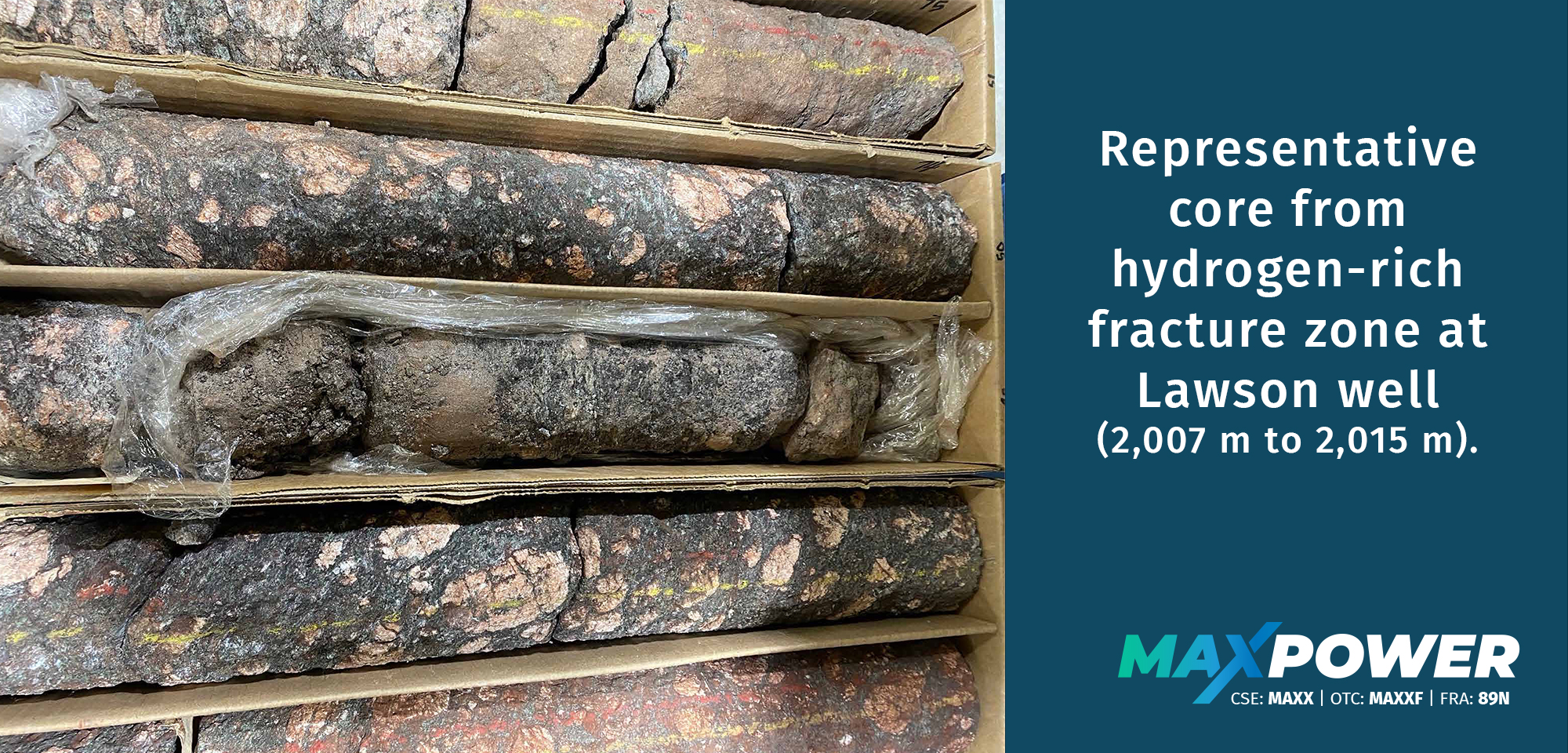
The original discovery well confirmed free gas flow to surface and significant hydrogen concentrations. Based on the 3D data, that well barely grazed the edge of the full system. Multiple discrete, high-priority drill targets have now been identified across the structure. A confirmatory well targeting the structural apex is planned for mid-2026.
Why Does Natural Hydrogen Change the Cost Equation?
Most of the world's hydrogen today is produced through steam methane reforming or electrolysis. Both are energy-intensive and expensive. According to IRENA, green hydrogen produced via electrolysis currently costs between $4.50 and $6 per kilogram in Europe. Grey hydrogen from fossil fuels without carbon capture costs under $2 per kilogram. Natural hydrogen sidesteps both pathways entirely.
Natural hydrogen, also called white or gold hydrogen, forms through geological processes underground and can be extracted using established drilling methods. Rystad Energy estimates its carbon intensity at approximately 0.4 kilograms of CO2 equivalent per kilogram of hydrogen produced at 85% purity with minimal methane contamination. That figure is well within the 0.45 kg CO2e threshold for the highest tier of U.S. production tax credits under the Inflation Reduction Act, which grants $3 per kilogram.
The Lawson system's gas composition runs at approximately 90% hydrogen-nitrogen mix with no hydrogen sulphide detected, validated by three independent laboratories. Elevated helium concentrations of up to 8.7% were also detected in sealed core tube gas samples from a zone above the basement complex. Helium is among the rarest and most commercially valuable gases on Earth. A system producing both hydrogen and helium strengthens the commercial case substantially.
>> RELATED: White Hydrogen Revolution: The Clean Fuel Major Oil Giants Are Betting On
Key Facts: Lawson Natural Hydrogen System, Saskatchewan
- 3D seismic delineated a 14.2 sq. km structural closure at Lawson Central (April 21, 2026)
- Broader "Lawson Complex" spans approximately 28 sq. km
- Gas composition confirmed at approximately 90% hydrogen-nitrogen mix, no hydrogen sulphide, validated by three independent labs
- Helium concentrations up to 8.7% detected in core tube gas samples above the basement complex
- MAX Power holds approximately 1.3 million acres (521,000 hectares) of permits in Saskatchewan, with 5.7 million acres under application
- The 475-km Genesis Trend hosts at least 80 additional structures identified as prospective for natural hydrogen accumulations
- Confirmatory well targeting the structural apex is planned for mid-2026
- Lawson is Canada's first-ever subsurface natural hydrogen system confirmed through deep drilling, with data validated by three independent labs
How Is Saskatchewan Positioned Within Canada's Hydrogen Strategy?
Saskatchewan sits at the center of what MAX Power calls the Genesis Trend, a 475-kilometre geological belt stretching into Montana and the Dakotas. The province already hosts a proposed Hydrogen Hub along the Regina-Moose Jaw Industrial Corridor. The Lawson system borders this corridor directly, placing any future commercial production within reach of industrial offtakers from day one.
MAX Power holds approximately 1.3 million acres of permitted ground across Saskatchewan, described by the company as the largest natural hydrogen land package in Canada. An additional 5.7 million acres are under application. That scale, combined with the geological framework now mapped by the 3D survey, positions the province as a potential district-scale hydrogen province rather than a single-well exploration story.
Global hydrogen demand increased to almost 100 million tonnes in 2024, up 2% from 2023, according to the IEA's Global Hydrogen Review 2025. The vast majority of that supply still comes from fossil fuels without carbon capture. Natural hydrogen, with its geological origin and near-zero carbon intensity, offers a direct alternative without requiring new manufacturing infrastructure.
>> RELATED: MAX Power Team Identifies Rare Basement Source Rocks as Potential Natural Hydrogen Source
| Hydrogen Type | Production Method | Approx. Cost/kg | Approx. Carbon Intensity |
|---|---|---|---|
| Grey | Steam methane reforming, no CCS | Under $2 | High |
| Blue | Steam methane reforming + CCS | $1.50 to $3 | Low to moderate |
| Green | Electrolysis from renewable electricity | $4.50 to $6 (Europe, IRENA) | Near zero |
| Natural (White) | Direct extraction from geological formations | Cost advantage vs. green (Rystad Energy) | ~0.4 kg CO2e/kg H2 at 85% purity (Rystad Energy) |
What Makes the Genesis Trend Significant Beyond Lawson?
The original Lawson discovery well only grazed the edge of what the 3D survey now describes as a 14.2 square kilometre structural closure. If one well at the periphery confirmed free gas flow, the apex of the structure represents the highest-purity, highest-volume zone of the system. That apex has not yet been drilled. It is the primary target for the mid-2026 confirmatory well.
A look-alike target called "Lawson Southwest" has also been identified approximately 12 kilometres from the original discovery, based on legacy 2D seismic data. It shares multiple geophysical similarities with Lawson and is associated with a dome-like surface feature at a location called Shooter Hill. That kind of repeatability across the Genesis Trend suggests the system is not an isolated pocket.
MAX Power also drilled the Bracken Well at its Grasslands Project, approximately 325 kilometres southwest of Lawson. Multiple natural hydrogen zones were encountered in Upper Devonian and basement formations at a total depth of 2,600 metres. The breadth of that footprint points to basin-scale geological continuity across Saskatchewan.

How Does This Fit Into the Global Natural Hydrogen Picture?
Saskatchewan is not the only place where natural hydrogen is attracting serious attention. In France's Moselle region, researchers reported a discovery estimated at 46 million metric tonnes of natural hydrogen, a figure large enough to stir global conversation about the resource's scale. In the United States, the USGS released its first-ever map of potential geologic hydrogen reserves across at least 30 states. BP Ventures backed Snowfox Discovery in January 2025, marking the first investment by a supermajor in natural hydrogen exploration.

"The data is allowing us to move beyond a single discovery well and into a fully defined geological framework with multiple high-priority targets. As we advance interpretation and modeling, and plan for follow-up drilling at the apex and flanks of the system, our focus is on systematically evaluating continuity, potential volumes, and the key parameters required for commercial assessment."
Ran Narayanasamy, CEO, MAX Power Mining Corp.
The global white hydrogen market was valued at $39.2 million in 2024 and is projected to reach $56.8 million by 2030, growing at a compound annual growth rate of 7.1%, according to BCC Research. Those numbers are modest today, but they reflect a sector still in its earliest commercial phase. Rystad Energy tracked 40 companies actively searching for natural hydrogen deposits at the end of 2023, up from just 10 companies in 2020.
Saskatchewan's Moment in the Clean Energy Transition
Canada has long held ambitions around clean hydrogen, backed by federal strategy and significant resource wealth. What Saskatchewan now offers is something different: a hydrogen opportunity that does not require building production infrastructure from scratch.
Natural hydrogen, if it proves commercially viable at the scale the Lawson 3D survey now suggests, could allow Canada to supply a near-zero-carbon energy source without the cost burdens that have slowed green hydrogen projects globally. Global hydrogen demand reached almost 100 million tonnes in 2024, according to the IEA. The vast majority still comes from fossil fuels without carbon capture. That gap is where natural hydrogen fits.
With 1.3 million acres permitted, 5.7 million more under application, and a 475-kilometre geological trend that reaches into the United States, MAX Power is not just exploring a single field. It is testing whether Saskatchewan can become the world's first commercial natural hydrogen province. The 3D seismic data suggests the scale to support that ambition is already there.
Subscribe to the newsletter
Daily decarbonization data and news delivered to your inbox
Follow the money flow of climate, technology, and energy investments to uncover new opportunities and jobs.
Latest issues
-
113 CCS Projects: What's Driving the Surge?
Inside This Issue 🏭 Global CCS Hits 113 Projects as Americas Lead Capacity 💰 We're Moving $2M+ to Climate Solutions 💧 China Launches World's First Semi-submersible Offshore Wind-to-hydrogen Platfo...
-
Why Is Wyoming Giving 650,000 Acres to Carbon Storage?
Inside This Issue 🪨 Inside Blm's 650,000-Acre Bet on Wyoming Carbon Storage 🏭 California Advances Carbon Capture and Removal Regulations Under SB 905 ⚡ Why a Japanese Power Giant Is Betting on Den...
-
Colorado Joins the 7-State CCS Permit Fast Lane
Inside This Issue ⚖️ Colorado Takes Over Class VI Permits: What Changes for CCS? 🏭 Hebei Shoulang Facility Using LanzaTech Technology Achieves World’s First ISCC EU RCF Certification for Ethanol P...
Company Announcements
-
A consortium led by Novacium, together with Axel’One and AD-VENTA, has secured funding from the Defence Innovation Agency (AID) and the Directorate General of Armaments (DGA) under the RAPID progr...
-
Video: The Next Chapter https://youtu.be/LUIHqS35rMg Led by John Douglas, whose development experience includes the $8 billion Champlain Hudson Power Express, the collaboration brings major Nort...
-
Emvolon Raises $22 Million Funding Round to Launch Its Modular, Waste-to-Fuel Chemical Plants
Following its recent offtake agreement and increased commercial demand, Emvolon raises Series A and non-dilutive federal and state grants to launch first commercial system and adds industry growth ...
-
Puro.earth Expands DACCS Certification With CCS+ Methodologies
Puro.earth has published its CCS+ methodology documents, with direct air capture and geological storage (DACCS) as the first activity type implemented under its CCS+ Program. Puro.earth’s multi-pr...