
Carbon Credits Market Pivots: Quality Beats Quantity
Published by Todd Bush on August 28, 2025
The carbon credit market is undergoing its most significant transformation since inception. After years of chasing volume over verifiability, the industry has hit the reset button. Integrity is now the dominant currency, reshaping how companies, investors, and regulators approach carbon finance.
BloombergNEF's latest Long-Term Carbon Credit Supply Outlook reveals a market choosing substance over scale. While supply could grow dramatically by 2050, the real story lies in the quality revolution happening right now.
Market Reset by the Numbers
Key Market Projections
- Current supply (2024): 243 million tons
- High-quality scenario (2030): 2.6 billion tons
- Projected supply (2050): 4.8 billion tons
- Average costs by 2030: $60 per ton CO2e
- Premium pricing by 2050: $104 per ton CO2e
BloombergNEF's base case High Quality scenario sees theoretical carbon credit supply rising from 243 million tons in 2024 to 2.6 billion tons in 2030 and 4.8 billion tons in 2050, reflecting renewed confidence in the market following its reset underway since 2022.
This isn't just about bigger numbers. The market is fundamentally rewiring itself around proven impact rather than promised potential. Companies that previously flooded the market with questionable credits are finding themselves sidelined.
>> RELATED: Why Gevo's Live BECCS Project Changes Everything

Technology-Based Removals Take Center Stage
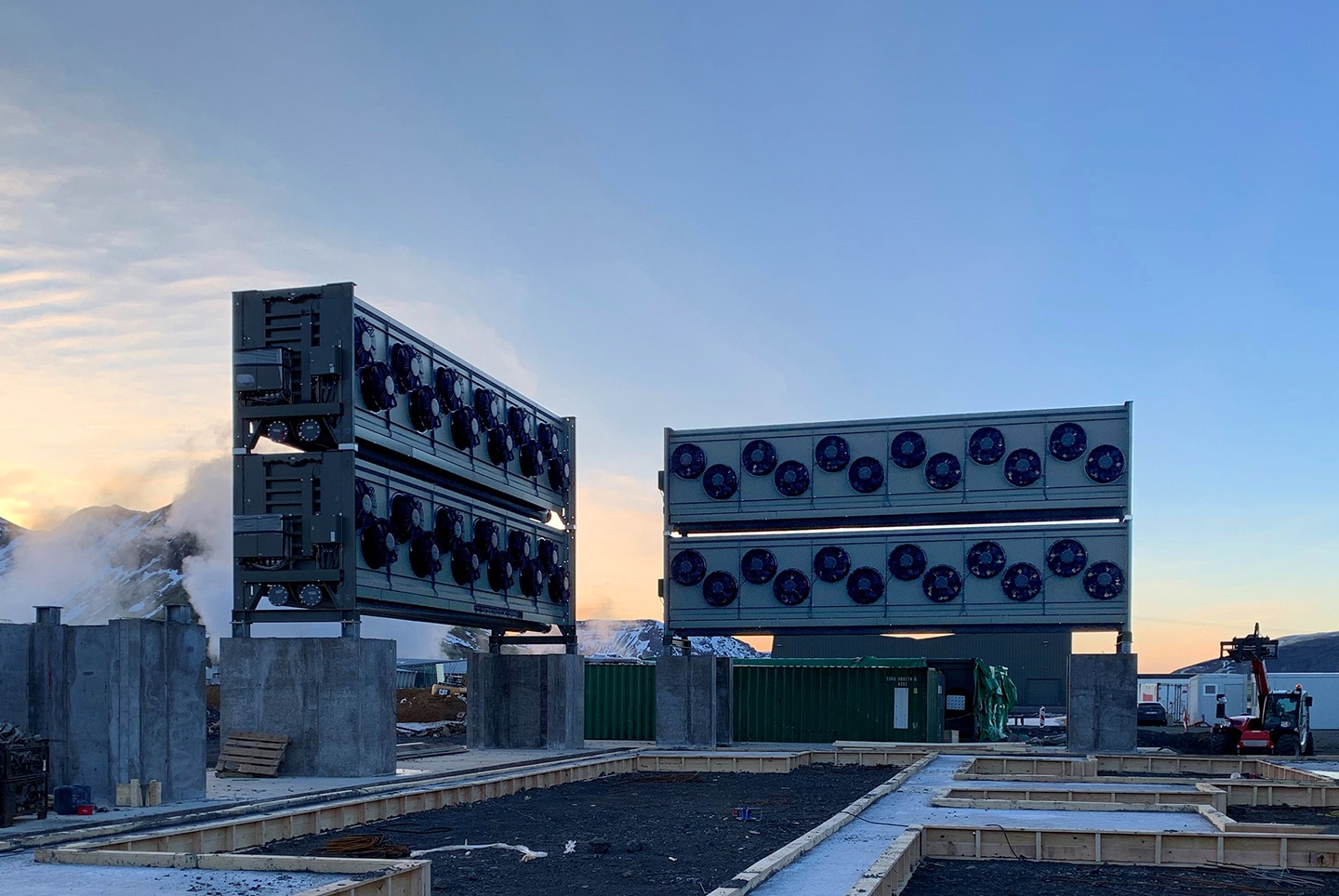
The winners in this integrity-focused landscape are clear. Direct air capture (DAC), bioenergy carbon capture and storage (BECCS), and carbon capture and storage (CCS) projects are emerging as market favorites.
Winners in the High-Integrity Market
- Direct Air Capture: Expected to capture 21% of available supply by 2050
- BECCS projects: Leading the carbon removal market with measurable results
- Industrial CCS: Gaining traction with corporate buyers seeking verifiable credits
- Enhanced natural solutions: Nature-based projects with robust monitoring
Unlike traditional offset projects that often struggle with additionality questions, technology-based removals offer measurable, permanent carbon sequestration. Corporate buyers are willing to pay premium prices for this certainty.

"We need to use all the tools at our disposal creatively and efficiently to meet the challenges of climate change."
Janet Yellen, U.S. Treasury Secretary
U.S. Projects Positioned for Leadership
American carbon removal projects are uniquely positioned to capitalize on this integrity shift. The combination of technological innovation, regulatory clarity, and corporate demand creates a perfect storm for U.S. leadership.
>> In Other News: French Firm Teams Up With JetZero on Hydrogen-powered Flight
Key U.S. Market Advantages
- Texas DAC hub: Leveraging existing infrastructure and geological formations
- Gulf Coast CCS corridor: Industrial clusters with proven storage capacity
- Midwest BECCS potential: Agricultural waste streams meeting carbon removal technology
- Federal policy support: Tax incentives and regulatory frameworks favoring high-integrity projects
The U.S. Department of Energy's commitment to carbon management technologies provides the regulatory backbone these projects need. Meanwhile, corporate sustainability mandates are creating consistent demand for verified removals.
| Technology | Current Cost ($/tCO2) | 2030 Projection | U.S. Advantage |
|---|---|---|---|
| Direct air capture | $600-1000 | $300-500 | Tech leadership |
| BECCS | $100-200 | $80-150 | Biomass availability |
| Industrial CCS | $50-100 | $40-80 | Storage geology |
Economic Signals Drive Investment
The market's pivot toward integrity is creating clear price signals. Top market analysts predict that in 2025, the carbon market will shift. It will emphasize credible, high-integrity solutions. This change will create a stronger, more reliable system for achieving climate goals.
Corporate buyers are increasingly willing to pay premium prices for verified, permanent carbon removal. This shift is fundamentally changing investment patterns across the industry.

"Build integrity and scale will follow: we aim to create a high-integrity voluntary carbon market that accelerates a just transition to 1.5°C."
Integrity Council for Voluntary Carbon Market
Investment Implications
The integrity reset is redirecting capital flows toward projects with stronger fundamentals:
- Technology developers: Companies building DAC, BECCS, and CCS solutions
- Project developers: Organizations with proven track records in verification
- Monitoring services: Firms providing measurement, reporting, and verification (MRV)
- Infrastructure players: Companies building CO2 transport and storage networks
The voluntary carbon credit market size exceeded USD 1.7 billion in 2024 and is estimated to grow at a CAGR of 25% from 2025 to 2034, driven by the rising biodiversity and conservation goals. This growth is being driven by quality rather than quantity.
Beyond Volume: Building Credible Climate Finance
The carbon credit market's evolution from volume-focused to integrity-driven represents more than a market correction. It signals the maturation of climate finance as a serious tool for decarbonization.
This transformation creates opportunities for U.S. projects to lead globally. American companies combining technological innovation with rigorous verification standards are positioned to capture premium market segments.
The reset may result in a smaller overall market in the near term, but the foundation being built now supports sustainable, scalable climate action. For investors and project developers focused on long-term value creation, the integrity-first approach offers a clearer path to both environmental impact and financial returns.
Subscribe to the newsletter
Daily decarbonization data and news delivered to your inbox
Follow the money flow of climate, technology, and energy investments to uncover new opportunities and jobs.
Latest issues
-
Oil Sands Alliance Faces $43.7 Billion Price Tag
Inside This Issue 🍁 Alberta Cuts Carbon Costs to Fast-Track Pathways CCS 🏛️ EU Unveils Sweeping ETS Overhaul With €100 Billion Industrial Decarbonisation Bank 🌱 Consultation: Major Revision to Bio...
-
Wall Street Pours $1.7B Into Fuel Cells for AI
Inside This Issue 🔋 IDF, Oaktree to Invest $1.7 Billion in Bloom Energy Fuel Cells for AI Infrastructure 🌬️ Airhive Acquires Carbyon, Creating a European Leader in Low-Cost Direct Air Capture Tech...
-
AI Data Centers Just Went Hydrogen, Bosch Is In
Inside This Issue ⚡ ECL and PowerCell Announce 300 MW+ Hydrogen Power Strategic Partnership for AI Data Centers, Supported by Bosch 🍁 Canada, Alberta Ease TIER Carbon Rules to Fast-Track Pathways ...
Company Announcements
-
JERA Co., Inc. (JERA), a global energy leader and Japan's largest power generation company, today announced that it has signed a Memorandum of Understanding (MoU) with Samsung C&T Corporation (...
-
ZeroAvia and Safran Forge Partnership on Hydrogen-Electric Technologies
ZeroAvia and Safran have announced the launch of a collaboration dedicated to hydrogen-electric propulsion technologies for aviation. This partnership combines ZeroAvia’s cutting-edge expertise in ...
-
Clean Fuels Welcomes Hawaii Clean Fuel Standard for Alternative Fuels
JEFFERSON CITY, MO, Clean Fuels Alliance America applauds Hawaii Governor Josh Green, M.D., for signing legislation to create a clean fuel standard for the State of Hawaii. This new law will help d...
-
Air Liquide Invests Over 160M USD in the U.S. to Supply Advanced Chips Manufacturing in Arizona
Air Liquide announces a new investment of over 160 million US dollars to build, own and operate a new large-scale production facility in Arizona to supply essential ultra-high purity gases to the l...