
The next wave of carbon capture might come from something far less glamorous than a mega-project, and far more repeatable: the gas compressor stations that dot North America's pipeline network by the thousands.
CarbonQuest, a distributed carbon capture technology provider based in Spokane, Washington, has secured its first contract in Canada to install its modular DCCS™ system on a natural gas compressor at Tourmaline Oil's Banshee facility near Edson, Alberta. The project also marks CarbonQuest's first deployment on compression engines of any kind.
That matters because the U.S. alone has more than 5,400 natural gas compressor stations. If this technology proves viable on one, the template could apply to thousands more.
>> In Other News: CADO, 123Carbon, and Assure SAF Registry Join Forces to Tackle SAF Integrity Gaps
What the Project Actually Involves
CarbonQuest is partnering with Canadian firm Cielo Carbon Solutions and New Zealand-based Captivate Technology on the deployment. The project brings three firsts: CarbonQuest's first Canadian project, its first application on compression engines, and the first integration of Captivate's metal-organic framework (MOF) adsorbents into a CarbonQuest unit.
MOF materials are gaining traction in carbon capture for their ability to selectively trap CO2 with lower energy requirements than traditional sorbents.

"Our distributed carbon capture technology for medium-sized applications is ideally suited for natural gas compressors found at gas processing facilities. The integration of Captivate's MOF in this project and Cielo's Canadian presence is a great opportunity to expand our North American footprint."
Shane Johnson, CEO of CarbonQuest
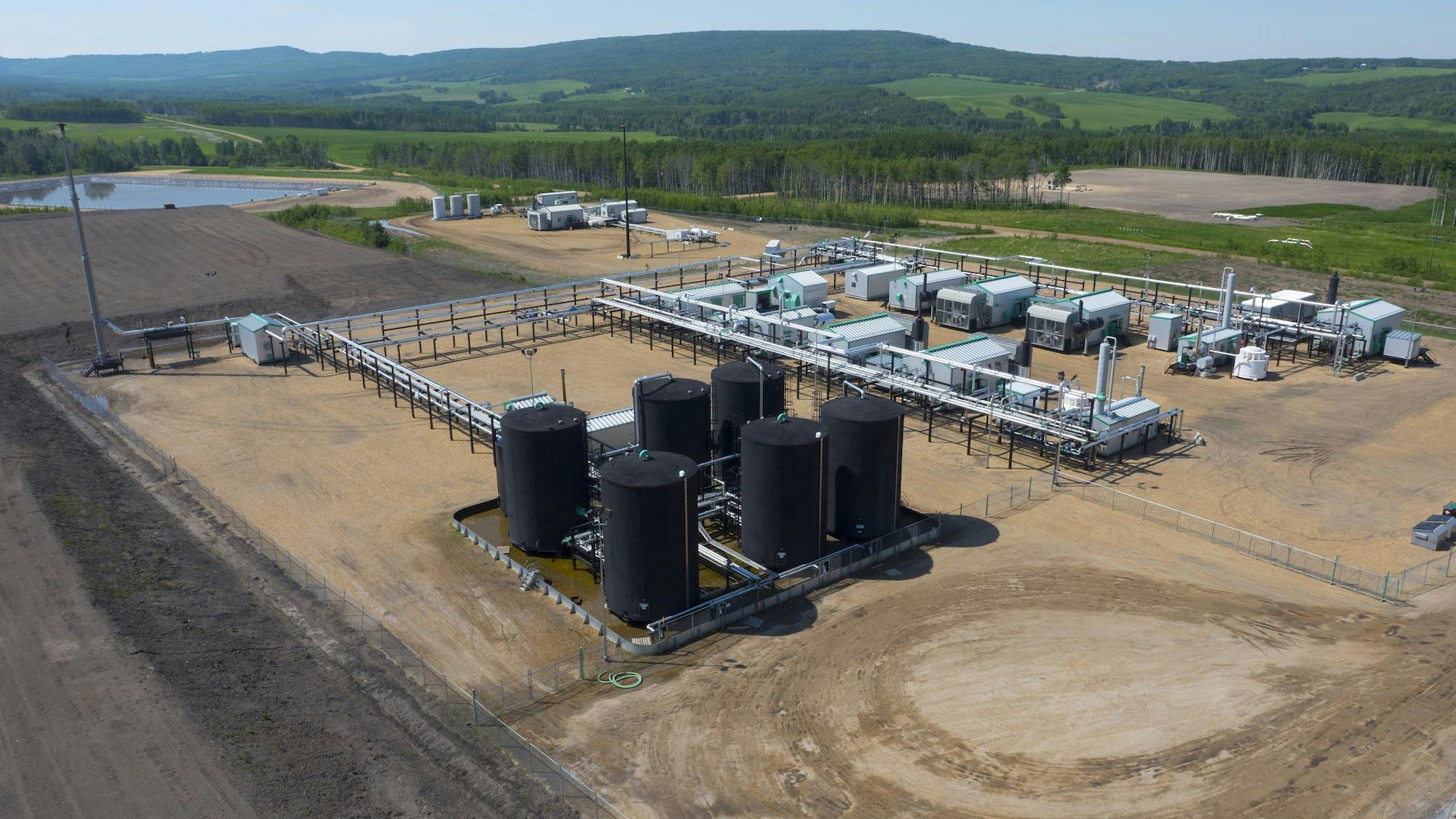
Over the next 10 months, CarbonQuest will assemble its equipment into transportable containers at its Spokane factory before installation at the Banshee site. Once operational, the system aims to capture approximately 4 tonnes of CO2 per day, with the carbon permanently sequestered underground via Tourmaline's on-site infrastructure.

A new carbon capture initiative at Tourmaline Oil's Banshee facility in Alberta targets capturing nearly 1,500 metric tonnes of CO2 annually using innovative DCCS and MOF technology for permanent sequestration.
Why Compressors Matter More Than You Think
Natural gas compressors are the workhorses of the pipeline network, using gas-burning engines to push fuel through pipelines. They're everywhere, yet these mid-scale emission sources are rarely addressed by large, centralized CCS projects.
CarbonQuest is making a deliberate bet on this gap. Rather than chasing massive installations, the company is targeting distributed, modular carbon capture at a scale that can be replicated quickly. Its first boiler installations in New York City captured about 1,000 metric tonnes per year. This compressor project bumps that to 1,500 metric tonnes, expanding the technology into engine applications.
>> RELATED: CarbonQuest and Daroga Power Partner to Offer Low-Carbon Fuel Cell Solution
The potential market extends beyond pipelines. The same gas-burning engines that power compressors also serve university campuses, hospitals, and AI data centers generating their own electricity behind the meter.
Alberta Puts Money Behind It
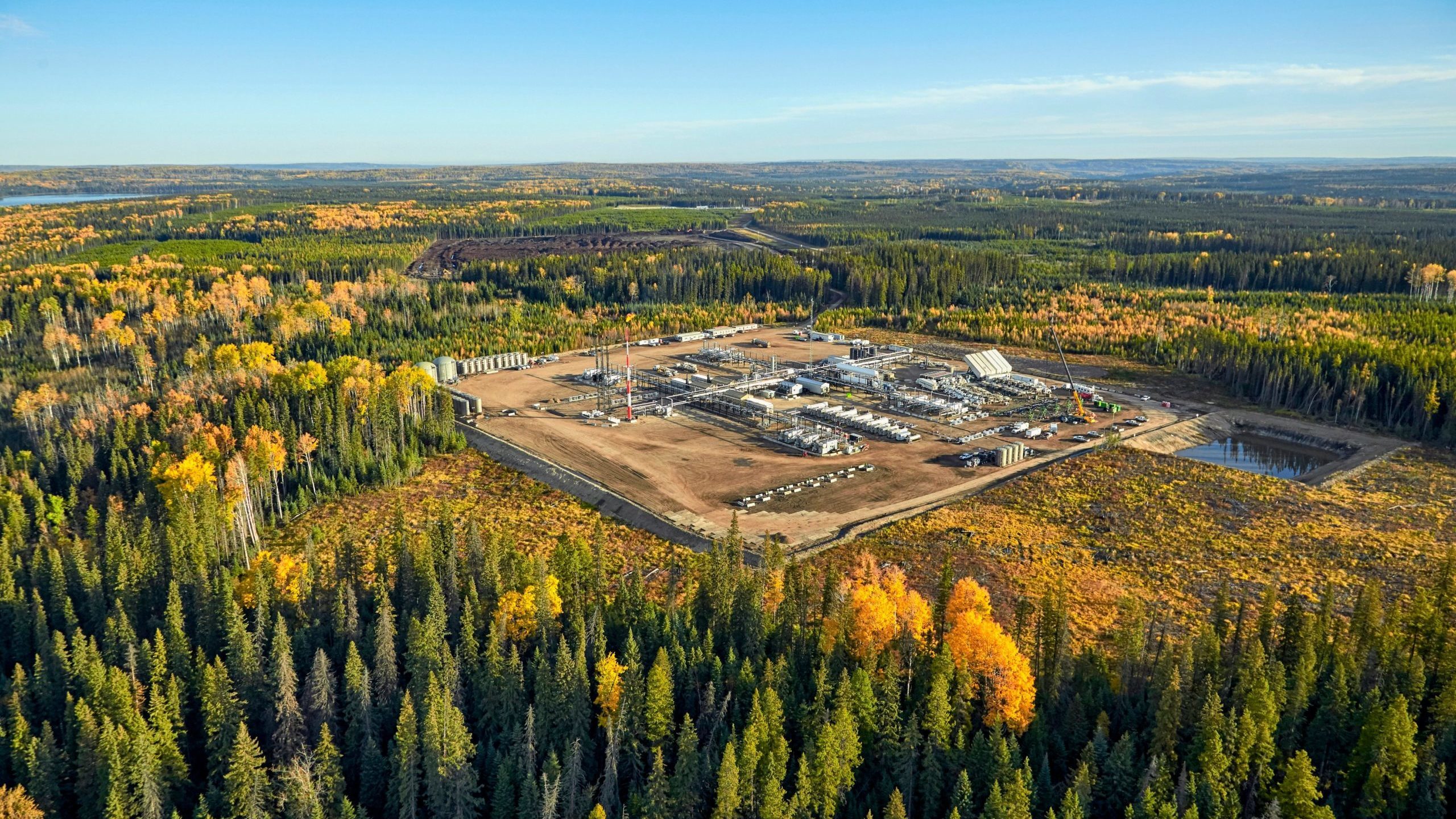
Half the project's C$4.1 million budget comes from the Alberta government, through Emissions Reductions Alberta and the Natural Gas Innovation Fund. That's a strong signal that Alberta continues to back carbon capture at the provincial level.
Tourmaline has been advancing CCS initiatives since 2021 to lower emissions intensity. As Canada's largest natural gas producer, its decision to pilot distributed capture sends a clear market signal.
"Now is the time to develop our natural gas assets and pursue Canada's natural gas opportunity. Not only is Canada's geographic position beneficial for exports to international markets, but we also have an abundant supply of lower-carbon-intensity natural gas to share."
Scott Volk, Director of Emissions and Innovation, Tourmaline
The MOF Factor
Metal-organic frameworks are crystalline materials with nanoscale pores that act like molecular sponges for CO2. They've shown great promise in research, but commercial deployment has been limited. This project tests Captivate's MOF alongside a commercial zeolite baseline inside CarbonQuest's adsorbent-agnostic VPSA system.

This overview highlights CarbonQuest's key carbon capture milestones, from NYC boiler installations and food & beverage market entry to their new Carbon Capture-as-a-Service model and an upcoming compressor project.
The Bigger Play
The real story here isn't one compressor station in Alberta. It's the deployment pathway. If CarbonQuest can prove reliable capture on a Tourmaline engine, the same containerized system could ship to industrial facilities, data centers, and campus power systems across the continent.
The company is already working to close fully commercial deals for compression engines in the U.S. With Alberta's growing sequestration infrastructure, the ground is ready. Sometimes the fastest path to real emissions reductions isn't the biggest project in the room. It's the one you can copy a hundred times over.
Subscribe to the newsletter
Daily decarbonization data and news delivered to your inbox
Follow the money flow of climate, technology, and energy investments to uncover new opportunities and jobs.
Companies

Latest issues
-
113 CCS Projects: What's Driving the Surge?
Inside This Issue 🏭 Global CCS Hits 113 Projects as Americas Lead Capacity 💰 We're Moving $2M+ to Climate Solutions 💧 China Launches World's First Semi-submersible Offshore Wind-to-hydrogen Platfo...
-
Why Is Wyoming Giving 650,000 Acres to Carbon Storage?
Inside This Issue 🪨 Inside Blm's 650,000-Acre Bet on Wyoming Carbon Storage 🏭 California Advances Carbon Capture and Removal Regulations Under SB 905 ⚡ Why a Japanese Power Giant Is Betting on Den...
-
Colorado Joins the 7-State CCS Permit Fast Lane
Inside This Issue ⚖️ Colorado Takes Over Class VI Permits: What Changes for CCS? 🏭 Hebei Shoulang Facility Using LanzaTech Technology Achieves World’s First ISCC EU RCF Certification for Ethanol P...
Company Announcements
-
A consortium led by Novacium, together with Axel’One and AD-VENTA, has secured funding from the Defence Innovation Agency (AID) and the Directorate General of Armaments (DGA) under the RAPID progr...
-
Video: The Next Chapter https://youtu.be/LUIHqS35rMg Led by John Douglas, whose development experience includes the $8 billion Champlain Hudson Power Express, the collaboration brings major Nort...
-
Emvolon Raises $22 Million Funding Round to Launch Its Modular, Waste-to-Fuel Chemical Plants
Following its recent offtake agreement and increased commercial demand, Emvolon raises Series A and non-dilutive federal and state grants to launch first commercial system and adds industry growth ...
-
Puro.earth Expands DACCS Certification With CCS+ Methodologies
Puro.earth has published its CCS+ methodology documents, with direct air capture and geological storage (DACCS) as the first activity type implemented under its CCS+ Program. Puro.earth’s multi-pr...