
Colorado just changed how it backs sustainable aviation fuel. Governor Jared Polis signed House Bill 26-1289 on June 3, 2026, creating a new tax credit for SAF purchases. The bill also repeals the state's existing credit for SAF facility construction, marking a shift from supporting production to rewarding demand.
Key Facts
- Colorado Governor Jared Polis signed HB 26-1289 on June 3, 2026
- The bill creates a SAF purchase tax credit of at least $1.50 per gallon starting January 1, 2027
- The credit rises by one cent for every whole percentage of carbon intensity reduction above 50 percent
- Total credits are capped at $3 million per tax year through 2032
- The bill repeals the existing SAF production facility tax credit effective January 1, 2027
>> In Other News: [x](x)
What Does HB 26-1289 Actually Change for SAF?
HB 26-1289 swaps a supply-side incentive for a demand-side one. The bill repeals Colorado's sustainable aviation fuel production facility tax credit, effective January 1, 2027.
That production credit had offered qualified taxpayers a percentage of construction costs for building SAF production facilities in the state, with rates stepping down from 30 percent for projects starting before 2027 to 12 percent for projects beginning after 2029.
In its place, the new law creates the sustainable aviation fuel purchase income tax credit, rewarding the people and companies who buy SAF for use in Colorado rather than the facilities that make it. It's a deliberate trade, not a simple expansion. Lawmakers chose to fund purchase incentives by ending construction incentives rather than layering one on top of the other.

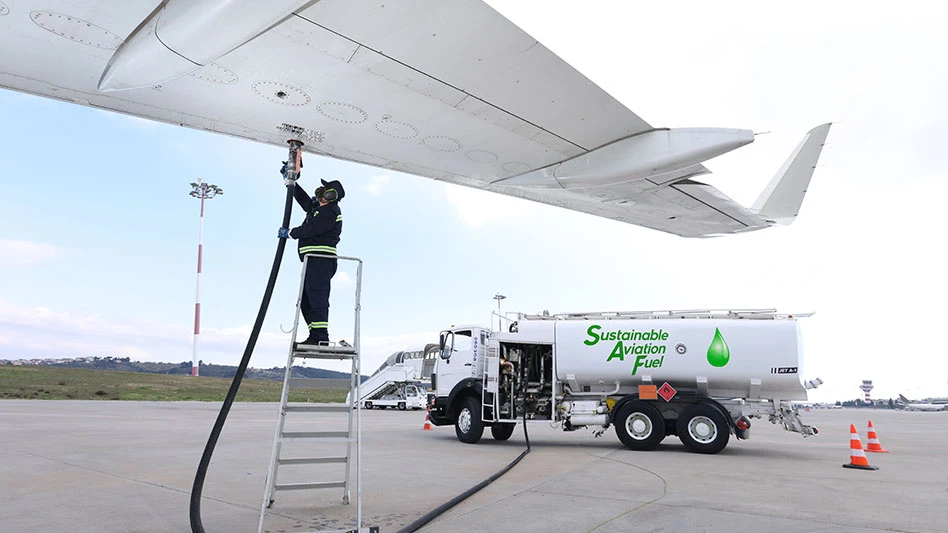
Colorado’s new SAF purchase credit starts at $1.50 per gallon and increases as carbon intensity reductions rise above 50%.
How Much is the New SAF Purchase Credit Worth?
The credit starts at $1.50 per gallon of SAF purchased for use in Colorado, for tax years beginning January 1, 2027 through December 31, 2032.
The amount climbs with environmental performance. For every whole percentage point that a fuel's carbon intensity reduction exceeds 50 percent, the credit gains one cent per gallon. A blend with a 60 percent reduction would earn roughly $1.60 per gallon, ten cents above the base rate.
Starting in 2028, the Colorado Energy Office can approve an additional 50 cents per gallon when the SAF was both produced and purchased for use in the state. The buyer claims this bonus, not the producer, but it makes in-state SAF more attractive to buy.
Caps and Refundability
Total credits issued cannot exceed $3 million per tax year. Buyers must apply to the Colorado Energy Office for a tax credit certificate before purchasing fuel, and the office verifies eligibility before reserving any credit.
The credit is refundable, so buyers receive the value even if it exceeds their tax liability. It cannot be carried forward into future tax years.
"At the end of the day, tightening up ineffective tax laws to continue impactful tax credits for working families is an easy choice."
Mike Weissman, Colorado State Senator and bill sponsor
Why Move From Production Credits to Purchase Credits?
Colorado's choice reflects a broader question states are weighing as SAF policy matures nationally. Production credits help facilities get built, but they don't guarantee anyone buys the fuel once it exists. Purchase credits work the other direction, lowering the cost gap between SAF and conventional jet fuel for airlines and fuel buyers.
>> RELATED: The Credit That Refused to Die: 45Q's New Chapter
The shift lands against a federal backdrop Decarbonfuse readers know well. The federal 45Z clean fuel production credit already rewards low-carbon fuel producers nationally, which may have reduced the value of stacking a state production credit on top. Colorado is betting that buyer incentives complement federal production support more efficiently than two production-focused credits would. The federal 45Q carbon capture credit follows similar logic, rewarding measurable outcomes rather than construction alone.
Who Qualifies for the New Credit?
The credit applies to qualified taxpayers who purchase SAF for uplift and use at a Colorado airport, airfield, or airpark. Fuel loaded into a cargo tank or otherwise exported from the state doesn't count, even if it was bought in Colorado. Fuel producers and blenders are excluded from claiming the credit themselves, since it's built for buyers, not the companies making the fuel.
| Credit | Status Under HB 26-1289 |
|---|---|
| SAF production facility credit | Repealed effective January 1, 2027 |
| SAF purchase credit | New, effective January 1, 2027 through 2032 |
| Base credit value | $1.50 per gallon, rising with carbon intensity reduction |
| Annual cap | $3 million in credits per tax year |
Beyond aviation fuel, HB 26-1289 is a broader tax package. It also extends the innovative motor vehicle tax credit and creates a new geothermal energy project credit capped at $35 million through 2032. The bill also modifies the industrial clean energy tax credit's review timeline.
OMV explains how sustainable aviation fuel (SAF) is produced from renewable raw materials like used cooking oils and animal fats through advanced processing. Colorado’s new purchase tax credit under HB 26-1289 (signed June 3, 2026) aims to boost demand for low-carbon SAF like this to help decarbonize aviation.
What Does This Mean for SAF Producers Already Operating in Colorado?
Producers who already built or are building facilities under the old construction credit aren't stripped of value retroactively. The repeal applies going forward, tied to when construction begins.
For producers still planning new facilities, the calculus changes. Construction costs no longer come with a state tax offset, but the new purchase credit could increase demand once the fuel exists, especially with the 2028 stacking bonus. A buyer who purchases SAF made in Colorado for use in the state can claim both the standard credit and the 50-cent bonus, giving buyers more reason to choose in-state SAF production over fuel made elsewhere.
Frequently Asked Questions
When does the new Colorado SAF purchase credit take effect?
The credit applies to tax years beginning on or after January 1, 2027, and runs through December 31, 2032.
Does the credit apply to SAF used outside Colorado?
No. Fuel must be delivered to and used at a Colorado airport, airfield, or airpark. Fuel exported from the state in a cargo tank does not qualify.
Do SAF producers get any benefit under the new law?
SAF producers and blenders cannot claim the purchase credit themselves. Starting in 2028, buyers who purchase SAF made in Colorado for use in the state may claim an extra 50 cents per gallon. That bonus can make in-state fuel more attractive to buyers.
This trade-off is worth watching as other states weigh their own stacked incentive strategies for clean fuel and carbon projects. Colorado is testing whether demand-side support can move the market further than supply-side construction credits did alone. The next few years of credit uptake data will show whether the bet pays off.
For ongoing coverage of carbon removal, BECCS, and corporate CDR procurement, subscribe to Decarbonfuse.com.
Subscribe to the newsletter
Daily decarbonization data and news delivered to your inbox
Follow the money flow of climate, technology, and energy investments to uncover new opportunities and jobs.
Latest issues
-
The US Hasn't Made Heavy Water Since 1982
Inside This Issue ⚛️ Aternium Completes FEED Studies for US Hydrogen, Heavy Water Project 🐄 Google, McKinsey Strike Brazil Carbon Removal Deal With Silvopasture Project 🔧 Cummins Selects Stargate ...
-
Why Colorado’s Koloma Has Japan’s Largest Utility Hooked
Inside This Issue ⚡ JERA Invests in Koloma to Explore Natural Hydrogen as a Future Low-Carbon Energy 🔬 New CATF Tool Provides Framework for Self-Assessment and Strengthening of Biomass Carbon Remo...
-
LNK Energies Targets $6.50 Hydrogen With No Federal Subsidies
Inside This Issue 🚛 MIT Startup Says It Can Turn Diesel Trucks Into Cheaper Hydrogen Haulers, See It at Disrupt 🏭 Baytown City Council Briefs: ExxonMobil Blue Hydrogen Agreement Approved 🌎 Colorad...
Company Announcements
-
A new interactive tool from Clean Air Task Force (CATF) provides a practical framework for the self-assessment and strengthening of biomass carbon removal (BiCRS) protocols to help ensure that carb...
-
LanzaJet Secures Financing to Scale SAF Production and Supply Global Customers
CHICAGO, Oct. 15, 2026 (GLOBE NEWSWIRE) -- LanzaJet, Inc., a leading next-gen fuels technology company and fuels producer, today announced fully committed new financing of at least $20 million to s...
-
44.01 and Frontier Advance Permanent CO₂ Storage Through In-Situ Mineralization
44.01's in-situ mineralization (ISM) process turns CO₂ into solid rock underground in a few years, after which the risk of reversal is functionally zero. >> In Other News: JERA Invests in ...
-
JERA Invests in Koloma to Explore Natural Hydrogen as a Future Low-Carbon Energy
JERA Co., Inc. (JERA), through its corporate venture capital arm JERA Ventures, has invested in Koloma, Inc. (Koloma), a U.S.-based natural hydrogen exploration and development company. The invest...