
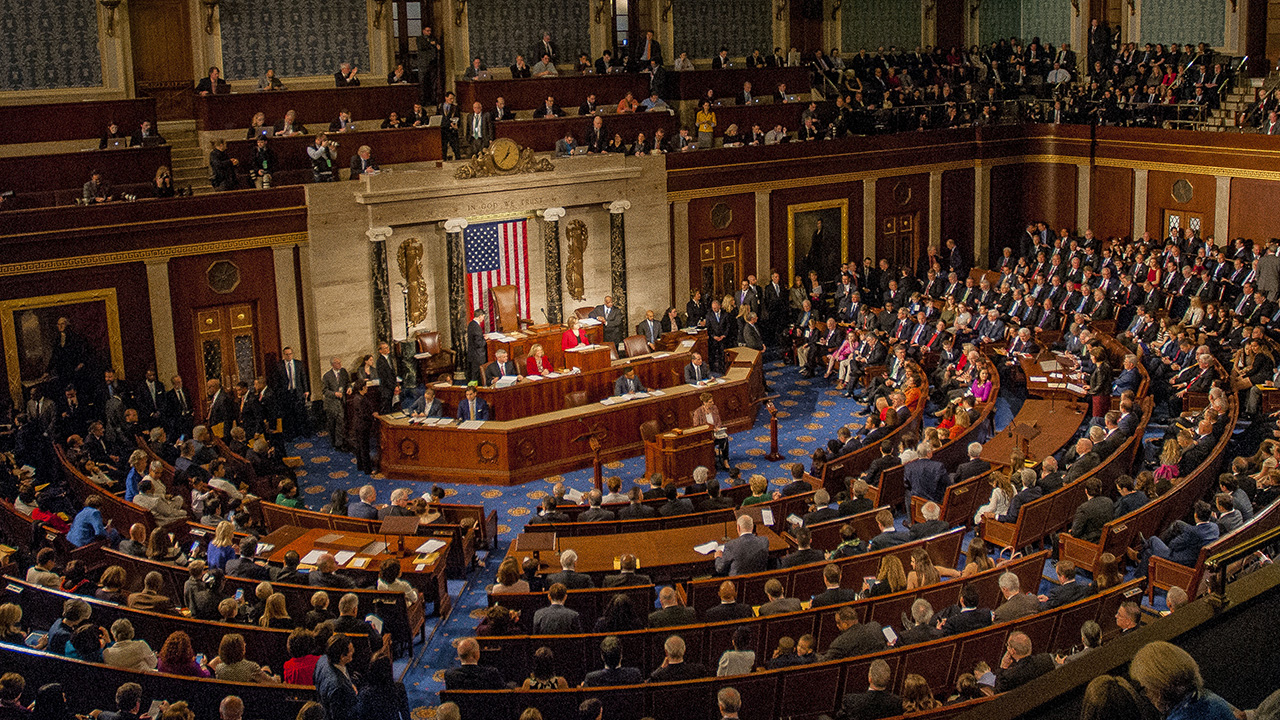
Congress has passed a fiscal year 2026 appropriations minibus funding package covering several federal departments, including energy and climate programs. The package passed the Senate 82–15 and the House 397–28 and now heads to President Trump’s desk ahead of the January 31 funding deadline.
Funding levels in the final legislation differ in some cases from amounts proposed earlier in the Senate’s FY26 Energy and Water bill.
The legislation marks a significant departure from the Trump administration's proposed budget, which called for deep cuts to the Department of Energy's clean energy research programs. While the White House sought to slash energy R&D spending by 32.5%, Congress trimmed cuts to just 2.6%, signaling that lawmakers on both sides of the aisle view carbon management as essential infrastructure for America's energy future.
>> In Other News: Iowa House Passes Bill Undercutting Infrastructure Critical to Ethanol and Agriculture
What the Bill Delivers for Carbon Management
Final enacted funding levels reflect the negotiated FY26 minibus package and do not fully match earlier Senate Energy and Water proposals.
The DOE's Office of Fossil Energy will receive $720 million in total funding, with targeted allocations across the carbon management value chain. This represents a meaningful commitment to technologies that are already driving $77.5 billion in private investment across more than 270 announced projects nationwide.

Key funding allocations for carbon management in the fiscal year 2026 appropriations bill.
For direct air capture developers and carbon storage operators, the bill also maintains $5 million for Class VI injection well permitting at the EPA, along with $1.2 million for regulator training. This funding is critical for expanding the permitting capacity needed to deploy permanent carbon storage at scale.
>> RELATED: IEA Report Highlights: A New Era of Carbon Capture Momentum

"Nearly every line item in the appropriations bill for DOE is higher than what was in the President's budget request. EERE, which no longer even exists in the org chart, still got more than $3 billion in funding, which I think is an example of Congress working to assert its power over the purse."
Brad Townsend, Vice President for U.S. Policy and Outreach, Center for Climate and Energy Solutions
Congress Reasserts Constitutional Authority
The overwhelming vote margins reflect something deeper than budget numbers. Lawmakers are asserting their constitutional role in directing federal spending, particularly on energy innovation that supports domestic manufacturing and clean hydrogen infrastructure.
The bill includes an important provision preventing DOE from terminating federal awards simply because they "no longer effectuate program goals or agency priorities." This language provides some protection for existing grant recipients, though it does not restore awards already canceled or cover Inflation Reduction Act funding.

"This is a major victory for getting back to regular order in the United States Senate. This bill prioritizes the safety of our nation, our highest priority, boosts economic growth, it maintains our competitive edge by prioritizing things that really matter."
Senator Kevin Cramer (R-ND), Member of the Senate Appropriations Committee
Strategic Trade-offs in Energy Investment
The legislation does include some reallocations. Notably, $1.5 billion in unobligated CIFIA program funds will be redirected to support nuclear technologies through the Advanced Reactor Deployment Program.
The Carbon Capture Coalition noted this reallocation, though they emphasized that core R&D funding for carbon management technologies remains largely intact.
| Funding Category | White House Request | Enacted FY26 Minibus |
|---|---|---|
| Office of Nuclear Energy | $1.45B | $1.785B (+23.5%) |
| EERE Total | $880M | $3.1B |
| Office of Fossil Energy | Not specified | $720M |
| Office of Science | Not specified | $8.4B |
Note: Enacted funding levels reflect the final FY26 minibus and differ from earlier Senate Energy and Water proposals.
What This Means for Industry
For developers working on 45Q-eligible projects, the appropriations bill provides welcome stability. Combined with the tax credits preserved in last summer's One Big Beautiful Bill Act, the policy framework supporting carbon capture remains broadly intact.
States like Louisiana, Texas, and North Dakota continue advancing major carbon storage hubs, supported by both federal R&D funding and the 45Q tax credit structure that makes commercial deployment economically viable.
Carbon Management's Political Durability
The bipartisan nature of this vote underscores something industry observers have noted for years: carbon management technologies enjoy support that cuts across traditional political divides. Projects in hydrogen hubs and carbon storage infrastructure are creating jobs in both red and blue states.
With funding secured through FY26, the next challenge will be execution. Industry stakeholders and lawmakers alike will be watching to ensure these investments translate into operational projects and continued American leadership in global carbon management.
**Editor’s Note: This article has been updated to clarify the distinction between Senate FY26 appropriations proposals and the final enacted minibus spending package.
Subscribe to the newsletter
Daily decarbonization data and news delivered to your inbox
Follow the money flow of climate, technology, and energy investments to uncover new opportunities and jobs.
Latest issues
-
113 CCS Projects: What's Driving the Surge?
Inside This Issue 🏭 Global CCS Hits 113 Projects as Americas Lead Capacity 💰 We're Moving $2M+ to Climate Solutions 💧 China Launches World's First Semi-submersible Offshore Wind-to-hydrogen Platfo...
-
Why Is Wyoming Giving 650,000 Acres to Carbon Storage?
Inside This Issue 🪨 Inside Blm's 650,000-Acre Bet on Wyoming Carbon Storage 🏭 California Advances Carbon Capture and Removal Regulations Under SB 905 ⚡ Why a Japanese Power Giant Is Betting on Den...
-
Colorado Joins the 7-State CCS Permit Fast Lane
Inside This Issue ⚖️ Colorado Takes Over Class VI Permits: What Changes for CCS? 🏭 Hebei Shoulang Facility Using LanzaTech Technology Achieves World’s First ISCC EU RCF Certification for Ethanol P...
Company Announcements
-
A consortium led by Novacium, together with Axel’One and AD-VENTA, has secured funding from the Defence Innovation Agency (AID) and the Directorate General of Armaments (DGA) under the RAPID progr...
-
Video: The Next Chapter https://youtu.be/LUIHqS35rMg Led by John Douglas, whose development experience includes the $8 billion Champlain Hudson Power Express, the collaboration brings major Nort...
-
Emvolon Raises $22 Million Funding Round to Launch Its Modular, Waste-to-Fuel Chemical Plants
Following its recent offtake agreement and increased commercial demand, Emvolon raises Series A and non-dilutive federal and state grants to launch first commercial system and adds industry growth ...
-
Puro.earth Expands DACCS Certification With CCS+ Methodologies
Puro.earth has published its CCS+ methodology documents, with direct air capture and geological storage (DACCS) as the first activity type implemented under its CCS+ Program. Puro.earth’s multi-pr...