
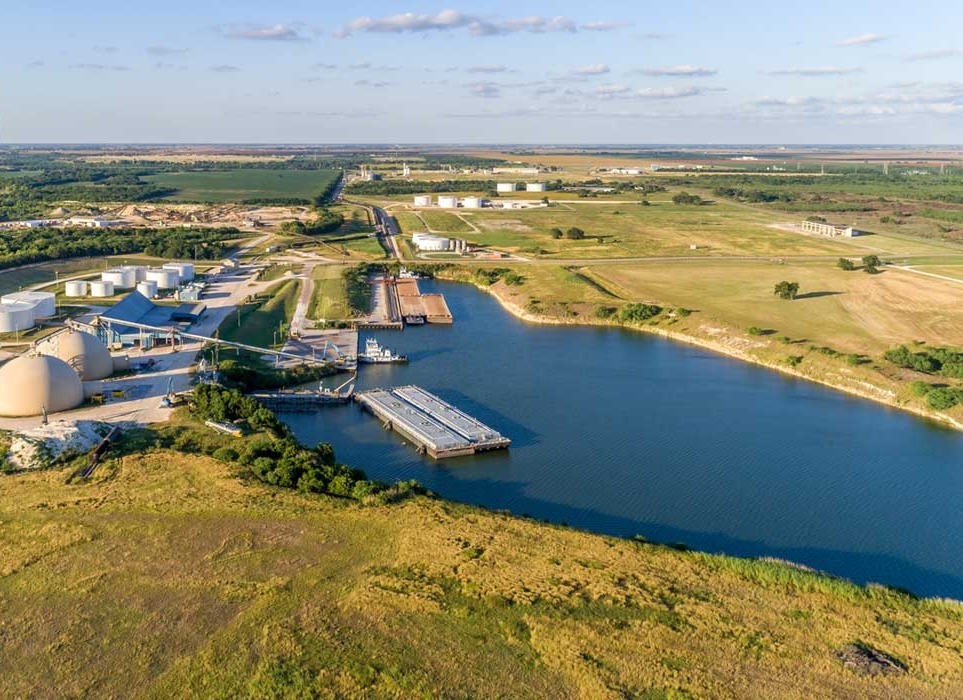
First Ammonia says its 2026 final investment decision is still on track, even after Danish technology company Topsoe terminated a 100 MW electrolyzer supply agreement for its Port of Victoria, Texas project on March 26, 2026. The split puts supplier risk in the green ammonia space squarely in the spotlight, and how quickly First Ammonia secures a new supplier will determine whether that confidence holds.
>> In Other News: History Written As CCS Technology Starts Operating On Board FPSO
Why did Topsoe walk away from the deal?
The two companies go back to September 2022, when they announced the world's largest-ever electrolyzer reservation agreement, covering up to 5 GW of solid oxide electrolysis cell (SOEC) technology. Formal supply and service agreements covering the first 100 MW of SOEC modules were signed in 2024, kicking off fabrication at Topsoe's factory in Herning, Denmark.
By March 26, 2026, it was over. Topsoe cited missed project milestones as the reason, noting it had extended deadlines multiple times at First Ammonia's request before pulling out. Topsoe also confirmed it is conducting a broader review of its SOEC technology at industrial scale, expected to conclude by the end of Q2 2026, while remaining committed to a separate 50 MW offtake agreement with Forestal (pv-magazine, March 2026).
First Ammonia pushed back firmly on that framing, arguing that the supplier exit will not affect its FID schedule this year.
Key Facts
- Topsoe terminated 100 MW SOEC supply agreements with First Ammonia on March 26, 2026, citing missed project milestones (pv-magazine, March 2026)
- First Ammonia's Port of Victoria project targets an initial production capacity of 300 metric tons per day of electric ammonia (Worley/First Ammonia, January 2025)
- Each 100 MW module avoids an estimated 180,000 to 240,000 metric tons of CO2 per year compared to grey ammonia (First Ammonia/Uniper, October 2023)
- 2.2 million metric tons per annum of active low-carbon hydrogen capacity across 460+ projects globally as of February 2026, compared to just 104 projects in 2020 (GlobalData, February 2026)
- 82.3 million metric tons per annum of total global hydrogen production capacity could be reached by 2030, with only 2% currently operational (GlobalData, 2026)
- FID is targeted for 2026, with commercial operation planned for 2027 (Worley/First Ammonia, January 2025)
Is First Ammonia's 2026 FID still realistic?
The project has real structural groundwork behind it. The Texas Commission on Environmental Quality issued a draft air permit for the Port of Victoria facility in March 2025, confirming that projected emissions fall within state and federal standards. In January 2025, Worley was awarded the FEED contract for the facility, with a completion target of Q1 2025. Notably, construction had been expected to begin in 2025, but the Topsoe termination means that timeline has shifted.
On the commercial side, German energy major Uniper has been an official project partner since October 2023, lined up to purchase green ammonia for industrial customers in North America and Europe. A Series B funding round from Mercuria Holdings and Tokyo-based Manies Group has been committed toward advancing the project to FID.
Worth noting: First Ammonia originally targeted FID for mid-2024, then pushed it to 2026. The Topsoe exit adds pressure on an already delayed timeline.

"Clean ammonia is essential in reducing emissions across hard-to-abate sectors, and Worley's capabilities are vital for enabling decentralized, electric ammonia production."
Joel Moser, CEO, First Ammonia (January 2025)
>> RELATED: 14 Green Hydrogen Projects Reshaping America's Energy Future
What does the supplier pivot mean for the project's design?
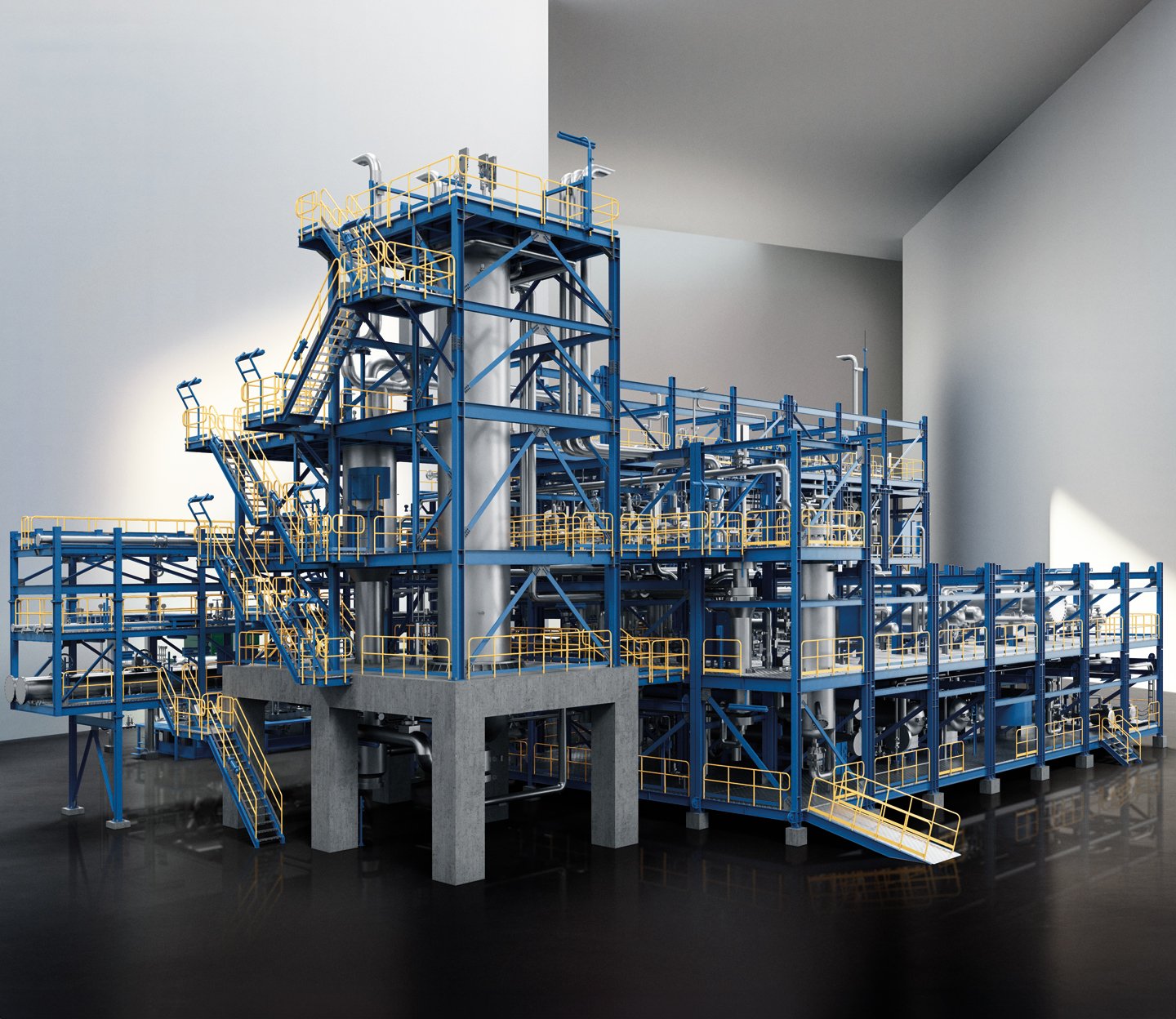
First Ammonia's design was built specifically around SOEC technology. Waste heat from the ammonia synthesis loop feeds back into the electrolysis process, cutting electricity consumption compared to conventional PEM or alkaline systems. That efficiency advantage is central to the project's cost model.
Finding a direct replacement will take time. First Ammonia has not yet named a new electrolyzer supplier, and that announcement will be the clearest signal the market watches. Meanwhile, Topsoe's SOEC industrial-scale review, due by end of Q2 2026, could also reshape which supplier options are realistically available.
| Electrolyzer Type | Key Advantage | Ammonia Integration |
|---|---|---|
| SOEC (Solid Oxide) | Highest efficiency via waste heat integration; 30% more energy efficient than conventional electrolyzers | Optimal, designed into First Ammonia's process |
| PEM (Proton Exchange Membrane) | Fast response to variable renewables; commercially proven at scale | Compatible but no heat integration benefit |
| Alkaline | Lowest cost at large scale; mature technology | Compatible with standard integration |
How big is the green ammonia opportunity at stake?
The commercial case for this project remains compelling. Each 100 MW module at Port of Victoria would produce up to 100,000 metric tons of green ammonia annually, avoiding 180,000 to 240,000 metric tons of CO2 compared to conventional grey ammonia production (First Ammonia/Uniper, October 2023). At full buildout, First Ammonia has outlined potential capacity of 5 million metric tons per year by 2035.

"We want to prove that a modular approach to building green ammonia plants is not only possible, but optimal."
Kevin Barnes, Global Head of Construction and Technology, First Ammonia
The sector is growing fast. 2.2 million metric tons per annum of active low-carbon hydrogen capacity was operational globally as of February 2026, across 460+ projects (GlobalData, February 2026). That number was just 104 projects in 2020. Total global hydrogen production capacity could reach 82.3 million metric tons per annum by 2030, though only 2% is currently operational (GlobalData, 2026).
What comes next for First Ammonia?
Three signals matter most over the coming months. First: a new electrolyzer supplier announcement, and whether it preserves the SOEC-based heat integration that was central to the project's efficiency case. Second: whether First Ammonia can formalize that new supplier relationship quickly enough to keep the 2026 FID window open. Third: the outcome of Topsoe's SOEC industrial-scale review in Q2 2026, which could affect the broader supplier landscape.
The green ammonia industry needs projects like Port of Victoria to succeed. First Ammonia has the permits, the FEED, the offtake partner, and the funding foundation. The supplier pivot is a real setback, but the project's underlying foundations remain intact. The next announcement will tell us how much ground was actually lost.
Subscribe to the newsletter
Daily decarbonization data and news delivered to your inbox
Follow the money flow of climate, technology, and energy investments to uncover new opportunities and jobs.
Latest issues
-
113 CCS Projects: What's Driving the Surge?
Inside This Issue 🏭 Global CCS Hits 113 Projects as Americas Lead Capacity 💰 We're Moving $2M+ to Climate Solutions 💧 China Launches World's First Semi-submersible Offshore Wind-to-hydrogen Platfo...
-
Why Is Wyoming Giving 650,000 Acres to Carbon Storage?
Inside This Issue 🪨 Inside Blm's 650,000-Acre Bet on Wyoming Carbon Storage 🏭 California Advances Carbon Capture and Removal Regulations Under SB 905 ⚡ Why a Japanese Power Giant Is Betting on Den...
-
Colorado Joins the 7-State CCS Permit Fast Lane
Inside This Issue ⚖️ Colorado Takes Over Class VI Permits: What Changes for CCS? 🏭 Hebei Shoulang Facility Using LanzaTech Technology Achieves World’s First ISCC EU RCF Certification for Ethanol P...
Company Announcements
-
A consortium led by Novacium, together with Axel’One and AD-VENTA, has secured funding from the Defence Innovation Agency (AID) and the Directorate General of Armaments (DGA) under the RAPID progr...
-
Video: The Next Chapter https://youtu.be/LUIHqS35rMg Led by John Douglas, whose development experience includes the $8 billion Champlain Hudson Power Express, the collaboration brings major Nort...
-
Emvolon Raises $22 Million Funding Round to Launch Its Modular, Waste-to-Fuel Chemical Plants
Following its recent offtake agreement and increased commercial demand, Emvolon raises Series A and non-dilutive federal and state grants to launch first commercial system and adds industry growth ...
-
Puro.earth Expands DACCS Certification With CCS+ Methodologies
Puro.earth has published its CCS+ methodology documents, with direct air capture and geological storage (DACCS) as the first activity type implemented under its CCS+ Program. Puro.earth’s multi-pr...