
Google has extended a long-term agreement with American Express Global Business Travel and Shell Aviation to source sustainable aviation fuel (SAF) environmental attributes. The deal uses the blockchain-powered Avelia registry and shows how corporate demand can drive SAF supply growth.
Key Facts
- SAF can reduce lifecycle greenhouse-gas emissions from aviation by up to 80 percent when substituting for conventional jet fuel.
- Avelia has injected over 64 million gallons of SAF into the fuel network at 18 airports worldwide.
- Avelia has helped reduce over 590,000 tons of CO2e, equal to 1 million passengers flying from London to New York.
- 66 corporations and airlines have joined Avelia, with over 1,300 retirements executed on the platform.
What Is the Google-Amex GBT-Shell SAF Agreement?
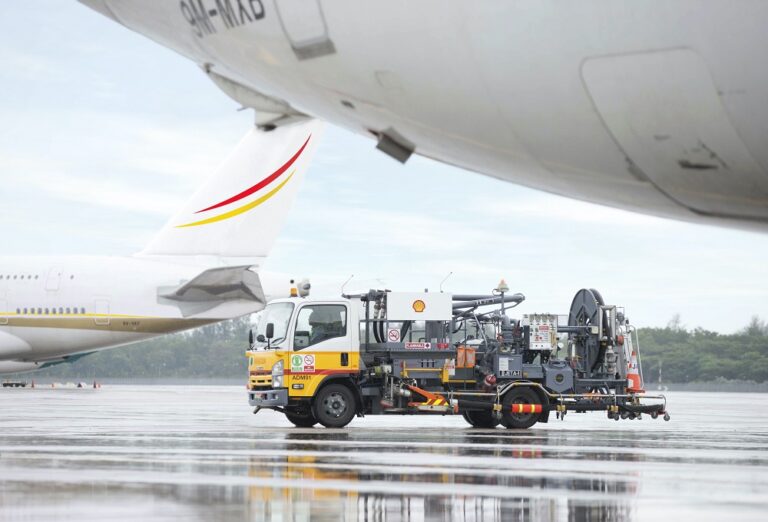
Google extended its collaboration with Amex GBT and Shell Aviation through this agreement. Amex GBT is a leading software and services company for travel, expense, and meetings and events. Shell Aviation is one of the world's largest traders and suppliers of sustainable aviation fuel. The extended agreement sources SAF environmental-attribute information through the Avelia registry.

"Sustainable aviation fuel represents a critical unlock for decarbonizing the hard-to-abate aviation sector and we recognize the importance of long-term agreements to increase demand and expand its availability. We view this as a key opportunity to support the broader ecosystem through this book-and-claim effort, while making progress towards reducing our own aviation emissions."
Vrushali Gaud, Global Director of Climate Operations, Google
This is a multi-year commitment, not a one-time transaction. Long-term agreements like this send sustained demand signals that SAF producers need before investing in new supply capacity.
>> In Other News: [x](x)
How Does the Avelia Book-and-Claim Model Work?
The book-and-claim model separates SAF environmental attributes from the physical fuel. A corporate buyer can access the lifecycle emissions-reduction benefits of SAF even when that fuel is not available at its departure airport.

"Our valued customer Google continues to lead by example and is showcasing one of the many ways business travel is a force for good. Corporate demand and investment are essential to growing the SAF industry. By extending this key collaboration, we are continuing to build a more resilient and lower-carbon future for our industry. Together, we are investing in the technologies of tomorrow—today."
Andrew Crawley, President, American Express Global Business Travel
The SAF only needs to be injected somewhere into the aviation fueling network. Avelia's blockchain securely tracks and allocates the environmental attributes to the registered buyer. This removes a key logistical barrier to aviation decarbonization.
>> RELATED: Twelve Commences Construction of First Commercial-Scale SAF Plant in the US
Why Corporate Demand Is the Engine Behind SAF Supply Growth
Strong corporate demand is essential to growing the SAF market. It sends the signals SAF producers need to invest and expand supply. Lifecycle greenhouse-gas emissions from aviation can fall by up to 80 percent through SAF use.
Global SAF production grew 24 times between 2021 and 2025, reaching an estimated 713 million gallons by year-end. Multi-year agreements are a primary driver of that growth.
| Avelia Metric | Figure (as of March 2026) |
|---|---|
| SAF injected into fuel network | Over 64 million gallons at 18 airport locations worldwide |
| CO2e abated | Over 590,000 tons |
| CO2e equivalent | 1 million passengers flying London to New York |
| Corporations and airlines on platform | 66 |
| Retirements executed | Over 1,300 |
| Global SAF production growth (2021–2025) | 24 times |
How Big Is the Avelia Ecosystem Today?
Avelia has grown well beyond its 2022 pilot launch. Over 64 million gallons of SAF have been injected at 18 airport locations worldwide. That has helped abate over 590,000 tons of CO2e, the equivalent of 1 million passengers flying from London to New York.

"Advancing SAF takes collective effort across the entire aviation ecosystem. Google's extended commitment provides important financial signals for the SAF ecosystem and supports the development and deployment of SAF at large. We're excited to continue this work with a company that leads with action and ambition."
Raman Ojha, President, Shell Aviation
Sixty-six corporations and airlines have joined the platform. More than 1,300 retirements have been executed. The rapidly expanding SAF market continues to feed the supply that Avelia tracks and allocates.
Where Policy and Corporate Action Converge
Corporate agreements don't operate in a vacuum. In the U.S., the Section 45Z Clean Fuel Production Tax Credit provides incentives for SAF producers. Europe and Asia are adding SAF mandates and incentives to their regulatory frameworks, reinforcing the push toward aviation decarbonization.
Policy and long-term corporate demand together give producers the confidence to scale. Avelia now connects buyers to verified SAF supply across 18 airports. Aviation lifecycle greenhouse-gas emissions can drop by up to 80 percent through SAF. Corporate commitments from companies like Google keep that foundation growing.
Subscribe to the newsletter
Daily decarbonization data and news delivered to your inbox
Follow the money flow of climate, technology, and energy investments to uncover new opportunities and jobs.
Latest issues
-
113 CCS Projects: What's Driving the Surge?
Inside This Issue 🏭 Global CCS Hits 113 Projects as Americas Lead Capacity 💰 We're Moving $2M+ to Climate Solutions 💧 China Launches World's First Semi-submersible Offshore Wind-to-hydrogen Platfo...
-
Why Is Wyoming Giving 650,000 Acres to Carbon Storage?
Inside This Issue 🪨 Inside Blm's 650,000-Acre Bet on Wyoming Carbon Storage 🏭 California Advances Carbon Capture and Removal Regulations Under SB 905 ⚡ Why a Japanese Power Giant Is Betting on Den...
-
Colorado Joins the 7-State CCS Permit Fast Lane
Inside This Issue ⚖️ Colorado Takes Over Class VI Permits: What Changes for CCS? 🏭 Hebei Shoulang Facility Using LanzaTech Technology Achieves World’s First ISCC EU RCF Certification for Ethanol P...
Company Announcements
-
A consortium led by Novacium, together with Axel’One and AD-VENTA, has secured funding from the Defence Innovation Agency (AID) and the Directorate General of Armaments (DGA) under the RAPID progr...
-
Video: The Next Chapter https://youtu.be/LUIHqS35rMg Led by John Douglas, whose development experience includes the $8 billion Champlain Hudson Power Express, the collaboration brings major Nort...
-
Emvolon Raises $22 Million Funding Round to Launch Its Modular, Waste-to-Fuel Chemical Plants
Following its recent offtake agreement and increased commercial demand, Emvolon raises Series A and non-dilutive federal and state grants to launch first commercial system and adds industry growth ...
-
Puro.earth Expands DACCS Certification With CCS+ Methodologies
Puro.earth has published its CCS+ methodology documents, with direct air capture and geological storage (DACCS) as the first activity type implemented under its CCS+ Program. Puro.earth’s multi-pr...