
Kansas just became part of the growing U.S. carbon storage map. On April 10, 2026, the EPA issued its first-ever Class VI injection well permit in Kansas to PureField Ingredients, a wheat processor and low-carbon ethanol producer in Russell. The permit authorizes PureField to inject up to 150,000 metric tons of CO2 per year into deep underground rock formations — permanently. It is also the first Class VI permit across all four states in EPA Region 7, which covers Kansas, Missouri, Iowa, and Nebraska.
Class VI permits are still rare at the federal level. As of August 2025, the EPA had issued 11 Class VI permits nationally since the program launched in 2010. The PureField approval is among the most recent. Each new permit is a concrete step forward for U.S. carbon capture and storage infrastructure.

Why Is a Class VI Permit Such a Big Deal?
Class VI permits are among the hardest to obtain in U.S. carbon management. These wells require site-specific geological assessment, multi-year federal review under the Safe Drinking Water Act, and long-term monitoring commitments. The EPA's stated target is 24 months from application to permit decision. In practice, actual timelines have often stretched three to six years.
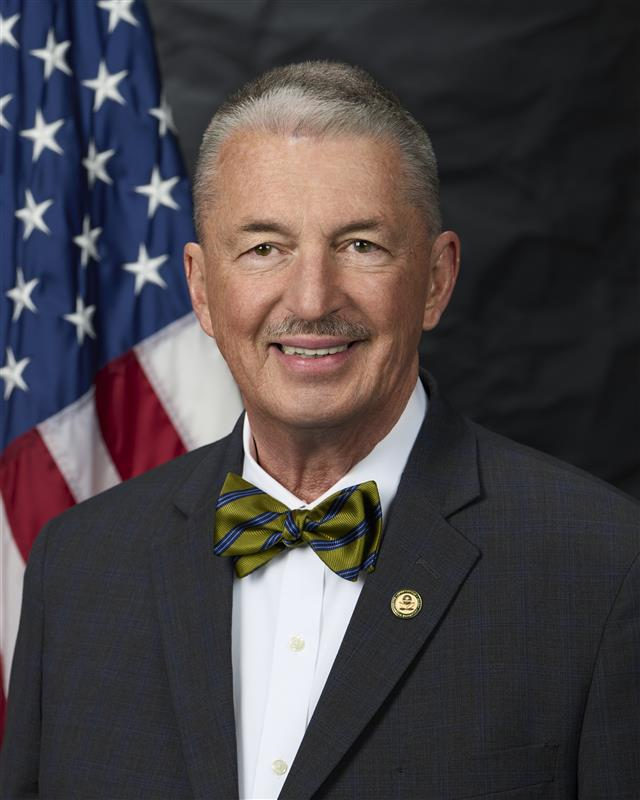
"This permit exemplifies EPA's support of domestic energy production and unleashing American energy dominance. We'll continue to advance projects that grow rural economies while fulfilling the agency's core mission of protecting human health and the environment."
Jim Macy, EPA Region 7 Administrator
As of August 2025, the EPA had issued 11 final Class VI permits since the program's creation in 2010, with more than 232 individual well permit applications across 63 projects still in review. That makes each new federal approval significant. The PureField permit is the first ever issued in Region 7 and the first in Kansas.
The Heartland region — Iowa, Kansas, Missouri, Nebraska — is home to a dense network of ethanol producers. These facilities generate concentrated CO2 streams during fermentation, making them practical candidates for carbon capture. PureField's approval proves that the region's geology can support Class VI carbon storage projects and that the federal permitting pathway is open.
Key Facts
- First Class VI well permit issued in Kansas and across all of EPA Region 7 (Kansas, Missouri, Iowa, Nebraska)
- Permit issued April 10, 2026 by EPA Region 7 to PureField Carbon Capture, LLC, near Russell, Kansas
- Authorized injection volume: up to 150,000 metric tons of CO2 per year
- Total permitted volume: 1.8 million metric tons of CO2 over 12 years
- CO2 injected into the Arbuckle formation at 3,448 to 3,606 feet below ground
- CO2 source: fermentation at PureField's wheat-based ethanol facility
- Pipeline transport to injection well: approximately 5 miles
- Monitoring required during 12-year injection period and for 50 years after injection ends
- PureField processes approximately 20 million bushels of Kansas wheat and sorghum annually
- PureField produces more than 50 million gallons of ethanol per year at its Russell facility
What Is PureField Actually Doing?
PureField Ingredients operates a fully integrated food and fuel platform in Russell, Kansas. The facility converts locally grown wheat and sorghum into three outputs: functional wheat protein ingredients for food use, ethanol fuel, and animal feed. The facility produces more than 50 million gallons of ethanol per year, with more than half transported to West Coast markets where low-carbon fuels command premium pricing.
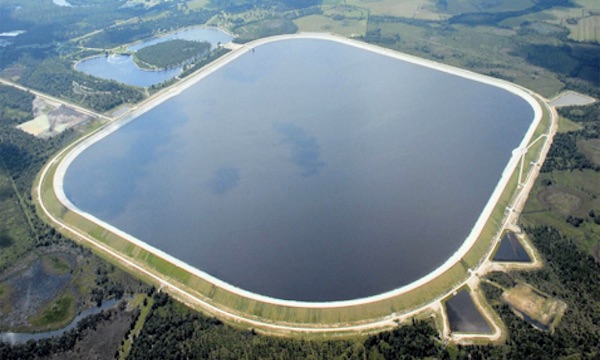
The CO2 targeted by this permit comes from the fermentation process used in ethanol production. Fermentation emits a concentrated, relatively pure stream of CO2, making it one of the most cost-effective sources for carbon capture. PureField will capture that CO2, move it approximately 5 miles by pipeline, and inject it into the Arbuckle formation.
The Arbuckle is a deep saline reservoir located between 3,448 and 3,606 feet underground. This geological layer is well-suited for long-term CO2 containment. It sits well below drinking water sources and is separated from them by thousands of feet of dense rock. Over the 12-year injection period, PureField is authorized to store a total of 1.8 million metric tons of CO2.
>> RELATED: Conestoga Energy Ramps Up U.S. Carbon Storage Ambitions with Class VI Milestone
How Does PureField Benefit Beyond Cutting Emissions?
The business case for this project goes beyond sustainability. PureField's permit application identified access to California's Low Carbon Fuel Standard (LCFS) market as a central objective. California's LCFS rewards fuels with lower carbon intensity scores with premium credits. Permanent underground CO2 storage significantly reduces ethanol's carbon intensity score.
PureField's feedstock already has an advantage. Its ethanol is made from residual wheat starch, a byproduct of food ingredient production. The California Air Resources Board has awarded PureField's biofuels facility the lowest carbon intensity ratings in the industry, according to the company's own site. Adding geologic sequestration amplifies that advantage further, putting PureField's fuel pathway among the lowest-carbon-intensity options globally.
Federal tax incentives add another layer. Section 45Q tax credits reward each metric ton of CO2 permanently sequestered in a Class VI well. The companion Section 45Z credit applies to low-carbon fuel production. Both are applicable to PureField's operation. Congress preserved and extended both credits in legislation signed into law in July 2025, providing long-term policy certainty for projects like this one.

"By combining our advanced, wheat-based feedstock with carbon capture and permanent storage, we are creating a structurally advantaged platform that delivers some of the lowest carbon fuels in the world while simultaneously producing essential food ingredients."
Aaron Buettner, CEO, PureField Ingredients
What Does "Permanent" Storage Actually Require?
Permanence is the goal, but the permit defines exactly what it requires in practice. PureField must monitor the well and the zone above the injection site throughout the 12-year active injection period. Monitoring continues for 50 years after injection ends. That post-closure requirement exists to confirm the stored CO2 stays contained and does not threaten underground drinking water sources.
The layered safeguards include geological screening at the permit application stage, construction standards for the injection well, real-time operational testing, and decades of post-closure oversight. The DOE has studied geologic CO2 storage for more than 20 years. Its research consistently shows that properly sited wells carry a very low risk of CO2 migration outside the target formation.
The U.S. holds an estimated 2.2 trillion to 21.2 trillion metric tons of geologic CO2 storage capacity, according to the DOE's Carbon Storage Atlas. U.S. CO2 emissions totaled approximately 6,340 million metric tons in 2021, meaning the country's storage potential is orders of magnitude larger than foreseeable injection volumes.
>> RELATED: Three States Just Took Control of CCS Permitting. Here's What It Means
How Does the PureField Permit Fit the Bigger CCS Picture?
The PureField permit was not the only Class VI approval issued on April 10, 2026. The EPA issued a second Class VI permit on the same day for a project in Illinois, also tied to ethanol and biofuel production. The dual announcement signals active momentum at the federal permitting level after years of criticism over backlogs and delays.
Nationally, the U.S. carbon capture industry has announced more than 270 projects representing $77.5 billion in capital investment. Class VI permitting is one of the primary bottlenecks keeping many of those projects from reaching construction. As of August 2025, 232 individual well permit applications for 63 projects remained in review at the EPA.
States that gain "primacy," the authority to issue Class VI permits independently, can move considerably faster. Wyoming issued its first three Class VI permits in just 10 months after gaining primacy, compared to federal timelines stretching three to six years. Six states now hold Class VI primacy: North Dakota, Wyoming, Louisiana, West Virginia, Arizona, and Texas, which received primacy in November 2025. Kansas has not applied for primacy, so the federal review process will govern future projects in the state.
| Milestone | Detail | Date / Status |
|---|---|---|
| EPA draft permit published | Public comment period opened | Late 2025 |
| Public comment deadline | Community review window closed | February 1, 2026 |
| Final permit issued | First Class VI permit in Kansas and EPA Region 7 | April 10, 2026 |
| Injection operations | 12-year window, up to 150,000 metric tons CO2 per year | Post-commissioning |
| Post-closure monitoring | Continuous oversight of stored CO2 | 50 years after injection ends |
What This Permit Signals for the Heartland
Russell, Kansas is a small agricultural city. It is not a traditional energy or carbon hub. But the PureField project demonstrates that carbon storage infrastructure can take root in rural communities built around grain, food processing, and biofuels.
PureField's integrated model creates a stable demand channel for approximately 20 million bushels of Kansas wheat and sorghum per year. The CCS addition doesn't displace that agricultural foundation. It builds on it. Lower carbon intensity means better market access, premium pricing in California's LCFS market, and a stronger long-term competitive position.
For the wider Heartland, the permit functions as a template. Other ethanol producers across Iowa, Nebraska, and Missouri operate similar facilities and generate similar concentrated CO2 streams. The PureField approval demonstrates that Region 7 permitting is active, the Arbuckle formation is a viable storage target, and the regulatory pathway for pairing biofuels with geologic sequestration is real and functional.
That may be this permit's biggest contribution — not just the 1.8 million metric tons PureField will store underground over 12 years, but the signal it sends to every other Midwest operator still watching from the sidelines.
Sources: U.S. EPA Region 7 press release (April 10, 2026); PureField Ingredients press release via PR Newswire (April 10, 2026); purefield.com; Carbon Herald; Energy Tech; Advanced BioFuels USA; Carbon Capture Coalition Class VI Fact Sheet (September 2025); U.S. Energy Association, "US Class VI Permitting and State Primacy" (September 2025); Bipartisan Policy Center (November 2025); Congressional Research Service R48033.
Subscribe to the newsletter
Daily decarbonization data and news delivered to your inbox
Follow the money flow of climate, technology, and energy investments to uncover new opportunities and jobs.
Latest issues
-
113 CCS Projects: What's Driving the Surge?
Inside This Issue 🏭 Global CCS Hits 113 Projects as Americas Lead Capacity 💰 We're Moving $2M+ to Climate Solutions 💧 China Launches World's First Semi-submersible Offshore Wind-to-hydrogen Platfo...
-
Why Is Wyoming Giving 650,000 Acres to Carbon Storage?
Inside This Issue 🪨 Inside Blm's 650,000-Acre Bet on Wyoming Carbon Storage 🏭 California Advances Carbon Capture and Removal Regulations Under SB 905 ⚡ Why a Japanese Power Giant Is Betting on Den...
-
Colorado Joins the 7-State CCS Permit Fast Lane
Inside This Issue ⚖️ Colorado Takes Over Class VI Permits: What Changes for CCS? 🏭 Hebei Shoulang Facility Using LanzaTech Technology Achieves World’s First ISCC EU RCF Certification for Ethanol P...
Company Announcements
-
A consortium led by Novacium, together with Axel’One and AD-VENTA, has secured funding from the Defence Innovation Agency (AID) and the Directorate General of Armaments (DGA) under the RAPID progr...
-
Video: The Next Chapter https://youtu.be/LUIHqS35rMg Led by John Douglas, whose development experience includes the $8 billion Champlain Hudson Power Express, the collaboration brings major Nort...
-
Emvolon Raises $22 Million Funding Round to Launch Its Modular, Waste-to-Fuel Chemical Plants
Following its recent offtake agreement and increased commercial demand, Emvolon raises Series A and non-dilutive federal and state grants to launch first commercial system and adds industry growth ...
-
Puro.earth Expands DACCS Certification With CCS+ Methodologies
Puro.earth has published its CCS+ methodology documents, with direct air capture and geological storage (DACCS) as the first activity type implemented under its CCS+ Program. Puro.earth’s multi-pr...