
Microsoft never stopped buying carbon removal credits. What looked like an exit was a volume adjustment. The BioCirc deal, 650,000 metric tonnes of BECCS credits over seven years, confirms that. Pair it with April's Saskatchewan agreement, and a pattern takes shape: Microsoft is recalibrating, not retreating, and BECCS is the pathway getting the most attention.
Key Facts
- BioCirc will deliver 100,000 CRUs annually to Microsoft from 2026 through 2032, totaling 650,000 metric tonnes (BioCirc press release, May 20, 2026)
- CO₂ is captured at five Danish biogas plants and stored in the Nini West reservoir, 1,500 to 1,800 meters below the North Sea seabed, via the Greensand Future project (BioCirc / INEOS Energy, 2026)
- Microsoft contracted 45 million metric tonnes of carbon removal in fiscal year 2025, nine times its 2023 volume and twice its 2024 total (Microsoft Environmental Sustainability Report, January 2026)
- Microsoft accounted for approximately 87 percent of all global carbon removal purchases in 2025 (CDR.fyi, April 2026)
- This is Microsoft's second BECCS deal in under two months, following the 626,000-metric-tonne North Star agreement in Saskatchewan, Canada (Business Wire, April 6, 2026)
- BioCirc aims to capture and store up to 1 million metric tonnes of CO₂ across the full 2026 to 2032 ramp-up period, equivalent to the annual direct emissions of more than 130,000 people in Denmark (BioCirc, 2026)
>> In Other News: Hydrogen Exploration in Iowa Well Underway
Did Microsoft Actually Pause Carbon Removal Purchases?
Reports in April 2026 indicated Microsoft had told some suppliers it was pausing new carbon removal purchases. Microsoft clarified quickly: it was adjusting the pace and volume of procurement, not ending the program. Phillip Goodman, Director of Carbon Removal Portfolio at Microsoft, confirmed buying was continuing.
In fiscal year 2025, Microsoft contracted 45 million metric tonnes of carbon removal credits with 21 companies worldwide. That is nine times its 2023 volume and more than double its 2024 total (Microsoft, January 2026). A company operating at that scale was always going to recalibrate at some point. The BioCirc deal, announced May 20, 2026, is the first major carbon removal agreement Microsoft has announced since those reports. It does not look like a company that stopped.
>> RELATED: Microsoft's Carbon Removal Pause Puts a One-Buyer Market to the Test

BioCirc’s carbon removal pathway shows how biogenic CO₂ from Danish biogas plants can be captured, liquefied, transported, and permanently stored offshore through Greensand Future. Each CRU represents one metric tonne of CO₂ removed, with deliveries expected to begin in H2 2026 and ramp up through 2032.
How Does the BioCirc Deal Work?
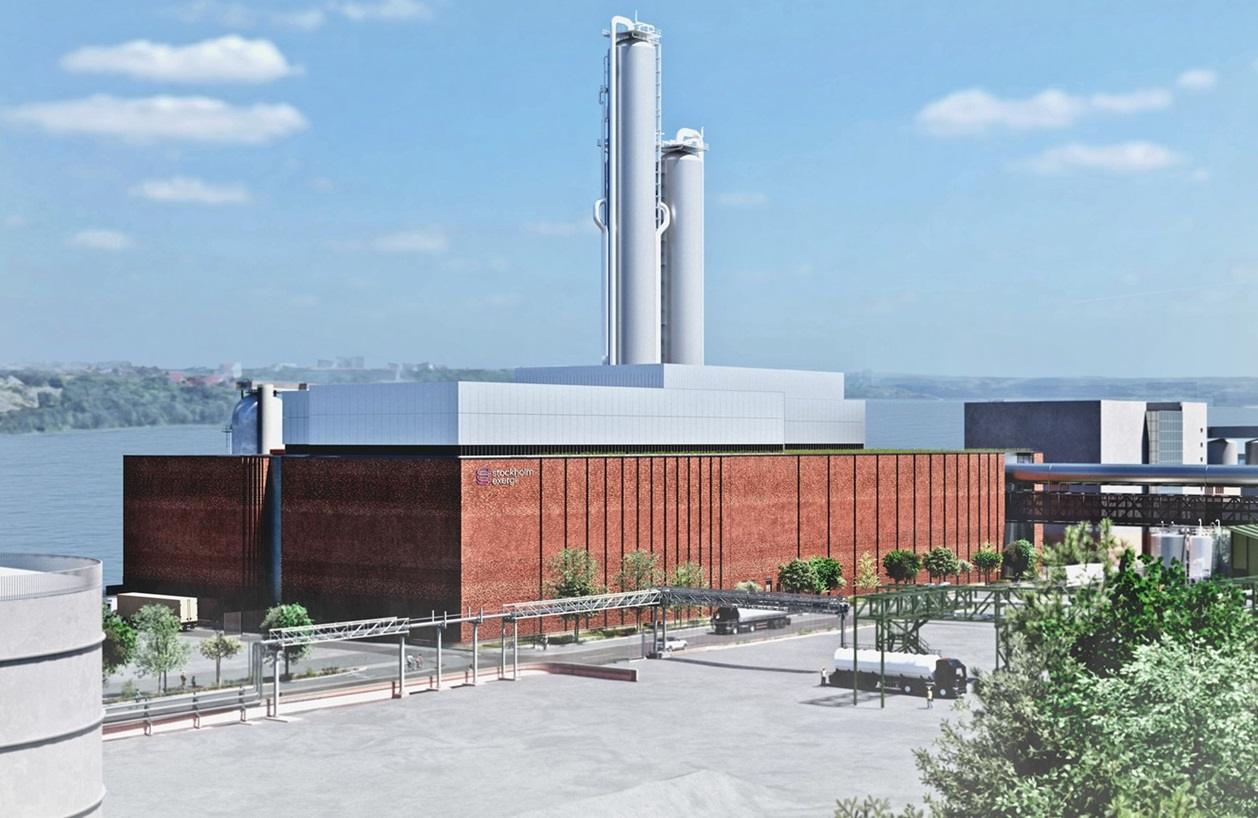
BioCirc is a Copenhagen-based circular bioeconomy company with an annual biomethane capacity of 1.9 to 2 terawatt hours. Under the deal, it captures biogenic CO₂ at five of its eight Danish biogas plants, in Favrskov, Vesthimmerland, Haderslev, Grønhøj, and Vinkel. That CO₂ is liquefied, transported to the Port of Esbjerg, and shipped to the Nini West reservoir via Greensand Future, where it is injected 1,500 to 1,800 meters beneath the North Sea seabed. Greensand Future is operated by INEOS Energy, with partners Harbour Energy and Nordsøfonden, and is expected to become the EU's first full-scale CO₂ storage facility.
Each CRU equals one metric tonne of CO₂ permanently removed. Deliveries begin in the second half of 2026 and ramp up through 2032. The project also receives public co-financing from the Danish Energy Agency through the NECCS fund. BioCirc has confirmed that both the NECCS subsidy and Microsoft's offtake commitment are necessary to make the project financially viable (BioCirc press release, May 2026).

"The BioCirc project offers a durable and scalable approach to carbon removal while contributing to broader decarbonization of the energy system. High-quality and scalable carbon removal solutions with rigorous carbon accounting, such as BioCirc's, are critical to the development of a robust global carbon removal market."
Phillip Goodman, Director of Carbon Removal Portfolio, Microsoft

"The agreement is a major milestone for BioCirc and a meaningful validation of our approach to delivering durable carbon removal. We are thrilled to work with organizations such as Microsoft that are helping advance the market for durable carbon removal while addressing residual emissions and supporting global climate goals."
Bertel Maigaard, Group CEO, BioCirc
Why Is the Saskatchewan Deal Part of This Story?
Six weeks before BioCirc, Microsoft signed a 15-year agreement with Svante Technologies and Meadow Lake Tribal Council (MLTC) for 626,000 metric tonnes of CDR credits from the North Star BECCS project in Meadow Lake, Saskatchewan. That is believed to be Canada's first majority Indigenous-owned carbon removal offtake agreement (Business Wire, April 6, 2026). At full capacity, the project will generate up to 90,000 metric tonnes of credits annually, with commercial operations expected in early 2029.
That is the North American thread in this story. Corporate CDR demand from a global technology company is flowing into an Indigenous-led project in rural Saskatchewan. Two BECCS deals in six weeks, across two continents, confirm this is not a one-off. It is a procurement strategy.
What Do These Deals Tell Us About BECCS as a Pathway?
Microsoft accounted for approximately 87 percent of all global carbon removal purchases in 2025 (CDR.fyi, April 2026). Global CDR demand reached 57 million metric tonnes that year, double the 2024 total (BloombergNEF and BCSE, 2025). When that buyer keeps signing BECCS contracts through a reported slowdown, the market takes notice.
BECCS projects in North America are proving that commercial-scale delivery works, not just in theory. BioCirc adds to that evidence from Europe. The pathway has moved from one that needed defending to one that gets contracted.
| Deal | Location | Volume | Term | Storage |
|---|---|---|---|---|
| BioCirc (May 2026) | Denmark | 650,000 metric tonnes | 7 years | Greensand Future, North Sea |
| North Star / Svante / MLTC (April 2026) | Saskatchewan, Canada | 626,000 metric tonnes | 15 years | Geologic storage, undisclosed site |
| AtmosClear / Fidelis (2025) | Louisiana, USA | 6.75 million metric tonnes | 15 years | BECCS, Port of Greater Baton Rouge |
How Big Is Microsoft's Carbon Removal Program?
In fiscal year 2025, Microsoft contracted 45 million metric tonnes of carbon removal with 21 companies, equivalent to removing 9.8 million internal combustion vehicles from the road for one year (Microsoft, January 2026). No other corporate buyer is close. Frontier, the next-largest purchaser, has contracted approximately 1.8 million metric tonnes in its entire lifetime (Heatmap News, April 2026). Microsoft contracted that volume roughly 25 times over in 2025 alone.
Microsoft has paid between $100 and $600 per metric tonne for engineered removal credits, compared to $5 to $15 for traditional offsets (CarbonCredits.com, 2026). The price difference reflects permanence and rigor. The company's total contracted CDR volume across three years reached approximately 72.5 million metric tonnes (Trellis, April 2026). Long-term offtake agreements like this one are what allow early-stage CCUS projects to reach financial close.
Watch how captured CO₂ from BioCirc’s Danish biogas plants will be permanently stored 1,500–1,800 meters beneath the North Sea seabed in the Greensand Future project. This clear explainer from INEOS shows the full subsurface journey of durable carbon storage.
What This Means for the Market Going Forward
BECCS is no longer a pathway that needs defending. It is being contracted at scale, across geographies, by the world's largest carbon removal buyer, through a period when that buyer was supposedly stepping back. Two deals, 1.276 million metric tonnes, six weeks apart. New BECCS developers in Canada are watching closely, and building their own projects on the assumption that demand like this will continue.
Global CDR demand doubled from 2024 to 2025, reaching 57 million metric tonnes (BloombergNEF and BCSE, 2025). Roughly 50 percent of first-half 2025 purchases came from first-time buyers, per CDR.fyi. The buyer base is widening. But for now, the market still depends on anchor commitments like this one to keep project finance moving. The BioCirc deal adds 650,000 metric tonnes to that foundation. The narrative of a market in retreat does not hold up against the contracts being signed.
Frequently Asked Questions
Did Microsoft actually pause carbon removal purchases?
Microsoft adjusted its procurement pace and volume. It did not stop. The BioCirc deal and the North Star agreement in Saskatchewan, both announced within a six-week window, confirm that buying continued through the reported pause period.
What is BECCS and why do these deals matter?
BECCS (bioenergy with carbon capture and storage) generates energy from organic materials while capturing and permanently storing the CO₂ produced. It is one of the few removal pathways capable of delivering high volumes of durable credits at commercial scale. Two back-to-back Microsoft BECCS deals signal that the technology has cleared a major market credibility threshold.
What does the Saskatchewan deal mean for North America's carbon removal market?
The North Star project in Meadow Lake, Saskatchewan is believed to be Canada's first majority Indigenous-owned BECCS offtake agreement. It shows that corporate CDR demand from global technology companies can flow into Canadian Indigenous-led projects, connecting climate commitments to rural economic development in a way that is structurally new for the market.
For ongoing coverage of carbon removal, BECCS, and corporate CDR procurement, subscribe to Decarbonfuse.com.
Subscribe to the newsletter
Daily decarbonization data and news delivered to your inbox
Follow the money flow of climate, technology, and energy investments to uncover new opportunities and jobs.
Latest issues
-
113 CCS Projects: What's Driving the Surge?
Inside This Issue 🏭 Global CCS Hits 113 Projects as Americas Lead Capacity 💰 We're Moving $2M+ to Climate Solutions 💧 China Launches World's First Semi-submersible Offshore Wind-to-hydrogen Platfo...
-
Why Is Wyoming Giving 650,000 Acres to Carbon Storage?
Inside This Issue 🪨 Inside Blm's 650,000-Acre Bet on Wyoming Carbon Storage 🏭 California Advances Carbon Capture and Removal Regulations Under SB 905 ⚡ Why a Japanese Power Giant Is Betting on Den...
-
Colorado Joins the 7-State CCS Permit Fast Lane
Inside This Issue ⚖️ Colorado Takes Over Class VI Permits: What Changes for CCS? 🏭 Hebei Shoulang Facility Using LanzaTech Technology Achieves World’s First ISCC EU RCF Certification for Ethanol P...
Company Announcements
-
China Launches World's First Semi-Submersible Offshore Wind-to-Hydrogen Platform
The world's first semi-submersible offshore wind-to-hydrogen platform has floated in Jiangmen, south China's Guangdong Province, opening a new avenue for the development and utilization of clean ma...
-
We’re Moving $2M+ to Climate Solutions
New companies, new ways to back existing ones, and every purchase built to pull in more capital We’re adding new companies to our portfolio and getting creative with how we put more money behind e...
-
Citi Closes $72 Million Carbon Removal-Linked Note to Support Applied Carbon Biochar Project
HIGHLIGHTS Citi structured an innovative $72 million carbon removal-linked note to provide upfront capital for Applied Carbon's biochar project, marking a first-of-its-kind "outcome bond" for ver...
-
New platform opens access to the same rigorous project evaluations trusted by the world's leading carbon removal procurement programs Today, Relae (formerly Carbon Direct) launched The Diligence C...