
Microsoft has paused all new carbon removal purchases, with no timeline and no detailed explanation. For most companies, that's a routine portfolio adjustment. For the carbon removal industry, it's the moment everyone quietly feared. One buyer held 80 to 90 percent of global engineered carbon dioxide removal demand. Now that buyer has stepped back.
>> RELATED: North America's Carbon Removal Year in Review: The Deals, Policies, and Milestones That Shaped 2025
How Big Was Microsoft's Role in the CDR Market?
Microsoft wasn't just the largest buyer in the carbon removal market. In many ways, it was the market itself.
In 2025, the company contracted 45 million metric tonnes of carbon removal credits. That was twice its 2024 volume and nine times its 2023 figure, according to Microsoft's own releases. Combined with prior years, its total contracted volume reached approximately 72.5 million metric tonnes across three years. The company also contracted around 3 million metric tonnes in 2021 and 2022.
No other corporate buyer came close. The next-largest buyer, Frontier, a purchasing coalition led by Stripe, has contracted approximately 1.8 million metric tonnes in total lifetime purchases. Microsoft contracted that amount roughly 25 times over in 2025 alone.
According to CDR.fyi, Microsoft made 90 percent of all carbon removal purchases worldwide in 2025. Across its full history of purchases, the company is generally cited as accounting for between 79 and 90 percent of all engineered CDR procurement globally.
Key Facts
- Microsoft contracted 45 million metric tonnes of carbon removal credits in 2025, twice its 2024 volume and nine times its 2023 figure (Microsoft, January 2026)
- Total contracted volume across three years reached approximately 72.5 million metric tonnes (Trellis, April 2026)
- Microsoft accounted for 90 percent of all global engineered CDR purchases in 2025 (CDR.fyi, via Heatmap News, April 2026)
- The next-largest buyer, Frontier, has contracted approximately 1.8 million metric tonnes lifetime total (Heatmap News, April 2026)
- Microsoft has paid between $100 and $600 per metric ton of CO2 removed, compared to $5 to $15 for traditional offsets (CarbonCredits.com, 2026)
- Microsoft achieved only a 1.8 percent decrease in total emissions between 2023 and 2024, while its stated goal requires more than halving total emissions by 2030 (Trellis, April 2026)
- Ongoing AI data center expansion is driving continued emissions growth, creating pressure on Microsoft's ability to hit its 2030 carbon-negative target
>> In Other News: Ceres Launches Ceres® Endura™ - A Game-Changing Solid Oxide Platform
Why Did Microsoft Actually Pause?
This isn't an abandonment of carbon removal. The math for Microsoft's 2030 carbon-negative target still roughly works. The pause is a recalculation.
Microsoft has pledged to become carbon negative by 2030 and to eliminate all historical emissions by 2050. Its most recent sustainability report projected retiring close to 6 million credits in 2030 to hit that goal. With a stockpile of roughly 70 million contracted credits on hand in 2030, the company has enough to remain carbon neutral for nearly a decade beyond its target date, based on forecasts in the report.
"That Microsoft was going to slow down their carbon removal purchasing was known. They had already contracted most of what they needed. But a hard pause, and so soon, was a bit of a surprise. The need for the CDR sector to focus on 'prove and learn' rather than 'speed and scale' now becomes obvious."
Robert Höglund, Co-founder, CDR.fyi; Fund Manager, Milkywire Climate Transformation Fund
The problem is the emissions side of the equation. Microsoft achieved only a 1.8 percent decrease in total emissions between 2023 and 2024. Under the scenario in its most recent report, that total needs to more than halve by 2030. AI data center expansion is driving continued emissions growth. New gas-powered data center projects in the pipeline add further pressure to that trajectory.
Melanie Nakagawa, Microsoft's chief sustainability officer, said the company's carbon removal program has not ended. She indicated that the pace or volume may be adjusted as the company continues to refine its approach toward sustainability goals. A Microsoft spokesperson stated the company "continually reviews and assesses its carbon removal portfolio along with market conditions for the optimal balance on its path to carbon negative."
The pause reflects a strategic recalibration, not a retreat from climate commitments. But the gap between purchasing credits and actually cutting emissions is widening. That gap is what the industry now has to reckon with.
>> RELATED: Direct Air Capture: The Technology Racing to Scale Carbon Removal
What Does This Expose About the CDR Market?
The fragility was always there. Nobody wanted to say it out loud.
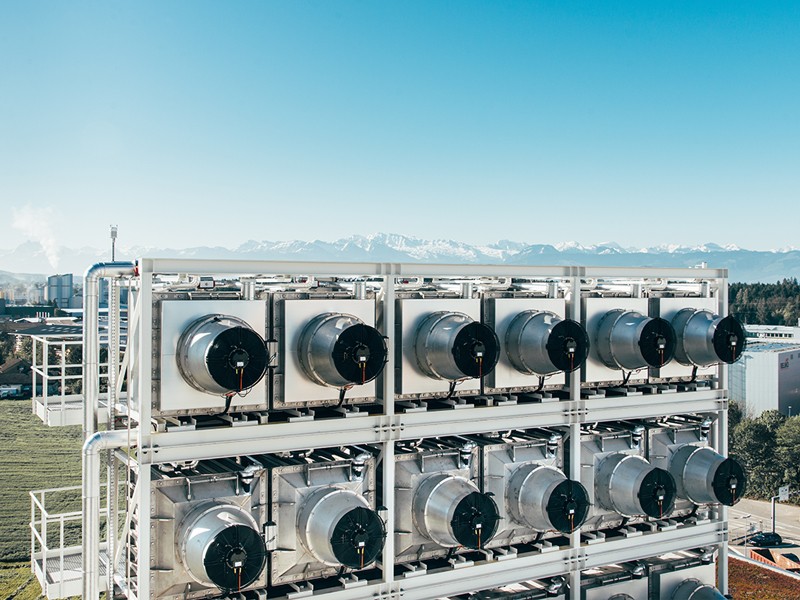
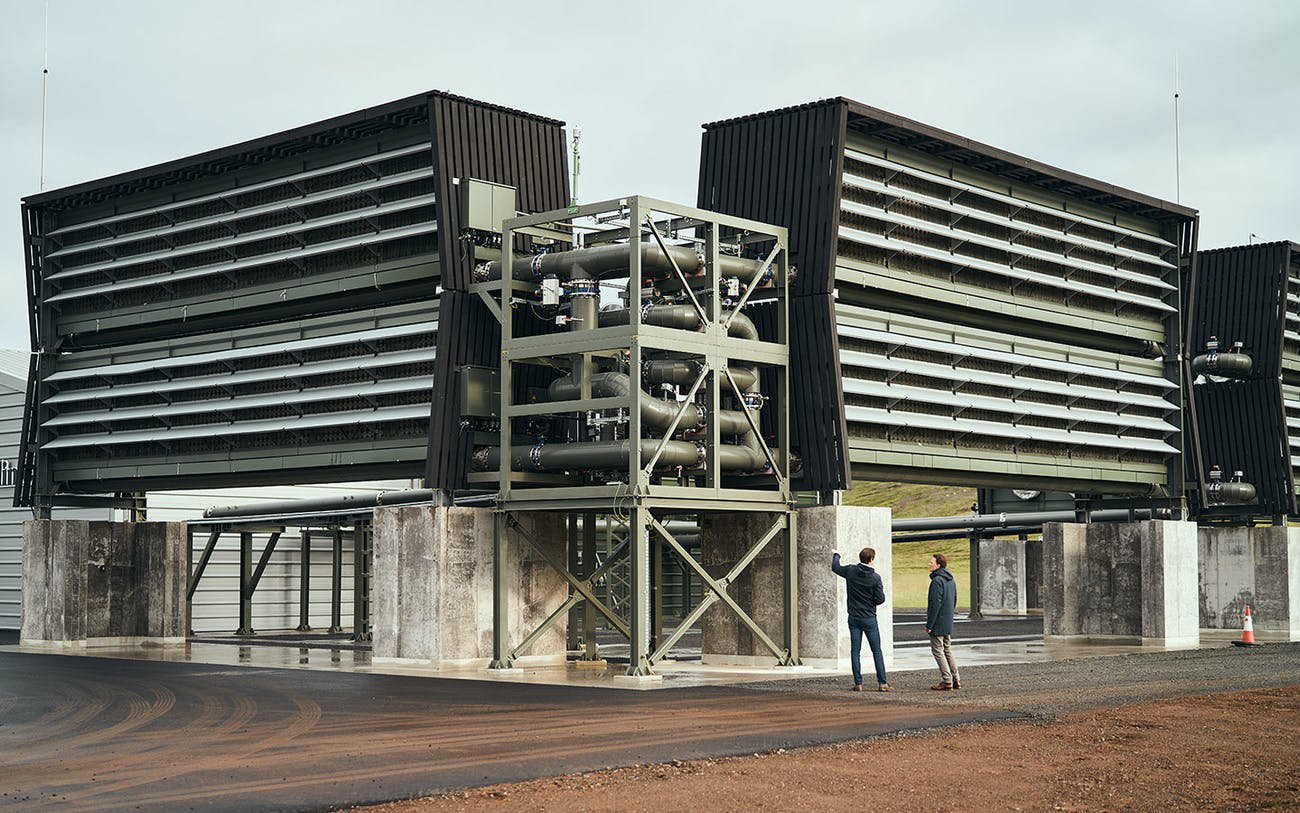
Startups built roadmaps around Microsoft demand. Developers modeled long-term financing around its offtake agreements. Companies like Climeworks and Carbon Engineering signed multi-year deals with Microsoft. Those agreements helped fund early deployment of direct air capture facilities that otherwise may never have reached commercial scale.
That's not a bad thing. Early markets often depend on anchor buyers. The problem is that nobody built in a serious plan for when the anchor lifts.
A market where one buyer controls 80 to 90 percent of global demand isn't really a market. It's a single-customer dependency. CDR's persistently high costs, ranging from $50 to $500 per metric ton across nature-based and technological approaches, made it almost impossible to attract the broad corporate base needed to reduce that concentration risk.
| Buyer | Lifetime CDR Volume Contracted | Share of Global Engineered CDR (2025) |
|---|---|---|
| Microsoft | ~72.5 million metric tonnes (3-year total) | ~90% (CDR.fyi, 2025) |
| Frontier (Stripe-led coalition) | ~1.8 million metric tonnes (lifetime) | Small fraction of total |
| JPMorganChase | Over 520,000 metric tonnes (CDR.fyi, 2025) | Small fraction of total |
The 2025 market did show some positive signs. Roughly 50 percent of first-half 2025 buyers were first-timers, including ByteDance, which purchased over 100,000 metric tonnes through Rubicon Carbon. The durable CDR market crossed 1 million metric tonnes in actual deliveries for the first time, across 521 purchasers from 35 countries. That's real progress. It's just not enough to replace Microsoft-scale demand overnight.

"When Microsoft is stepping aside, who will step up? The biggest risk in the voluntary market for durable CDR seems to have materialized."
Eve Tamme, Senior Advisor, Climate Policy
What Policy Foundations Are Still Standing?
The policy floor isn't gone. It just needs to do heavier lifting than it was designed for.
The Section 45Q tax credit survived the One Big Beautiful Bill Act and came out stronger. It now offers $85 per metric ton for point-source carbon capture and $180 per metric ton for direct air capture with dedicated geologic storage. That's meaningful for project economics, especially for developers who can monetize credits through transferability provisions.
Congress has been more supportive of CDR than the executive branch. The 2026 federal spending law included more than $116 million to support carbon removal research and establish a federal purchasing program, according to Carbon180. Federal programs including the Carbon Dioxide Removal Purchase Pilot Prize and the CREST Act exist to create consistent government demand for CDR.
Canada became the first national government to launch a dedicated CDR procurement program, targeting at least $7 million in purchases across direct air capture, BECCS, biochar, and other removal pathways. The EU's Industrial Carbon Management Strategy and the UK's Greenhouse Gas Removal business model are also emerging as potential public demand sources.
None of these are Microsoft-scale. But they don't need to be. They need to be consistent, credible, and stackable with private demand.
>> RELATED: The Credit That Refused to Die: 45Q's New Chapter
What Must Happen Next for Carbon Removal to Scale?
The CDR industry now has a clear task: prove it can attract a broader, more distributed buyer base. The alternative is watching the next phase of scaling stall.
Part of that means driving costs down. The direct air capture market is projected to reach $120.8 billion by 2034, growing at a 61.4 percent compound annual rate. That growth requires a wider spread of demand, not reliance on a single buyer. Technologies like hybrid DAC systems from Avnos are cutting energy use by over 50 percent compared to traditional approaches. Climeworks' Generation 3 systems capture twice the CO2 at half the energy and half the cost of prior systems. These cost reductions matter for attracting buyers outside of tech giants.
Existing contracts remain intact. Svante confirmed its CDR offtake agreement with Microsoft is not affected by the pause. That keeps current projects operational. The issue is the pipeline beyond what's already committed.
The Carbon Removal Alliance's policy roadmap calls for expanding federal procurement programs and integrating carbon removal into trade policy through carbon border adjustment mechanisms. That kind of systemic demand creation is what the market has been missing.
Companies like Aircapture, which raised $50 million in Series A funding to deploy modular DAC systems at industrial sites, are building models around distributed commercial demand rather than single large offtakes. That approach may prove more resilient in the post-Microsoft phase of the market.
>> RELATED: $250B Carbon Credit System Just Changed Project Funding
The Honest Reckoning the Industry Has Been Avoiding
The pause doesn't kill carbon removal. The technology is real. The credits are real. The climate need is real. But this moment forces a conversation the industry kept postponing.
A market that relies on one buyer isn't a market. It's a partnership with a very large counterparty risk attached. The 45Q credit, government procurement programs, and a growing spread of corporate buyers all represent the foundation of a more resilient demand base. Building on that foundation, rather than waiting for Microsoft to return, is the only path that leads to meaningful scale.
The CDR industry has proved it can deliver at scale. The durable CDR market hit 1 million metric tonnes in actual deliveries in 2025, across 521 purchasers from 35 countries. That's a market. Now it needs to grow like one.
What This Means Going Forward
- Existing Microsoft CDR contracts remain active. Svante confirmed its agreement with Microsoft is unaffected by the pause.
- The 45Q tax credit offers up to $180 per metric ton for direct air capture, providing a stable financing floor for U.S. projects.
- The 2026 federal spending law included more than $116 million for carbon removal research and a federal purchasing program (Carbon180, 2026).
- Canada's federal CDR procurement program, the first of its kind by any national government, targets at least $7 million in purchases across multiple removal pathways.
- New corporate buyers entered the CDR market in 2025: ByteDance purchased over 100,000 metric tonnes through Rubicon Carbon; JPMorganChase has now contracted over 520,000 metric tonnes total (CDR.fyi, 2025).
- The durable CDR market reached 1 million metric tonnes in actual deliveries in 2025, across 521 purchasers from 35 countries, its first time crossing that milestone (CDR.fyi, 2025).
Subscribe to the newsletter
Daily decarbonization data and news delivered to your inbox
Follow the money flow of climate, technology, and energy investments to uncover new opportunities and jobs.
Latest issues
-
113 CCS Projects: What's Driving the Surge?
Inside This Issue 🏭 Global CCS Hits 113 Projects as Americas Lead Capacity 💰 We're Moving $2M+ to Climate Solutions 💧 China Launches World's First Semi-submersible Offshore Wind-to-hydrogen Platfo...
-
Why Is Wyoming Giving 650,000 Acres to Carbon Storage?
Inside This Issue 🪨 Inside Blm's 650,000-Acre Bet on Wyoming Carbon Storage 🏭 California Advances Carbon Capture and Removal Regulations Under SB 905 ⚡ Why a Japanese Power Giant Is Betting on Den...
-
Colorado Joins the 7-State CCS Permit Fast Lane
Inside This Issue ⚖️ Colorado Takes Over Class VI Permits: What Changes for CCS? 🏭 Hebei Shoulang Facility Using LanzaTech Technology Achieves World’s First ISCC EU RCF Certification for Ethanol P...
Company Announcements
-
A consortium led by Novacium, together with Axel’One and AD-VENTA, has secured funding from the Defence Innovation Agency (AID) and the Directorate General of Armaments (DGA) under the RAPID progr...
-
Video: The Next Chapter https://youtu.be/LUIHqS35rMg Led by John Douglas, whose development experience includes the $8 billion Champlain Hudson Power Express, the collaboration brings major Nort...
-
Emvolon Raises $22 Million Funding Round to Launch Its Modular, Waste-to-Fuel Chemical Plants
Following its recent offtake agreement and increased commercial demand, Emvolon raises Series A and non-dilutive federal and state grants to launch first commercial system and adds industry growth ...
-
Puro.earth Expands DACCS Certification With CCS+ Methodologies
Puro.earth has published its CCS+ methodology documents, with direct air capture and geological storage (DACCS) as the first activity type implemented under its CCS+ Program. Puro.earth’s multi-pr...