
NGK Insulators, Ltd. announced new progress in applying its century-long ceramic technology expertise to Direct Air Capture (DAC), a key solution for achieving global carbon neutrality by 2050. At a media briefing held at the company’s headquarters in Nagoya, NGK presented its proprietary DAC innovations and discussed their role in the future energy transition.
The briefing featured presentations by Nobuo Tanaka, Honorary Executive Director of the International Energy Agency (IEA), and Professor Hidetaka Yamada of Kanazawa University on global energy trends and DAC developments, alongside NGK’s latest advancements.
Expert Insights on DAC Technology's Critical Role
In his opening keynote, Nobuo Tanaka emphasized that for resource-constrained nations like Japan, carbon removal technologies such as CCS (Carbon Capture and Storage) and DAC (Direct Air Capture) are gaining critical importance.
He also pointed out that achieving both energy security and carbon neutrality requires strategic deployment of clean hydrogen, ammonia, small modular reactors, and other emerging technologies.
According to IEA's net-zero scenario, achieving global carbon neutrality requires 2.5 Gt of CCS and 1.2 Gt of DAC by 2050. "If Japan can lead the world in DAC technology, it can gain strategic advantages in both energy security and climate action," Tanaka stated.
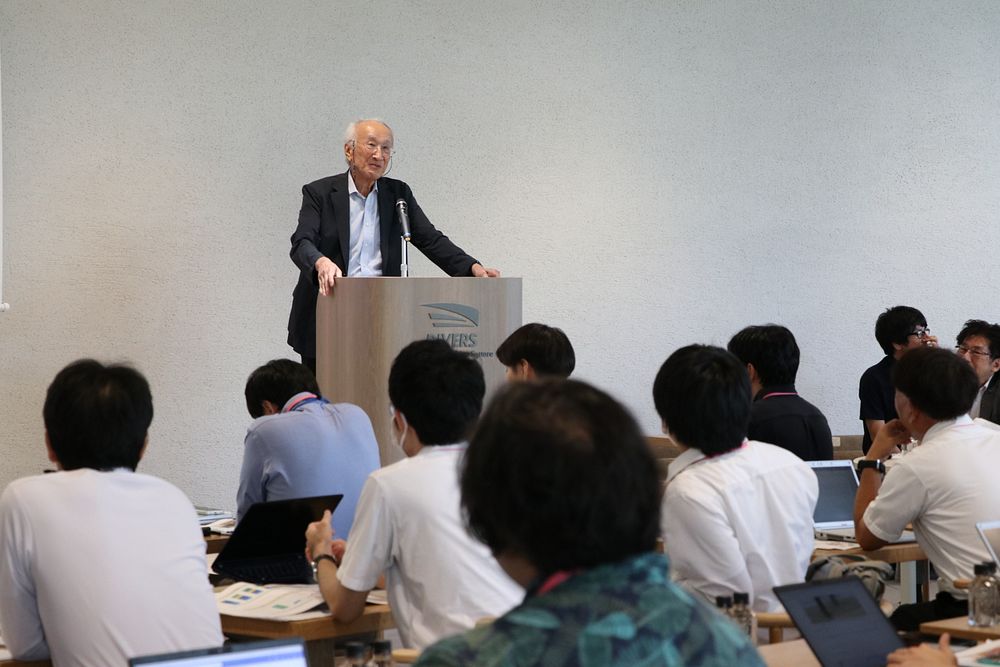
Mr. Tanaka explaining global energy situation and environmental crisis
>> In Other News: Hydrogen Stocks to Watch as $110B Investment Wave Accelerates
Professor Yamada explained DAC's critical importance under the premise that "achieving 2050 carbon neutrality requires both emission reduction and removal." He pointed out limitations of natural removal methods like afforestation in terms of scale, growth speed, and reliability, highlighting DAC's potential with the following advantages:
Key Advantages of DAC as a Removal Method
- Measurement clarity: Enables precise quantification of CO2 removal volumes
- Location flexibility: Not constrained by forest area limitations
- Processing speed: Dramatically faster than natural processes
- Quality consistency: High purity of captured CO2
Professor Yamada identified the primary challenge as high removal costs (US$ 500–1,000/t). He projected cost reduction to US$ 100–200 per ton by the 2030s through innovations including pressure loss reduction and improved sorbent performance.
He also noted that fan power accounts for 50–60% of system energy consumption, positioning efficiency improvements as critical. "DAC technology will be decisively important as a carbon resource supply source in future carbon-neutral society," he concluded.
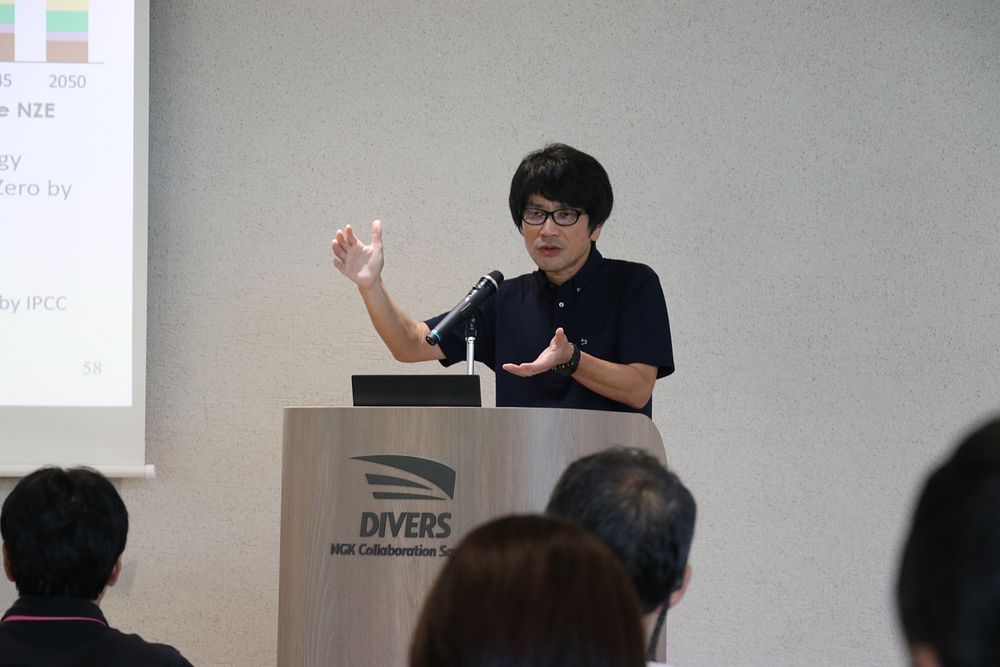
Professor Yamada explaining the importance and challenges of DAC technology and global trends
NGK's Technology Innovation and Business Strategy
Leveraging Over 100 Years of Ceramic Technology
Motoo Noritake, Group Executive of Environment Business Group, outlined NGK's history of expanding its business based on ceramic technology since its 1919 founding. "We are actively developing new businesses leveraging existing technologies, focusing on two major growth areas: carbon neutrality and digital society," he stated.
Noritake emphasized that expertise in automotive exhaust purification provides advantages in DAC development. NGK is preparing to shift existing automotive production facilities toward carbon neutrality-related businesses in response to DAC demand.
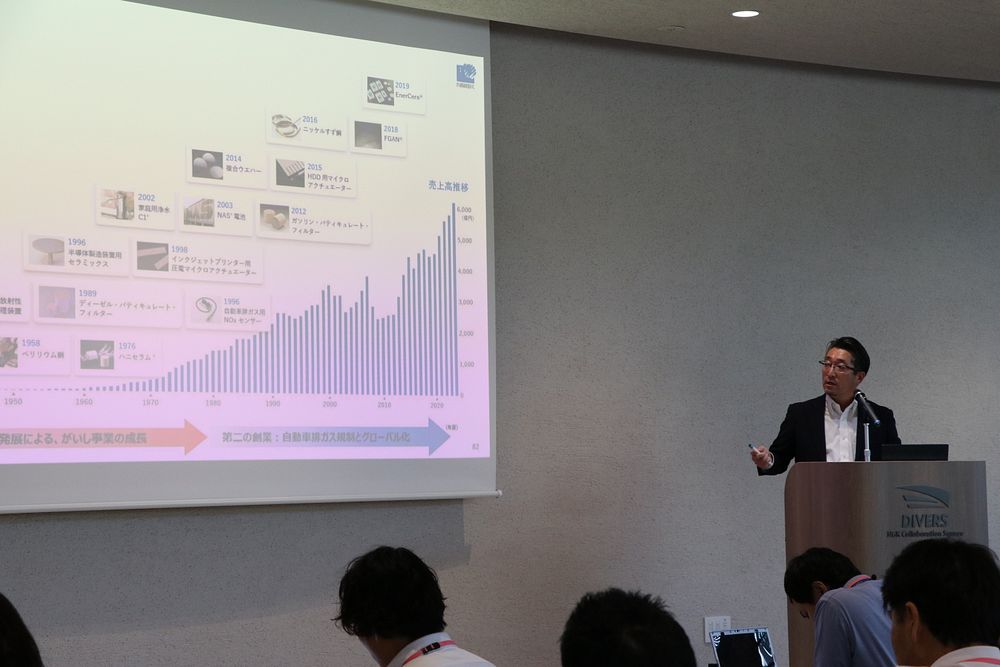
NGK Executive Noritake explaining how expanding automotive operations support DAC technology
NGK's Honeycomb Structures for DAC
Masataka Yamashita, Senior Director of Environment Business Group, detailed NGK's DAC honeycomb structures that solve pressure loss bottlenecks while improving efficiency.
Conventional pellet systems create turbulent flow and significant pressure loss. NGK's honeycomb structures maintain laminar flow, dramatically reducing pressure loss. The thin-wall structure—approximately tissue paper thickness—enables efficient regeneration at 80–100°C.
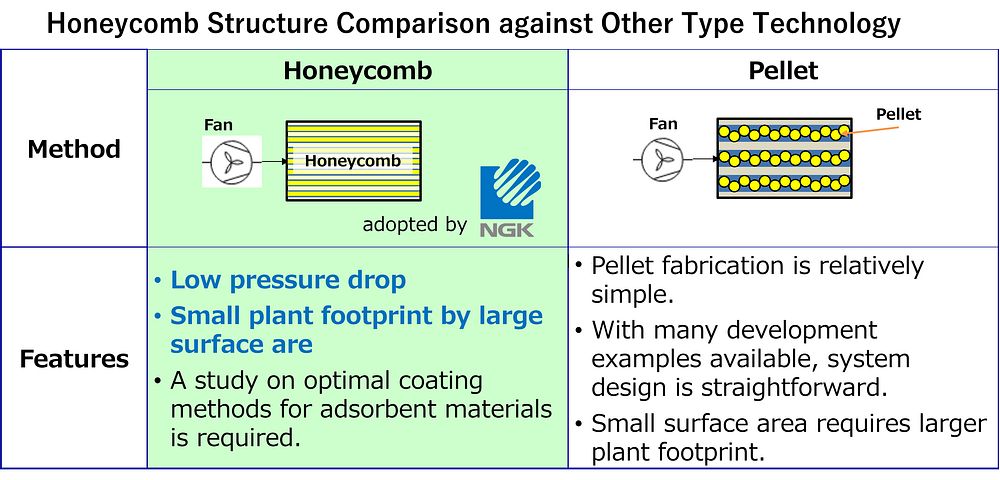
Key Technical Advantages
- Large surface area: Equivalent to 3+ tennis courts
- Low pressure loss: Efficient processing of large air volumes
- Energy efficiency: Significant reduction in system energy use
- Proven manufacturing: Based on automotive exhaust purification technology
Yamashita explained that "thin walls, large surface area, low pressure loss" are NGK’s competitive strengths in DAC.

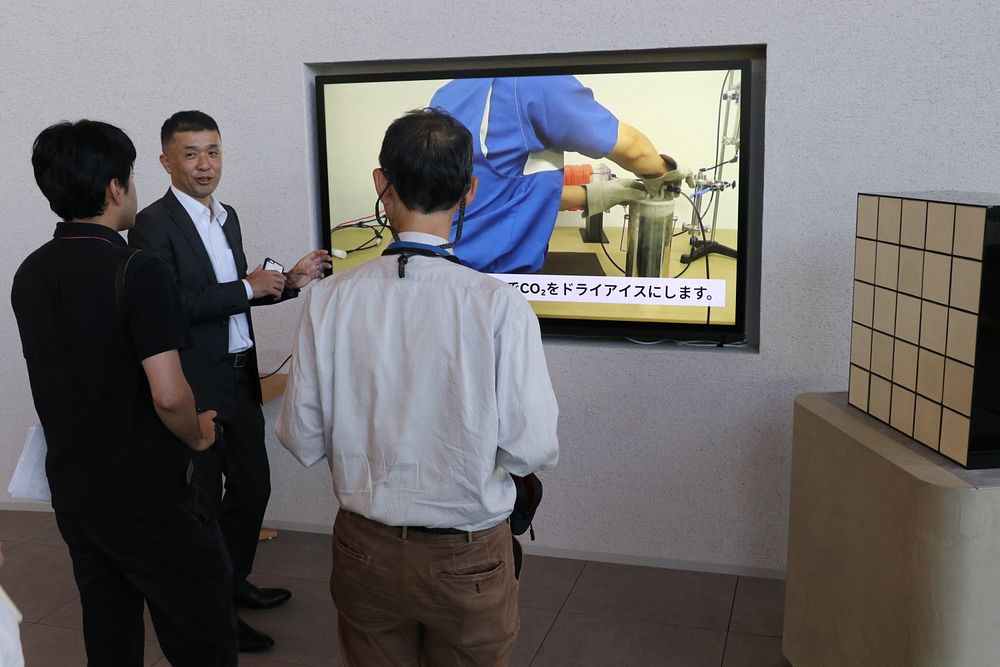
NGK's DAC honeycomb structures with thin walls arranged in regular patterns
Global Market Development and Future Outlook
NGK is in discussions with over 30 manufacturers worldwide and has received demonstration requests from multiple companies. "Large-scale demonstrations and commercialization are expected from 2030 onward," Yamashita noted.
The company is preparing to shift automotive facilities toward carbon neutrality applications and collaborates with the Japan CDR Coalition led by Mitsubishi Corporation to promote DAC adoption.
Live demonstrations showed CO2 concentrations dropping to near zero as ambient air passed through NGK's honeycomb structures.
As global demand for negative emission technologies intensifies, NGK's ceramic technology expertise positions the company as a key player in achieving worldwide carbon neutrality.
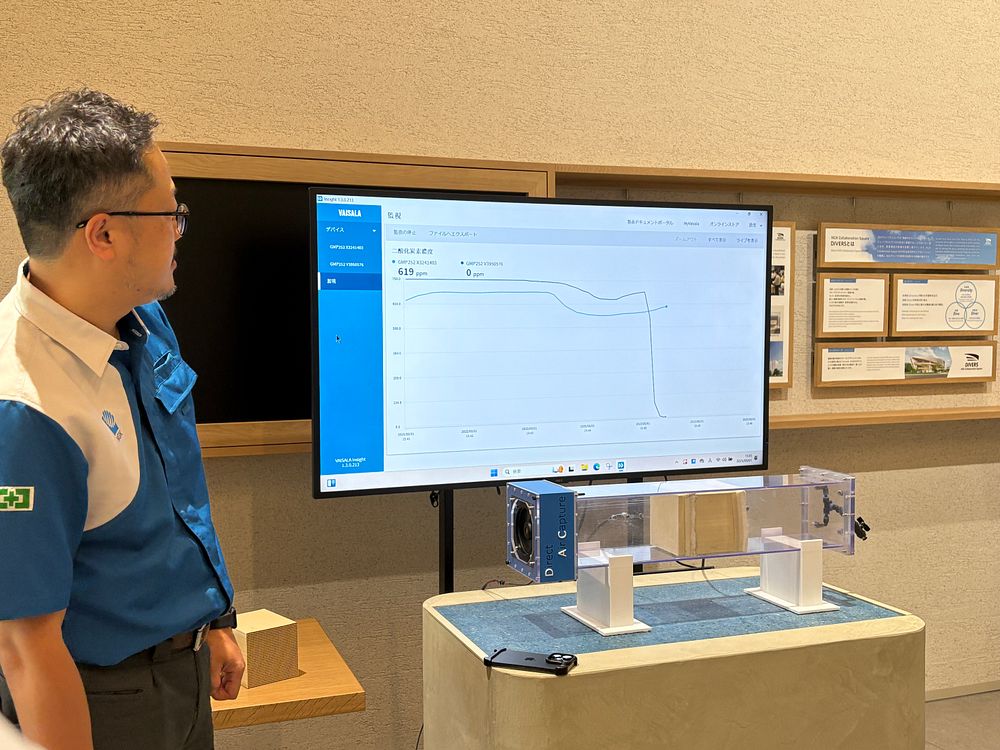
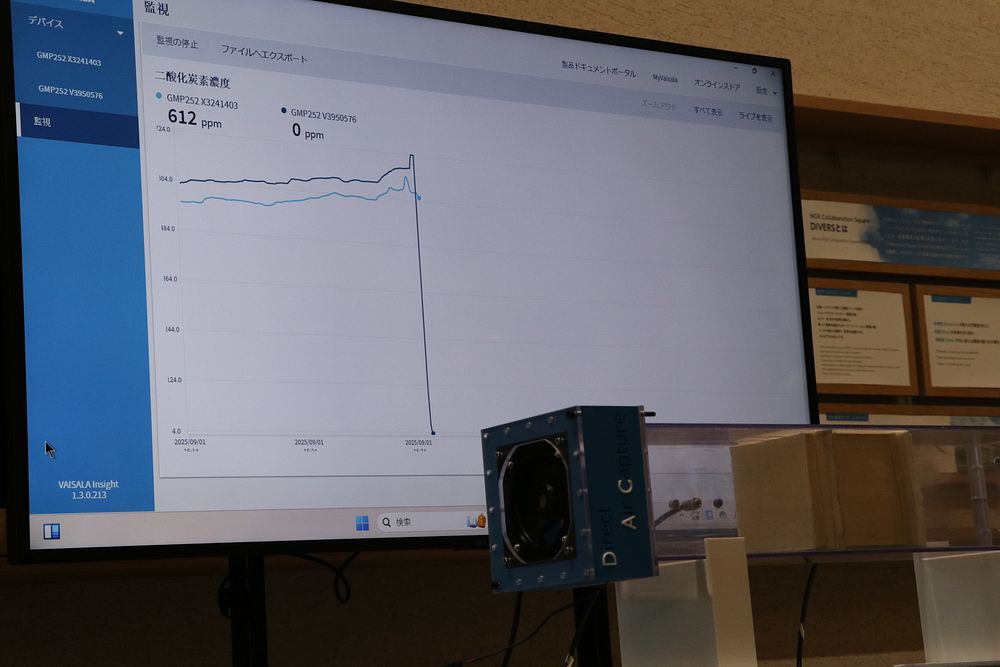
Live demonstration showing CO2 concentration dropping to near zero as ambient air passes through NGK's DAC honeycomb structures
About NGK Insulators
NGK Insulators (NGK) is a leading company in the field of ceramics. Since its foundation in 1919, NGK has used its unique ceramic technology to provide numerous ground-breaking products that solve social issues. Today, NGK is active in more than 20 countries worldwide, with business foci including mobility, energy, IT and industry.
As one of the largest manufacturers of ceramic substrates for automotive catalytic converters, NGK is actively reducing the strain on our global environment. Furthermore, NGK’s products include the energy storage system “NAS” battery, in addition to the compact, thin and high-energy-density lithium-ion rechargeable “EnerCera” battery line, vital tools for sustainable energy infrastructure.
Through providing innovative, high-quality products, NGK is committed to contributing to our society. In order to create a future where people can coexist with nature, we will continue to develop and provide products that support social infrastructure while preserving the environment.
Subscribe to the newsletter
Daily decarbonization data and news delivered to your inbox
Follow the money flow of climate, technology, and energy investments to uncover new opportunities and jobs.
Latest issues
-
Honeywell's Methanol-to-Jet Pathway Just Cleared Its Biggest Gate
Inside This Issue 🛫 Methanol-to-Jet Clears the ASTM Gate. What Changes Now? 🌿 InPlanet Selected as the Brazilian Supplier in Whirlpool Corporation's Durable Carbon Removal Portfolio 🧲 Climeworks A...
-
How Montana Renewables Cut $1B Out of Its SAF Budget
Inside This Issue 🌿 How Montana Renewables Cut MaxSAF Capex 89% 📋 IRS Issues Notice on 45Z Clean Fuel Production Tax Credit to Support Domestic Biofuel Production and American Agriculture 🌊 Natura...
-
Can Carba Really Remove Carbon Under $100?
Inside This Issue 🌬️ U.S. Bank Makes First Carbon Removal Purchase with Carba's Minnesota Biochar Project 🏭 Michigan's CCS Primacy Bid Could Reshape Great Lakes Industry 🏗️ Europe's Largest Carbo...
Company Announcements
-
In the largest rice methane offtake to date, Mitti Labs will deliver one million high-integrity credits to Google by 2030 BENGALURU, India and SAN FRANCISCO, Sept. 10, 2026 /PRNewswire/ -- Deep-t...
-
Climeworks Announces Key Performance Improvements at Mammoth
Over the past 18 months, technology upgrades have more than doubled CO₂ capture performance in upgraded collector containers while reducing operating costs by more than 50%. Zurich, Switzerland | ...
-
A team member at one of InPlanet’s partner farms inspects freshly harvested citrus fruit to assess its quality Remineralizer integrated into the soil following field application, beginning the enh...
-
Methanol-to-Jet Clears ASTM Gate. What Changes Now?
Methanol-to-jet has crossed a critical technical gate for commercial aviation fuel. ASTM D7566-26a, the active specification updated July 30, 2026, incorporates methanol into the Annex A5 alcohol-t...