
NTT Data and Climeworks Signal AI's DAC Turning Point
Published by Todd Bush on June 11, 2026
The AI infrastructure sector just made its first major commitment to direct air capture at scale. NTT DATA Group, the world's third-largest data center provider, has signed a partnership agreement with Climeworks, the Swiss DAC pioneer. The deal gives NTT DATA access to hundreds of kilotonnes of carbon removal over the next decade and marks Climeworks' first portfolio agreement with a major AI infrastructure and data center company.
Key Facts
- NTT DATA Group is the world's third-largest data center provider, operating more than 150 data centers across 20 countries, including seven U.S. campuses (NTT DATA, January 2025)
- The deal gives NTT DATA access to hundreds of kilotonnes of carbon removal capacity over the next decade (Climeworks press release, April 30, 2026)
- It is Climeworks' first portfolio agreement with a major AI infrastructure and data center company (Climeworks, April 30, 2026)
- NTT DATA is the first Japan-based IT and technology services provider to partner with Climeworks for high-quality CDR credits (NTT DATA press release, April 30, 2026)
- Climeworks operates the world's first two commercial DAC plants: Orca (4,000 tonnes CO2/year, operational since 2021) and Mammoth (36,000 tonnes CO2/year, operational since May 2024), both in Iceland (Climeworks)
- Global data center electricity demand grew 17% in 2025; AI-focused facilities grew 50% in the same year (IEA, Key Questions on Energy and AI, April 2026)
- Global data center electricity use is projected to nearly double from 485 TWh in 2025 to 950 TWh by 2030, reaching around 3% of global demand (IEA, Key Questions on Energy and AI, April 2026)
- Climeworks' Generation 3 DAC technology is set for construction in southwest Louisiana in 2026 as part of Project Cypress, a DOE-funded hub targeting one million tonnes CO2 removal per year by 2030 (Climeworks; U.S. DOE)
- NTT DATA has committed more than $10 billion through 2027 to expand AI-ready data center infrastructure globally (NTT DATA, January 2025)
>> In Other News: This Wind-Powered Green Ammonia Plant Could Be a Gateway to Buffering Minnesota Farmers From Volatile Fertilizer Prices
Why Is AI Infrastructure Turning to Direct Air Capture?
Data centers are among the fastest-growing electricity consumers on the planet. Global data center electricity demand grew 17% in 2025, according to the International Energy Agency. AI-focused facilities grew even faster, surging 50% in the same year. Total consumption is projected to nearly double, from 485 TWh in 2025 to 950 TWh by 2030, reaching roughly 3% of global electricity demand.
That growth puts companies like NTT DATA under mounting pressure to find credible solutions for emissions that renewables and efficiency cannot fully address. Nature-based offsets have faced growing scrutiny over permanence and verifiability. DAC credits permanently store CO2 underground in geological formations, providing the durable, measurable removal that rigorous net-zero commitments require.
NTT DATA was explicit about the deal's scope. The partnership is a last-mile complement, not a substitute for direct emissions reductions.

"NTT DATA is continuously reducing our carbon emissions, and we extend our overall expertise and experience to help clients along their own journeys to truly sustainable operations. Our agreement with Climeworks complements these efforts by applying high-quality CDR credits toward our own residual emissions, and we believe our support will help expand the effectiveness and reach of CDR technology overall."
Yutaka Sasaki, President and CEO, NTT DATA Group Corporation
NTT DATA already sourced 56% of its global electricity from renewables in fiscal year 2024, up from 49% the prior year. The company targets net zero in Scope 1 and 2 emissions across global data center operations by 2030, in offices worldwide by 2035, and across Scope 3 emissions by 2040.

What Does the NTT DATA and Climeworks Agreement Cover?
The agreement gives NTT DATA a diversified portfolio of carbon dioxide removal credits sourced across Climeworks' global facilities. That portfolio includes both engineered and nature-based removal options, all sourced and quality-vetted through Climeworks' scientific due diligence process. Exact financial terms were not disclosed.
This is Climeworks' first portfolio agreement with a major data center and AI infrastructure firm. In 2022, Climeworks signed a 10-year deal with Microsoft to remove 10,000 tonnes of CO2 over a decade. The NTT DATA arrangement uses a broader, diversified portfolio structure and represents a significantly larger buyer commitment in the AI infrastructure space.
"As artificial intelligence scales and data center construction expands, companies need clear, credible ways to manage their carbon footprint. Through this agreement, we're helping NTT DATA progress toward its net-zero operational goals. By providing access to hundreds of kilotons of carbon removal over the next decade, Climeworks is demonstrating that carbon removal is becoming a critical part of the AI economy."
Christoph Gebald, Co-CEO and Co-Founder, Climeworks
The deal was announced at the World Business Council for Sustainable Development meeting in Geneva on April 30, 2026. It makes NTT DATA the first Japan-based IT and technology services provider to partner with Climeworks to procure high-quality CDR credits.
>> RELATED: Climeworks Hits $1B Milestone in Record Carbon Tech Deal
How Does This Deal Connect to North America?
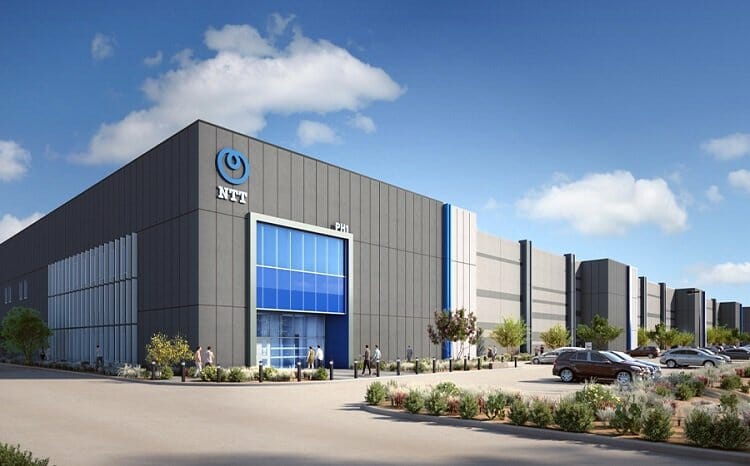
NTT DATA operates seven U.S. data center campuses in markets including Chicago, Dallas, Phoenix, Virginia, and Hillsboro, Oregon. In December 2025, the company secured hyperscale agreements totaling more than 130 MW across four U.S. campuses, supporting AI and machine learning workloads for major cloud providers. Its North American expansion is backed by a $10 billion global investment commitment through 2027.
As NTT DATA's U.S. footprint grows, so does the need for credible domestic carbon solutions. Climeworks is building exactly that. The company is the anchor DAC technology provider for Project Cypress, a megaton-scale DAC hub planned for southwest Louisiana. Construction starts in 2026, with the project designed to scale toward one million tonnes of CO2 removal per year by 2030.
The technology heading to Louisiana is Climeworks' Generation 3 DAC system. It doubles CO2 capture capacity per module and cuts energy consumption by 50% compared to earlier designs. Climeworks' 180-person R&D team ran 5,000 CO2 capture cycles and logged 15,000 testing hours to validate it before commercial deployment.
The next generation of direct air capture technology | Climeworks – Official video unveiling Generation 3 DAC technology for megaton-scale carbon removal, with the first deployment planned for Project Cypress in Louisiana.
Climeworks is also advancing DOE-selected DAC hub projects in California and North Dakota, further deepening its North American supply base.
| Climeworks Plant | Location | Capacity | Status |
|---|---|---|---|
| Orca | Iceland | 4,000 tonnes CO2/year | Operational since 2021 |
| Mammoth | Iceland | 36,000 tonnes CO2/year | Operational since May 2024 |
| Project Cypress (Gen 3) | Southwest Louisiana, USA | Pathway to 1 million tonnes CO2/year by 2030 | Construction starting 2026 |
What Does This Signal for the Broader CDR Market?
The NTT DATA agreement arrives at a pivotal moment for the carbon removal market. Companies contracted over 61.5 million tonnes of CDR in the first half of 2025 alone, a record high driven largely by Microsoft's large-scale procurement, according to Allied Offsets data cited by Decarbonfuse.
The buyer pool is diversifying beyond that single dominant buyer. Bain and Company made its first DAC purchase in January 2026, securing 9,000 metric tonnes from 1PointFive's STRATOS facility in Texas. JPMorganChase has built a multi-agreement CDR portfolio spanning direct air capture, bio-oil sequestration, and biomass-based removal, totaling well over one million metric tonnes contracted across multiple deals since 2023. Demand for high-quality, verifiable carbon removal is expanding to a wider class of enterprise operators.
That context matters. Microsoft paused all new CDR purchases earlier in 2026, with no stated timeline. The pause raised serious questions about the sector's dependence on one dominant buyer that had accounted for roughly 90% of all global engineered CDR purchases in 2025, according to CDR.fyi. The NTT DATA deal, announced in the same period, is a direct and meaningful counterpoint.
Global data center CO2 emissions from electricity generation are projected to peak at roughly 320 million tonnes around 2030, according to the IEA's Energy and AI report. That is a substantial and growing pool of residual emissions that cannot be solved through renewables and efficiency alone. The durable CDR market delivered its first million metric tonnes in actual removals in 2025. Reaching the next order of magnitude requires more buyers, more projects, and long-term agreements exactly like this one.
| NTT DATA U.S. Expansion | Details |
|---|---|
| U.S. campuses in operation | 7 campuses including Chicago, Dallas, Phoenix, Virginia, and Hillsboro, Oregon |
| Hillsboro, Oregon planned capacity | 354 MW total after new land acquisition |
| Mesa, Arizona new campus | 174 acres, 7 planned facilities, approximately 324 MW capacity |
| December 2025 hyperscale agreements | More than 130 MW across Chicago, Dallas, Phoenix, and Virginia campuses |
| Global investment commitment | More than $10 billion through 2027 for AI-ready data center infrastructure |
Frequently Asked Questions
What is direct air capture and how does it work?
Direct air capture technology uses large fans and specialized filter materials to pull CO2 directly from the ambient air. At Climeworks' Iceland plants, the captured CO2 is dissolved in water and injected into basaltic rock roughly 1,000 meters underground, where it mineralizes into a solid form within two years. This provides permanent, verifiable geological storage that lasts thousands of years, unlike nature-based offsets that can be reversed by fire, disease, or land-use change.
Why are data center companies buying CDR credits alongside renewables?
Renewables reduce operational emissions from electricity use, but they cannot eliminate every source of carbon output from large-scale infrastructure. Residual emissions from construction materials, supply chains, and grid power gaps require additional solutions. High-quality CDR credits address what cannot yet be reduced operationally, giving companies a credible path to meeting net-zero targets without over-relying on offsets.
Where is Climeworks building its next commercial DAC facility in the United States?
Climeworks is the anchor DAC technology provider for Project Cypress, a megaton-scale DAC hub planned for southwest Louisiana. Construction is set to begin in 2026, supported by a $50 million U.S. Department of Energy contract. Project Cypress is designed to scale toward one million tonnes of CO2 removal per year by 2030, a tenfold increase in capacity compared to Climeworks' Mammoth plant in Iceland.
For ongoing coverage of carbon removal, direct air capture, and corporate CDR procurement, subscribe to Decarbonfuse.com.
Subscribe to the newsletter
Daily decarbonization data and news delivered to your inbox
Follow the money flow of climate, technology, and energy investments to uncover new opportunities and jobs.
Companies

Latest issues
-
Why Gulf Coast CCS Teams Are Watching Liverpool Bay
Inside This Issue 💂 Eni’s Douglas Platform Sets the Offshore CCS Blueprint 🌲 Pacolet Milliken Expands Its Biomass Platform With the Acquisition of Georgia Renewable Power 🧪 Metacon Receives EU Fun...
-
Who Bought Gevo’s $50M in 45Z Credits?
Inside This Issue ⛽ Gevo Sells $70M in 45Z Credits to a New Kind of Buyer 🌱 South Pole, Gaïago, and Gold Standard Issue European Soil Carbon Credits, Unlocking Verified Regenerative Agriculture Re...
-
Verra Landed CCP Approval. What Changes for DAC?
Inside This Issue ✅ Verra's CCS Credits Just Got the Integrity Seal Buyers Want 💰 South Korea Unveils $747 Billion Energy Transition Plan Through 2035 💧 Hydrogen and Carbon Capture and Storage in ...
Company Announcements
-
FuelCell Energy Appoints John Dansby to Lead Manufacturing Scale-Up
Accomplished global manufacturing executive will lead the expansion of FuelCell Energy’s manufacturing operations and build the systems required to support future growth. DANBURY, Conn., Oct. 12, ...
-
New tools will help regulators evaluate proposed research activities on ocean fertilization, ocean alkalinity enhancement and ocean sinking of biomass. The International Maritime Organization has ...
-
Metacon Receives EU Funding for Project Targeting High-Purity Green Hydrogen Production from Biogas
Metacon’s fully owned Greek subsidiary Metacon SA has received EU funding for its participation in the PUREHY2+ project. The project targets an integrated system solution that can enable biogas pro...
-
Pacolet Milliken Expands Its Biomass Platform with the Acquisition of Georgia Renewable Power
Pacolet Milliken LLC, a sustainability-focused, family-owned investment firm, announced today it has acquired 100% of Georgia Renewable Power ("GRP"), which owns two biomass power plants in northea...