
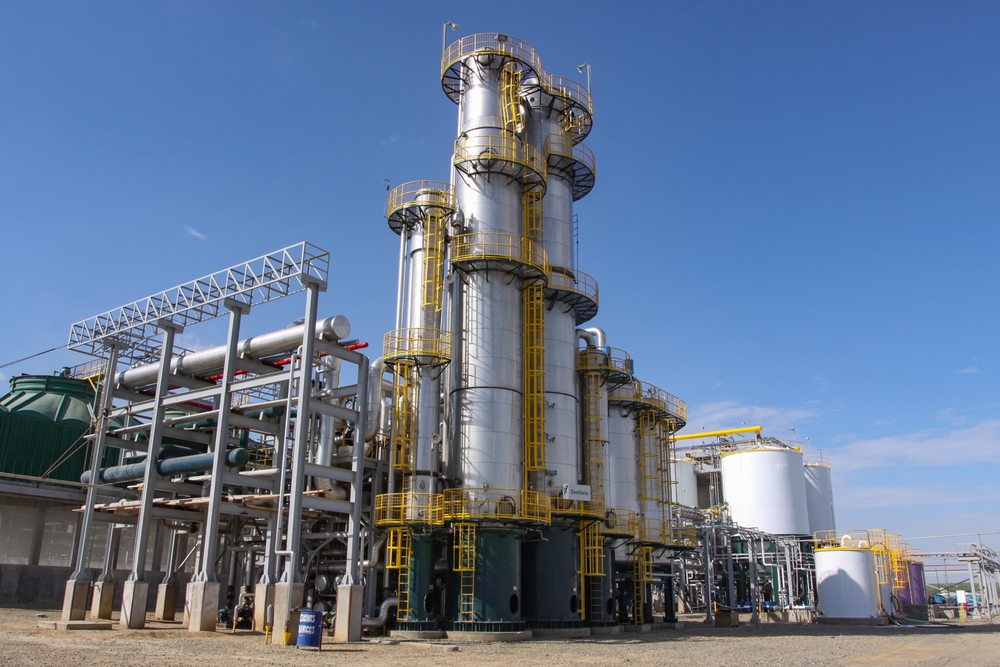
Hawaii's largest renewable fuels facility is officially online. Par Pacific Holdings confirmed on May 5, 2026 that its Kapolei biorefinery began commercial operations in April 2026. The plant produces approximately 61 million gallons of renewable fuels annually, including sustainable aviation fuel. For the first time, Hawaii has a domestic source of SAF, ending total reliance on imported jet fuel.
Key Facts
- Operations confirmed May 5, 2026; facility went live April 2026 (Par Pacific Q1 2026 SEC Form 8-K)
- Capacity: 61 million gallons per year; approximately 4,000 barrels per day of renewable diesel and SAF
- Up to 60% SAF output; can shift to over 90% renewable diesel based on market conditions
- Mitsubishi and ENEOS, via Alohi Renewable Energy LLC, hold 36.5% stake for $100 million
- Initial feedstocks: canola oil, used cooking oil, rendered animal fat from Canada (Par Hawaii, December 2025)
- Aviation: approximately 39% of Hawaii's domestic transportation GHG emissions (Hawaii State Energy Office)
- SAF reduces lifecycle carbon emissions by up to 80% versus conventional jet fuel
>> In Other News: Vary Tech, Evonik, and SupeZET Launch Full-Industry Chain Process Package for Chemical Plastic Recycling at IFAT Munich 2026
Why Does Hawaii Need a Domestic SAF Facility?
Hawaii imports nearly all of its fuel. There are no road connections between islands, so aviation is not optional. Jet fuel accounts for over 40% of the state's petroleum consumption, roughly 1.4 million barrels per month, making Hawaii more aviation-dependent than any other state except Alaska.
Transportation accounts for more than half of Hawaii's total greenhouse gas emissions, per the Hawaii State Energy Office. Domestic aviation represents approximately 39% of that transportation total. The Kapolei biorefinery is the first commercial-scale renewable fuels plant in the state and the most direct response to both Hawaii's energy security gap and its climate commitments.
Who Are the Partners Behind Hawaii Renewables LLC?
The facility operates through Hawaii Renewables LLC, formed in 2025. Par Pacific retains majority ownership and manages day-to-day operations through Par Hawaii Refining LLC, which has run the Kapolei refinery for over 50 years and holds an existing logistics network across the major islands.
Mitsubishi Corporation and ENEOS Corporation, Japan's largest energy company, hold a combined 36.5% stake via Alohi Renewable Energy LLC, acquired for $100 million. Mitsubishi brings access to its Petro-Diamond Inc. terminal in Long Beach, California. ENEOS contributes fuel refining and trading expertise across Asia-Pacific.

"Creating the Hawaii Renewables joint venture brings together the best of our three organizations and yields additional scale and expertise across feedstock origination, commercial optimization, and market access throughout the Pacific Basin."
Will Monteleone, President & CEO, Par Pacific Holdings
>> RELATED: Sustainable Flight Takes Off: Inside the Big SAF Bet Backed by Carbon Tech
What Feedstocks and Technology Does the Plant Use?
The facility uses the hydroprocessed esters and fatty acids, or HEFA, pathway to convert plant and waste oils into renewable transportation fuels. Initial feedstocks are canola oil, used cooking oil, and rendered animal fat, primarily from Canada. The plant uses Lutros LLC's advanced pretreatment technology and draws on on-site hydrogen from Par Hawaii's conventional refining operations, which lowers production costs versus greenfield facilities.
Par Hawaii is also developing local supply. Its partnership with Pono Pacific Land Management is establishing camelina as a Hawaii-grown oil crop. The U.S. Foreign-Trade Zone Board has authorized use of imported vegetable oil to supplement local inputs as that agricultural base develops.

Which Airlines Are the First SAF Customers?
Hawaiian Airlines and Alaska Airlines are both signed as launch customers. The two carriers, together with Par Hawaii and Pono Energy, committed in December 2025 to take the first deliveries of locally produced Hawaii-made SAF in early 2026.
Hawaiian Airlines targets 10% SAF blending by 2030 and a 45% reduction in lifecycle fuel emissions intensity per revenue ton mile by 2035 from 2019 levels, with a net-zero goal for 2050. SAF, at up to 80% lower lifecycle carbon intensity than conventional jet fuel, is the primary tool in that plan.
"We anticipate this project will deliver a stable supply of energy and contribute to a carbon-neutral society. ENEOS aims to contribute to this initiative by utilizing our deep experience in fuel refining and marketing, with an emphasis on enhancing Hawaii Renewable's feedstock procurement capabilities."
Marcus Echigoya, Senior Vice President and Managing Executive Officer, ENEOS Corporation
How Does Kapolei Fit Into the U.S. SAF Landscape?
U.S. renewable biofuel output jumped from approximately 2,000 barrels per day at the start of 2024 to 44,000 barrels per day by February 2025, per the U.S. Energy Information Administration. The EIA forecasts another 20% increase in 2026, with SAF driving most of that growth. Even so, SAF still accounts for less than 2% of total U.S. jet fuel consumption in 2025.
Kapolei's approximately 4,000 barrels per day joins a national supply base that includes Phillips 66 in California, Diamond Green Diesel in Texas, and Montana Renewables. Its unique role is geographic: it is the first plant serving Hawaii's domestic aviation market directly, cutting out the West Coast logistics chain that previously handled every gallon of clean fuel the islands received.
Hawaii Is Now Producing the Fuel Its Skies Require
With 61 million gallons of annual capacity confirmed, committed airline customers, and a three-way international partnership supplying feedstock reach across the Pacific Basin, Hawaii has moved from planning to production. For a state where aviation is unavoidable and transportation emissions are the single largest decarbonization challenge, the Kapolei biorefinery is the most consequential clean energy milestone the islands have reached outside the electricity sector.
| Partner | Role | Equity Stake |
|---|---|---|
| Par Pacific / Par Hawaii Refining LLC | Majority owner; project execution and operations | 63.5% |
| Mitsubishi & ENEOS (via Alohi Renewable Energy LLC) | Feedstock procurement; Pacific Basin market access | 36.5% for $100M |
Subscribe to the newsletter
Daily decarbonization data and news delivered to your inbox
Follow the money flow of climate, technology, and energy investments to uncover new opportunities and jobs.
Latest issues
-
113 CCS Projects: What's Driving the Surge?
Inside This Issue 🏭 Global CCS Hits 113 Projects as Americas Lead Capacity 💰 We're Moving $2M+ to Climate Solutions 💧 China Launches World's First Semi-submersible Offshore Wind-to-hydrogen Platfo...
-
Why Is Wyoming Giving 650,000 Acres to Carbon Storage?
Inside This Issue 🪨 Inside Blm's 650,000-Acre Bet on Wyoming Carbon Storage 🏭 California Advances Carbon Capture and Removal Regulations Under SB 905 ⚡ Why a Japanese Power Giant Is Betting on Den...
-
Colorado Joins the 7-State CCS Permit Fast Lane
Inside This Issue ⚖️ Colorado Takes Over Class VI Permits: What Changes for CCS? 🏭 Hebei Shoulang Facility Using LanzaTech Technology Achieves World’s First ISCC EU RCF Certification for Ethanol P...
Company Announcements
-
A consortium led by Novacium, together with Axel’One and AD-VENTA, has secured funding from the Defence Innovation Agency (AID) and the Directorate General of Armaments (DGA) under the RAPID progr...
-
Video: The Next Chapter https://youtu.be/LUIHqS35rMg Led by John Douglas, whose development experience includes the $8 billion Champlain Hudson Power Express, the collaboration brings major Nort...
-
Emvolon Raises $22 Million Funding Round to Launch Its Modular, Waste-to-Fuel Chemical Plants
Following its recent offtake agreement and increased commercial demand, Emvolon raises Series A and non-dilutive federal and state grants to launch first commercial system and adds industry growth ...
-
Puro.earth Expands DACCS Certification With CCS+ Methodologies
Puro.earth has published its CCS+ methodology documents, with direct air capture and geological storage (DACCS) as the first activity type implemented under its CCS+ Program. Puro.earth’s multi-pr...