
A Canadian exploration company just logged the highest hydrogen concentration ever recorded in Eastern Canada. Quebec Innovative Materials Corp. (QIMC) announced that soil gas surveys at its West Advocate site in Cumberland Township returned an extraordinary 5,558 parts per million (ppm) of natural hydrogen, far exceeding typical baseline readings.
This discovery adds momentum to a growing global race for geologic hydrogen, a resource that major oil companies and mining giants are now taking seriously. The find also positions Nova Scotia as a potential hub for what some are calling the next frontier in clean energy exploration.

>> In Other News: Gigablue Raises $20 Million to Scale Ocean-Based Carbon Removal Solution
What QIMC Found in Nova Scotia
The geochemical survey covered more than 4 kilometers along the Cobequid Fault Zone, a major crustal structure running through the Canadian Maritimes. Out of 189 soil gas samples analyzed using a mobile laboratory operated by INRS, the results were striking.
Following the results, QIMC expanded its claim package in the West Advocate area. The company has also confirmed additional hydrogen zones across Nova Scotia, including a second major discovery at East Advocate with readings averaging 623 ppm over a continuous 4-kilometer anomaly.

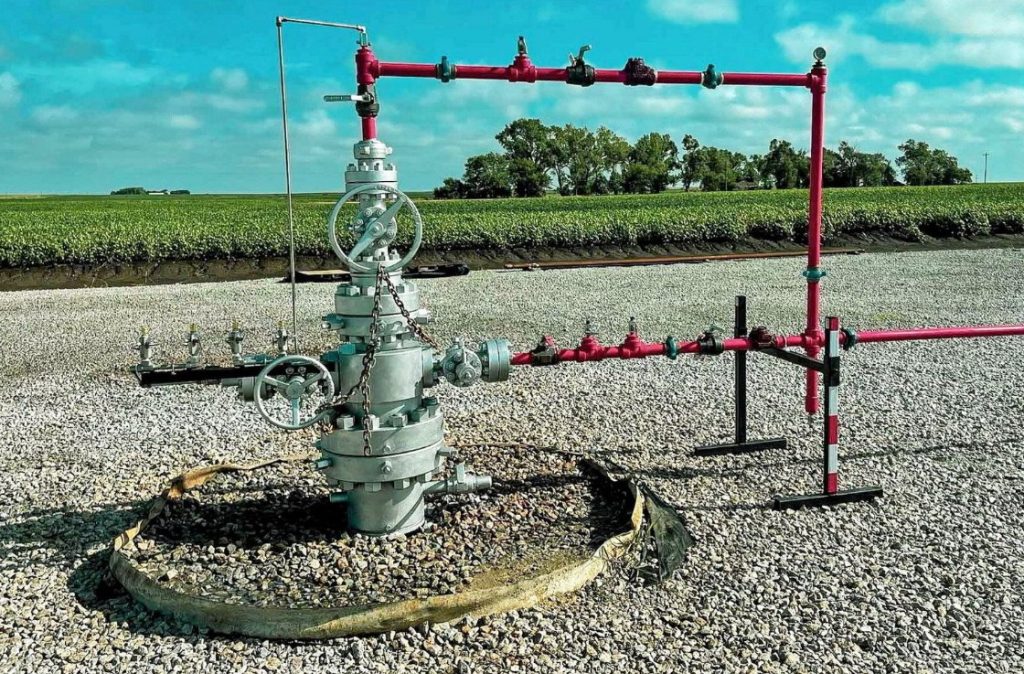
Restoring peatlands turns damaged landscapes into massive carbon sinks. Here’s a look at the ground-level infrastructure needed to rewet the soil and keep carbon locked away.

"These multiple hydrogen soil gas results exceeding 1,000 ppm, including numerous samples above 2,000 ppm, represent a breakthrough for QIMC and the Canadian natural hydrogen sector."
John Karagiannidis, President of QIMC
>> RELATED: 14 Green Hydrogen Projects Reshaping America's Energy Future
Why Geologic Hydrogen Matters
Natural hydrogen, also called white or gold hydrogen, forms through chemical reactions between water and iron-rich minerals deep underground. Unlike blue hydrogen (produced from natural gas with carbon capture) or green hydrogen (made via electrolysis using renewable power), geologic hydrogen requires no external energy input to produce.
According to a U.S. Geological Survey study published in Science Advances, Earth's subsurface may hold approximately 5.6 trillion metric tons of hydrogen. Even recovering just 2% of that would supply all the hydrogen needed to reach net-zero carbon emissions for roughly 200 years.
The Cost Advantage
Production costs for geologic hydrogen could be transformative. Some projects are targeting prices as low as $0.50 to $1.00 per kilogram, compared to $4 to $6 per kilogram for green hydrogen today. That potential has attracted heavy hitters like BP's venture capital arm, Rio Tinto, Fortescue, and Bill Gates' Breakthrough Energy Ventures.
"We calculate the energy content of this estimated recoverable amount of hydrogen to be roughly twice the amount of energy in all the proven natural gas reserves on Earth."
Geoffrey Ellis and Sarah Gelman, U.S. Geological Survey Researchers
What Comes Next for QIMC
QIMC has outlined an ambitious roadmap that extends beyond exploration. The company recently unveiled plans to develop off-grid AI data centers powered by natural hydrogen extracted from its Nova Scotia and Ontario-Quebec corridor sites. The vision combines on-site hydrogen extraction with baseload power generation, creating self-sustaining, carbon-neutral infrastructure.
Several factors make this approach appealing:
- Identified zones show no methane and no CO2 alongside high hydrogen concentrations
- Proximity to fiber networks and seaports enables low-latency connectivity
- Cold climates reduce cooling costs for data center operations
The company has also expanded its exploration footprint into Ontario's Témiscamingue Graben, where it recently reported an 11-kilometer hydrogen zone extension. Meanwhile, partnerships with First Nation communities signal a commitment to inclusive development as hydrogen hub projects across North America continue gaining traction.
A Sector Gaining Serious Attention
QIMC's Nova Scotia findings arrive at a pivotal moment for the natural hydrogen sector. At least 60 companies have publicly announced exploration efforts globally, with projects underway in the United States, France, Australia, and Africa. The Department of Energy has funded research into geologic hydrogen modeling and extraction techniques through its ARPA-E division.
For regions like Nova Scotia, where traditional energy industries have faced transitions, natural hydrogen development offers both economic opportunity and a path toward clean energy leadership. As QIMC continues drilling and testing, the question shifts from whether geologic hydrogen exists in significant quantities to how quickly it can move from exploration to commercial production.
With record-breaking readings and expanding claim packages, QIMC has positioned itself at the forefront of what could become a transformative chapter in North American energy development.
Subscribe to the newsletter
Daily decarbonization data and news delivered to your inbox
Follow the money flow of climate, technology, and energy investments to uncover new opportunities and jobs.
Latest issues
-
113 CCS Projects: What's Driving the Surge?
Inside This Issue 🏭 Global CCS Hits 113 Projects as Americas Lead Capacity 💰 We're Moving $2M+ to Climate Solutions 💧 China Launches World's First Semi-submersible Offshore Wind-to-hydrogen Platfo...
-
Why Is Wyoming Giving 650,000 Acres to Carbon Storage?
Inside This Issue 🪨 Inside Blm's 650,000-Acre Bet on Wyoming Carbon Storage 🏭 California Advances Carbon Capture and Removal Regulations Under SB 905 ⚡ Why a Japanese Power Giant Is Betting on Den...
-
Colorado Joins the 7-State CCS Permit Fast Lane
Inside This Issue ⚖️ Colorado Takes Over Class VI Permits: What Changes for CCS? 🏭 Hebei Shoulang Facility Using LanzaTech Technology Achieves World’s First ISCC EU RCF Certification for Ethanol P...
Company Announcements
-
A consortium led by Novacium, together with Axel’One and AD-VENTA, has secured funding from the Defence Innovation Agency (AID) and the Directorate General of Armaments (DGA) under the RAPID progr...
-
Video: The Next Chapter https://youtu.be/LUIHqS35rMg Led by John Douglas, whose development experience includes the $8 billion Champlain Hudson Power Express, the collaboration brings major Nort...
-
Emvolon Raises $22 Million Funding Round to Launch Its Modular, Waste-to-Fuel Chemical Plants
Following its recent offtake agreement and increased commercial demand, Emvolon raises Series A and non-dilutive federal and state grants to launch first commercial system and adds industry growth ...
-
Puro.earth Expands DACCS Certification With CCS+ Methodologies
Puro.earth has published its CCS+ methodology documents, with direct air capture and geological storage (DACCS) as the first activity type implemented under its CCS+ Program. Puro.earth’s multi-pr...