.png)
Forget the billion-dollar global shipping routes and cross-continental pipelines. The most promising hydrogen momentum is happening in places you probably haven't heard of, like rural Washington state and the freight corridors of Alberta. These regional ecosystems are proving that practical, localized approaches may ultimately outpace the grander visions that have dominated industry headlines.
The shift toward regional hydrogen hubs represents a fundamental change in how the industry is thinking about scale. Rather than waiting for massive infrastructure projects to materialize, communities and companies are building functional systems that work right now.
>> In Other News: Wild Assets Bets Big on Deep Mine Carbon Storage with Rewind Partnership
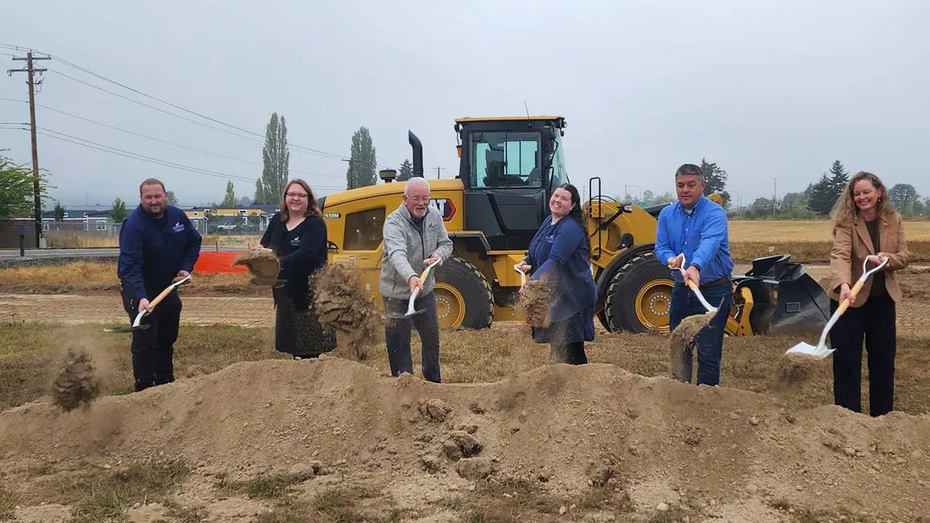
Port of Chehalis Breaks Ground on $9.7m Hydrogen Station
Washington's Rural Hydrogen Pioneer
In Lewis County, Washington, Lewis County Transit just broke ground on a $9.7 million hydrogen production and fueling station at the Port of Chehalis. The project follows a growing trend of green hydrogen projects prioritizing regional infrastructure over global ambitions.
The facility will generate green hydrogen on-site using an Ohmium electrolyzer system, eliminating the transportation costs that typically add $5-8 per kilogram to hydrogen pricing. This approach directly solves the chicken-and-egg problem that has stalled larger projects.

"For longer range, in rural America or rural Washington, where we are today, we have to use hydrogen because the battery electric just won't get us there."
Joe Clark, Executive Director, Lewis County Transit
The transit agency expects to operate 10 hydrogen-powered buses by 2030, with plans to become fully zero-emission for its heavy-duty fleet. Funding came from multiple state sources, including a $1.8 million Coal Transition Capital Grant from TransAlta, connecting clean energy investments directly to communities affected by the shift away from fossil fuels.
>> RELATED: 14 Green Hydrogen Projects Reshaping America's Energy Future
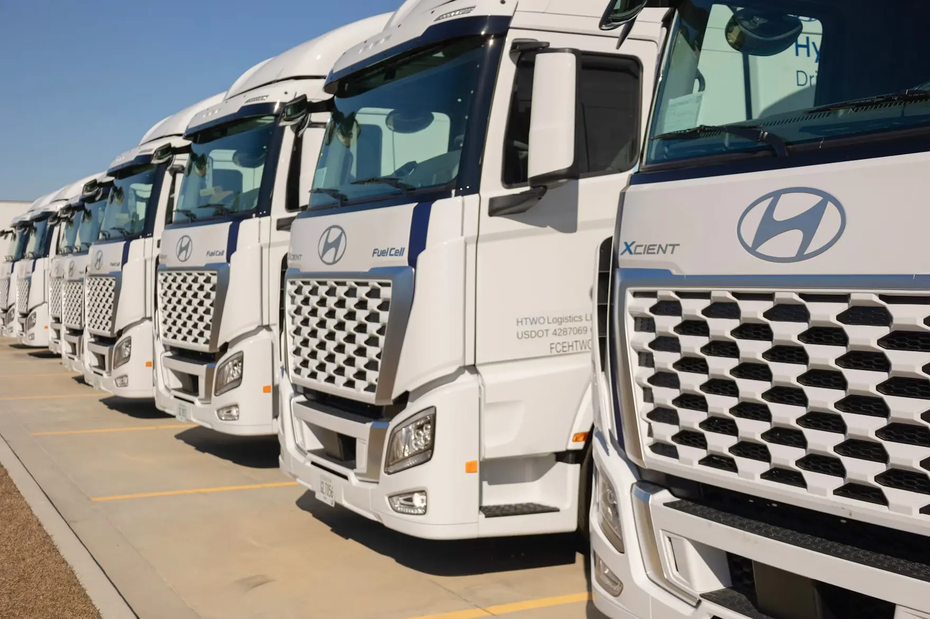
Alberta's Shared Truck Model
The Alberta Motor Transport Association developed a clever workaround to the cost barriers facing hydrogen trucking. Instead of asking individual carriers to make million-dollar bets on unproven technology, they're rotating a single Hyundai XCIENT fuel cell truck among participating fleets.

"AMTA is pleased to lead this project, which introduces this innovative technology to our carriers in a low-risk and cost-effective way. This project will help Canada reach its 2050 net-zero goals."
Doug Paisley, Board Chair, Alberta Motor Transport Association
Each carrier collects real-world data on range, refueling logistics, and operational costs under actual Canadian winter conditions. The evaluation runs through early 2026, generating cold-weather performance data that no other hydrogen trucking pilot has produced at this scale.

Key developments driving regional hydrogen momentum, highlighting infrastructure projects, fleet testing initiatives, global investment commitments, and future fuel cell market projections.
Why Regional Beats Global
The economics tell the story. Shipping compressed hydrogen by truck costs roughly $1 per kilogram per 100 kilometers. Regional production eliminates these costs while creating local jobs. Transportation expenses add significant cost burdens to hydrogen that make it uncompetitive with diesel, but localized systems sidestep this entirely.
Heavy-duty trucking presents hydrogen's strongest business case: weight and range requirements make batteries impractical for long-haul routes, fleet operators have predictable schedules, and freight companies face strict emissions mandates. Even large-scale production facilities emerging in California rely on regional distribution models.
Consider what makes these regional models successful:
- Co-location: Production facilities sit next to consumption points, slashing delivery costs
- Shared risk: Multiple stakeholders divide the investment burden and learning curve
- Predictable routes: Fleet operators know exactly where fuel cell trucks will travel
- Community integration: Projects tie directly to local workforce development and economic transition
Building the Foundation First
Alberta's hydrogen corridor between Calgary and Edmonton demonstrates how regional systems can scale. Additional hydrogen fueling stations are planned to enable trucks to complete full cargo routes. Suncor supplies the hydrogen from its Edmonton-area facility, creating a self-reinforcing ecosystem where supply supports demand and demand justifies additional supply.
The Pacific Northwest is following a similar pattern. Lewis County Transit is part of the Pacific Northwest Hydrogen Hub, which will receive up to $1 billion for regional hydrogen projects. Local organizations including Puget Sound Energy, Centralia College, and Fortescue Future Industries are participating, creating a network of interconnected projects.
The lesson is clear: while global hydrogen shipping dreams face years of infrastructure development, regional hubs are generating data, building expertise, and proving commercial viability today. For communities looking to participate in the hydrogen economy, the most practical path may be the one that starts closest to home.
Subscribe to the newsletter
Daily decarbonization data and news delivered to your inbox
Follow the money flow of climate, technology, and energy investments to uncover new opportunities and jobs.
Latest issues
-
113 CCS Projects: What's Driving the Surge?
Inside This Issue 🏭 Global CCS Hits 113 Projects as Americas Lead Capacity 💰 We're Moving $2M+ to Climate Solutions 💧 China Launches World's First Semi-submersible Offshore Wind-to-hydrogen Platfo...
-
Why Is Wyoming Giving 650,000 Acres to Carbon Storage?
Inside This Issue 🪨 Inside Blm's 650,000-Acre Bet on Wyoming Carbon Storage 🏭 California Advances Carbon Capture and Removal Regulations Under SB 905 ⚡ Why a Japanese Power Giant Is Betting on Den...
-
Colorado Joins the 7-State CCS Permit Fast Lane
Inside This Issue ⚖️ Colorado Takes Over Class VI Permits: What Changes for CCS? 🏭 Hebei Shoulang Facility Using LanzaTech Technology Achieves World’s First ISCC EU RCF Certification for Ethanol P...
Company Announcements
-
A consortium led by Novacium, together with Axel’One and AD-VENTA, has secured funding from the Defence Innovation Agency (AID) and the Directorate General of Armaments (DGA) under the RAPID progr...
-
Video: The Next Chapter https://youtu.be/LUIHqS35rMg Led by John Douglas, whose development experience includes the $8 billion Champlain Hudson Power Express, the collaboration brings major Nort...
-
Emvolon Raises $22 Million Funding Round to Launch Its Modular, Waste-to-Fuel Chemical Plants
Following its recent offtake agreement and increased commercial demand, Emvolon raises Series A and non-dilutive federal and state grants to launch first commercial system and adds industry growth ...
-
Puro.earth Expands DACCS Certification With CCS+ Methodologies
Puro.earth has published its CCS+ methodology documents, with direct air capture and geological storage (DACCS) as the first activity type implemented under its CCS+ Program. Puro.earth’s multi-pr...