
Deep Sky Alpha facility will trial technologies that suck CO2 from the sky
Innisfail, Alta. is set to host the world’s first test centre for technology that removes carbon dioxide directly from the air to fight climate change.
This June, Deep Sky completed construction of a $110-million carbon removal innovation and commercialization centre in the town about 120 kilometres north of Calgary.
It is a key piece of the company’s vision to build 100 large-scale facilities across Canada and become a pioneer in the emerging market for direct air capture (DAC) technology.
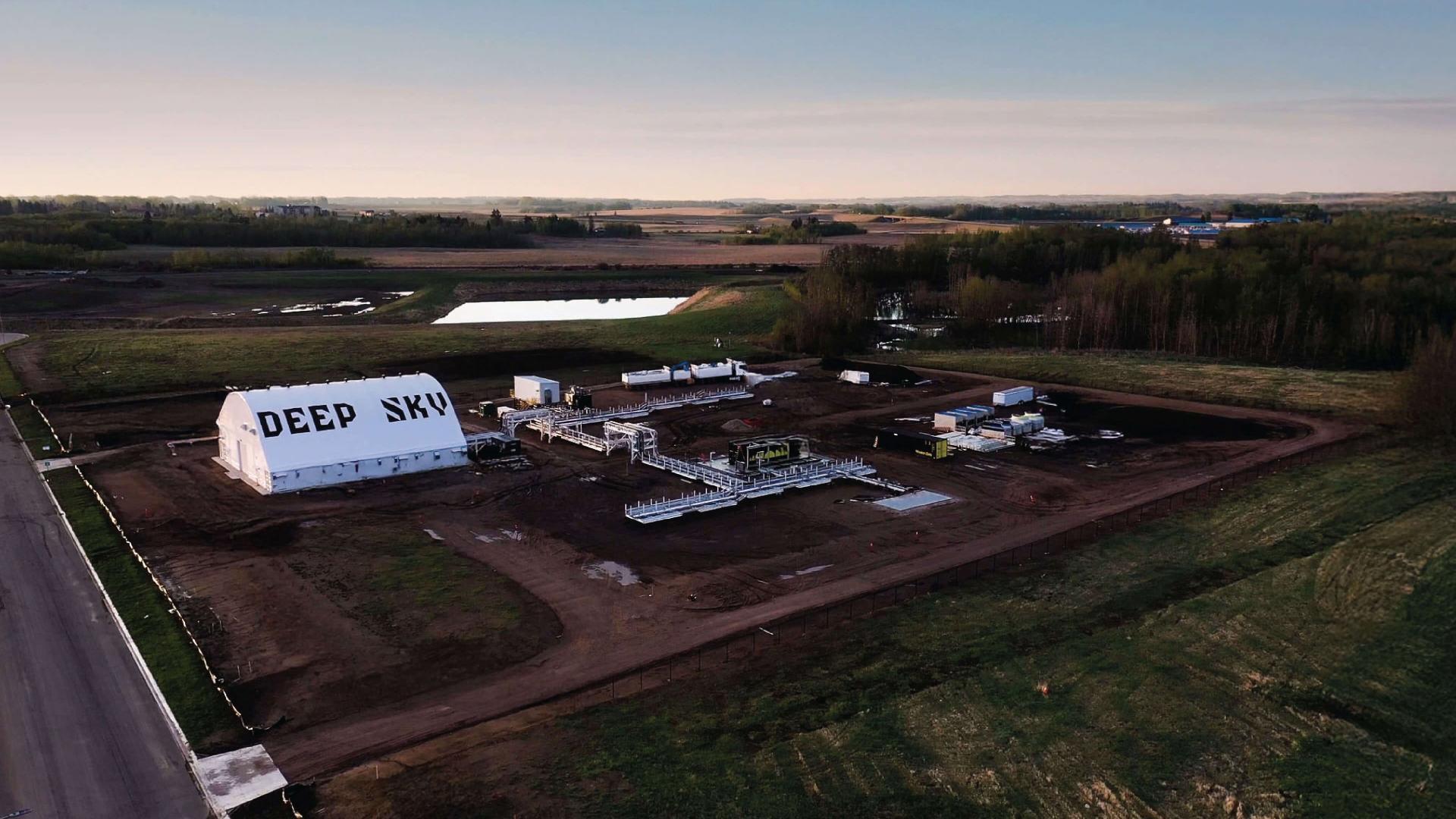
The Deep Sky Alpha direct air capture test facility in Innisfail, Alta. Photo courtesy Deep Sky
As of this summer, we will begin not only carbon removal, which is actually sucking it out of the air through these very powerful fans, but also liquefying it and then putting it underground for storage, Alex Petre, CEO, Deep Sky told CTV News.
Work began in August 2024 on the project known as Deep Sky Alpha, which aims to begin testing up to 10 different DAC technologies in real-world conditions. It is expected to be up and running this August.
The Government of Alberta is investing $5 million in the facility through Emissions Reduction Alberta.
The Deep Sky Alpha direct air capture test facility in Innisfail, Alta. Photo courtesy Deep Sky
Deep Sky’s facility will capture up to 3,000 tons of CO2 per year over the next 10 years, with room for future expansion.
Captured CO2 will be transported by tanker trucks about 200 kilometres north to Sturgeon County where it will be injected more than two kilometres below the surface into the Meadowbrook Carbon Storage Hub.
Operated by Bison Low Carbon Ventures, the project is the first approved under Alberta’s open-access carbon sequestration hub initiative and is expected to begin operations before year-end.
We’re going to line up these eight units side by side and run them to see how they operate in the summer and in the cold of winter, said Damien Steel, former CEO, Deep Sky, who continues to serve as a company advisor.
We’ll be tracking everything to see how all these best-in-class technologies compare – what are their strengths and weaknesses – so that ultimately we can choose the best solutions to scale up for the major commercialization of carbon removal projects that are needed.
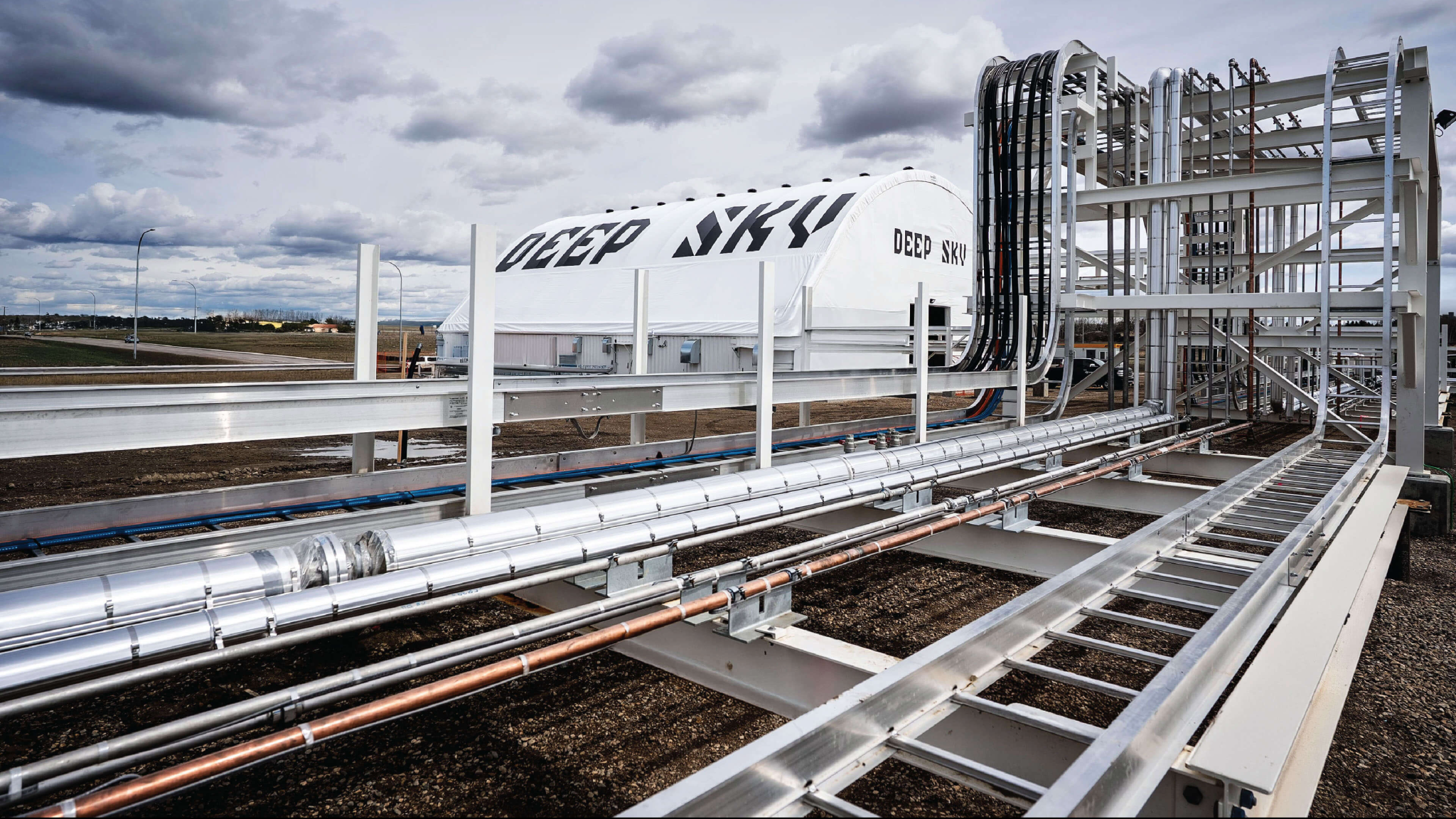
The Deep Sky Alpha direct air capture test facility in Innisfail, Alta. Photo courtesy Deep Sky
Unlike typical carbon capture and storage (CCS) projects that scrub CO2 from the exhaust of heavy industrial facilities such as power plants, refineries, cement plants or steel mills, DAC utilizes different technology to remove much lower concentrations of CO2 directly from the atmosphere.
According to the International Energy Agency (IEA), there are 27 DAC plants operating worldwide, capturing almost 10,000 tonnes of CO2 per year. In order to reach net zero emissions by 2050, the IEA estimates DAC capacity must expand to more than 60 million tonnes per year by 2030.
Deep Sky selected Alberta for its test facility because of the province’s experience with CCS, including its advanced regulatory system for CO2 sequestration.
To be successful at carbon removal you need three things: you need access to geologic storage, you need talent, and you need a reliable supply of renewable power to operate DAC facilities. Canada is blessed with these things, and Alberta especially has all of these attributes in spades, Steel said.
Deep Sky Alpha is one of several clean tech projects underway in a five-acre industrial park in Innisfail as part of an economic diversification plan that was launched in 2022 to make the town a centre for energy innovation.
A municipal solar farm and a power plant that burns garbage and will be equipped with CCS to eliminate emissions are also under development.
Deep Sky says that more than 110 jobs were created during the construction phase of its Innisfail project and it will employ 15 people for annual operations.
Subsequent commercial plants it hopes to build across Canada will employ approximately 1,000 workers for construction and 150 for annual operations.
Steel said he expects the DAC test facility will become a destination for those looking to advance CCS projects around the world, showcasing Canadian expertise in the process.
My hope is that not only will we learn and improve carbon removal technology, but we will also put Canada on the map in terms of being a place where innovation can thrive and this industry can work, he said.
It will be a place where corporate leaders, government officials and customers from around the world can come and see what direct air capture really is, how it works, and how Canada is the place to do it.
The unaltered reproduction of this content is free of charge with attribution to the Canadian Energy Centre.
Subscribe to the newsletter
Daily decarbonization data and news delivered to your inbox
Follow the money flow of climate, technology, and energy investments to uncover new opportunities and jobs.
Latest issues
-
Honeywell's Methanol-to-Jet Pathway Just Cleared Its Biggest Gate
Inside This Issue 🛫 Methanol-to-Jet Clears the ASTM Gate. What Changes Now? 🌿 InPlanet Selected as the Brazilian Supplier in Whirlpool Corporation's Durable Carbon Removal Portfolio 🧲 Climeworks A...
-
How Montana Renewables Cut $1B Out of Its SAF Budget
Inside This Issue 🌿 How Montana Renewables Cut MaxSAF Capex 89% 📋 IRS Issues Notice on 45Z Clean Fuel Production Tax Credit to Support Domestic Biofuel Production and American Agriculture 🌊 Natura...
-
Can Carba Really Remove Carbon Under $100?
Inside This Issue 🌬️ U.S. Bank Makes First Carbon Removal Purchase with Carba's Minnesota Biochar Project 🏭 Michigan's CCS Primacy Bid Could Reshape Great Lakes Industry 🏗️ Europe's Largest Carbo...
Company Announcements
-
In the largest rice methane offtake to date, Mitti Labs will deliver one million high-integrity credits to Google by 2030 BENGALURU, India and SAN FRANCISCO, Sept. 10, 2026 /PRNewswire/ -- Deep-t...
-
Climeworks Announces Key Performance Improvements at Mammoth
Over the past 18 months, technology upgrades have more than doubled CO₂ capture performance in upgraded collector containers while reducing operating costs by more than 50%. Zurich, Switzerland | ...
-
A team member at one of InPlanet’s partner farms inspects freshly harvested citrus fruit to assess its quality Remineralizer integrated into the soil following field application, beginning the enh...
-
Methanol-to-Jet Clears ASTM Gate. What Changes Now?
Methanol-to-jet has crossed a critical technical gate for commercial aviation fuel. ASTM D7566-26a, the active specification updated July 30, 2026, incorporates methanol into the Annex A5 alcohol-t...