
Yamaha Illuminates Hydrogen for Recreational Craft During 2024 IBEX®
Published by Todd Bush on October 18, 2024
KENNESAW, Ga.--(BUSINESS WIRE)--"Our work with hydrogen technology is a key part of Yamaha’s commitment to sustainability and innovation,” said Grant Suzuki, Yamaha U.S. Marine Business Unit Chief of Technology.
"By collaborating with industry leaders and advancing hydrogen propulsion systems, we’re not only exploring new possibilities for carbon-neutral marine products but also ensuring the performance and reliability Yamaha is known for remain uncompromised."
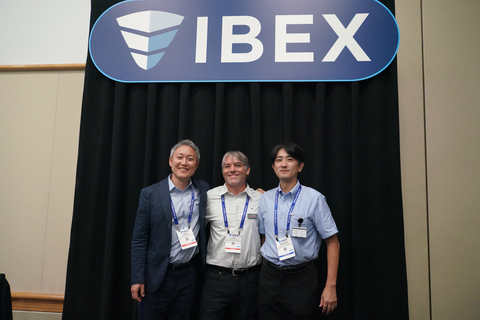
Grant Suzuki, Chief of Technology, Yamaha U.S. Marine Business Unit, Louis Doucette, Manager, Advanced Vehicles, Yamaha U.S. Marine Business Unit, and Tomoyoshi Onikata, Automotive Development Section, Yamaha Motor Company, dissected the challenges and opportunities related to hydrogen fuel storage, distribution infrastructure and regulatory requirements during IBEX 2024. (Photo: Business Wire)
>> In Other News: Vision RNG Secures $207 Million in Financing From Hasi to Construct Two LFG to RNG Projects in Ohio
Suzuki’s comments underscored “Hydrogen for Recreational Craft,” which Yamaha presented during the recent 2024 International BoatBuilders’ Exhibition (IBEX®).
The presentation included insights into Yamaha’s collaboration with leading industry partners, such as Roush and Regulator Marine, the long history of Yamaha’s efforts in hydrogen development, and the technical aspects of engineering a hydrogen internal combustion engine.
Along with Suzuki, Louis Doucette, Manager, Advanced Vehicles, and Tomoyoshi Onikata, Automotive Development Section, Yamaha Motor Company, dissected the challenges and opportunities related to hydrogen fuel storage, distribution infrastructure, and regulatory requirements.
The Yamaha team shared news of the company’s ongoing testing and development efforts. In early 2024, Yamaha introduced a hydrogen-powered golf car and a hydrogen-powered outboard (both industry firsts) as means to explore hydrogen as a possible method of achieving carbon neutrality within its product lines.
Yamaha has a long-standing commitment to exploring innovative and sustainable technologies, including hydrogen as a potential fuel source. The company's interest in hydrogen technology dates back to 2003 with early research into alternative energy solutions aimed at reducing environmental impact.
Over the years, Yamaha collaborated with various partners to develop hydrogen-powered engines. These efforts align with Yamaha's broader strategy to reduce carbon emissions and contribute to a more sustainable future.
By exploring hydrogen as a clean and renewable energy source, Yamaha is advancing environmental goals while maintaining performance and reliability.
Pursuit of hydrogen technology is just one example of Yamaha’s suite of multiple technology solutions to reduce carbon. Earlier this year, Yamaha acquired electric marine propulsion leader Torqeedo, expanding Yamaha's capabilities in electric and hybrid power.
In addition, Yamaha is actively researching and promoting the use of sustainable marine fuels as part of ongoing efforts toward carbon neutrality across the industry.
Yamaha U.S. Marine Business Unit, based in Kennesaw, Ga., markets and sells marine outboard motors ranging in size from 2.5 to 450 horsepower. It also engineers, manufactures, markets, and sells boat control systems, IoT control devices, fiberglass, jet-drive sport boats ranging from 19 to 27 feet, and personal watercraft.
The unit includes the manufacturing divisions of Yamaha Marine Systems Co., Inc., including Kracor of Milwaukee (rotational molding), Bennett Marine of Deerfield Beach, Fla. (trim tabs), and Yamaha Marine Precision Propellers of Indianapolis (stainless steel propellers). Yamaha U.S. Marine Business Unit is a division of Yamaha Motor Corporation, U.S.A., based in Cypress, Calif.
This document contains many of Yamaha's valuable trademarks. It may also contain trademarks belonging to other companies. Any references to other companies or their products are for identification purposes only and are not intended to be an endorsement.
REMEMBER to always observe all applicable boating laws. Never drink and drive. Dress properly with a USCG-approved personal floatation device and protective gear.
Subscribe to the newsletter
Daily decarbonization data and news delivered to your inbox
Follow the money flow of climate, technology, and energy investments to uncover new opportunities and jobs.
Latest issues
-
Honeywell's Methanol-to-Jet Pathway Just Cleared Its Biggest Gate
Inside This Issue 🛫 Methanol-to-Jet Clears the ASTM Gate. What Changes Now? 🌿 InPlanet Selected as the Brazilian Supplier in Whirlpool Corporation's Durable Carbon Removal Portfolio 🧲 Climeworks A...
-
How Montana Renewables Cut $1B Out of Its SAF Budget
Inside This Issue 🌿 How Montana Renewables Cut MaxSAF Capex 89% 📋 IRS Issues Notice on 45Z Clean Fuel Production Tax Credit to Support Domestic Biofuel Production and American Agriculture 🌊 Natura...
-
Can Carba Really Remove Carbon Under $100?
Inside This Issue 🌬️ U.S. Bank Makes First Carbon Removal Purchase with Carba's Minnesota Biochar Project 🏭 Michigan's CCS Primacy Bid Could Reshape Great Lakes Industry 🏗️ Europe's Largest Carbo...
Company Announcements
-
In the largest rice methane offtake to date, Mitti Labs will deliver one million high-integrity credits to Google by 2030 BENGALURU, India and SAN FRANCISCO, Sept. 10, 2026 /PRNewswire/ -- Deep-t...
-
Climeworks Announces Key Performance Improvements at Mammoth
Over the past 18 months, technology upgrades have more than doubled CO₂ capture performance in upgraded collector containers while reducing operating costs by more than 50%. Zurich, Switzerland | ...
-
A team member at one of InPlanet’s partner farms inspects freshly harvested citrus fruit to assess its quality Remineralizer integrated into the soil following field application, beginning the enh...
-
Methanol-to-Jet Clears ASTM Gate. What Changes Now?
Methanol-to-jet has crossed a critical technical gate for commercial aviation fuel. ASTM D7566-26a, the active specification updated July 30, 2026, incorporates methanol into the Annex A5 alcohol-t...