
Vema Hydrogen and First Atlantic Nickel & Cobalt Sign LOI to Develop Engineered Mineral Hydrogen at Pipestone XL Awaruite Project in Newfoundland
Published by Todd Bush on June 8, 2026
Vema's Engineered Mineral Hydrogen could supply regional industry and seaborne export markets from the Pipestone XL Project in central Newfoundland.
The Pipestone Ophiolite Complex spans 30 kilometers of ultramafic rock, and holds enough potential hydrogen to power industrial demand in Newfoundland for generations.
GRAND FALLS-WINDSOR, Newfoundland and Labrador, June 08, 2026 -- Vema Hydrogen (“Vema”) today announced that it has entered into a non-binding letter of intent dated June 1, 2026 (the “LOI”) with First Atlantic Nickel & Cobalt Corp (TSXV: FAN | OTCQB: FANCF | FSE: P21) (“First Atlantic”), to jointly develop Engineered Mineral Hydrogen, or EMH, at the Pipestone XL project, a 30-kilometer ultramafic belt in central Newfoundland. Under the LOI, the parties intend to establish a 50/50 joint venture to produce low-carbon hydrogen alongside First Atlantic's primary awaruite nickel-cobalt program. The partnership is intended to serve as a first-of-its-kind template for combining hydrogen production with critical mineral development at ultramafic sites, with the potential to attract co-located investment in clean fuels, ammonia, and downstream industry.
“Vema’s Engineered Mineral Hydrogen is on the verge of delivering clean energy at a scale cost-competitive with hydrocarbons,” said Dr. Douglas Wicks, Strategic Advisor to First Atlantic & Cobalt and former Program Director for ARPA-E’s MINER program and Geologic Hydrogen portfolio. “Awaruite forms through serpentinization when hydrogen reduces nickel and iron, so its presence at Pipestone XL is a clear signature of a hydrogen-rich system. Vema’s technology could engineer that same reaction for hydrogen production, and Pipestone XL is an ideal location due to its size, proximity to infrastructure, and the potential for cost efficiencies in co-locating hydrogen production with nickel & cobalt mining. Having worked closely with Vema’s founders since before the company’s founding, and having seen firsthand how they developed the engineered approach to geologic hydrogen, I believe Pipestone XL represents a compelling opportunity to bring this technology to commercial scale.”
>> In Other News: Charm Industrial Secures 61,500-Ton Carbon Removal Purchase and $20 Million Debt Financing to Catalyze Growth
Over the past twelve months, Vema has worked with First Atlantic to evaluate the Pipestone Ophiolite Complex, analyzing geological and geophysical data as well as infrastructure across the 30-kilometer belt. Laboratory testing of Pipestone rock samples at Vema's Orléans facility in France confirmed hydrogen production through stimulated serpentinization, indicating that the formation is well suited to EMH. Vema will leverage the experience gained in its established site in the Thetford ophiolite in Quebec, where Vema operates the world's first Engineered Mineral Hydrogen project.
Newfoundland is a significant region for critical minerals and clean energy development, but exploration and mining remain energy-intensive. Engineered Mineral Hydrogen (EMH) produces hydrogen from iron-rich rock through naturally occurring geochemical reactions, with no grid electricity required. Locally produced hydrogen at Pipestone XL could, over time, support on-site energy needs for a large-scale nickel and cobalt mining district and related downstream industries.
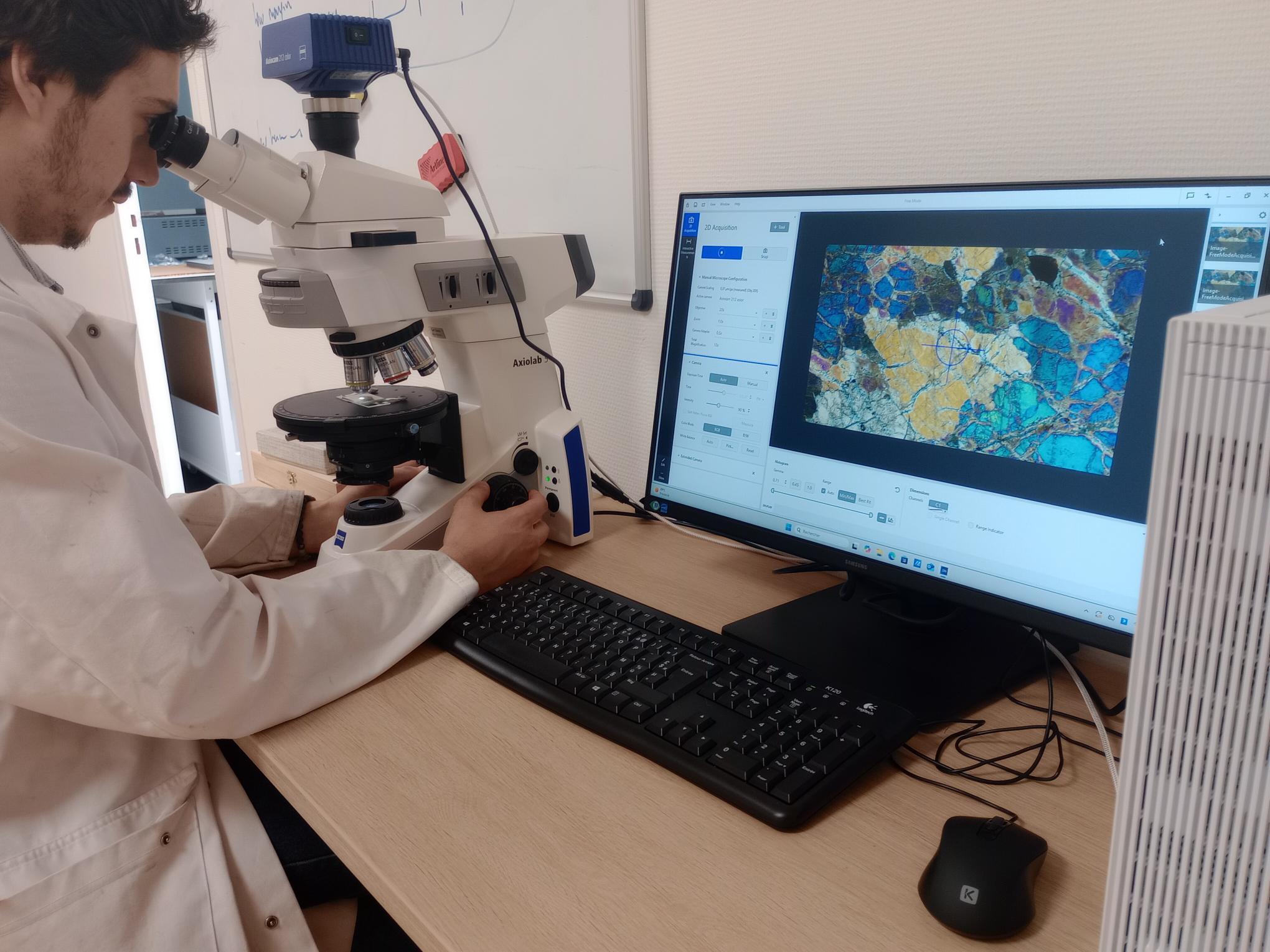
Figure 1: Thin section analysis of Pipestone XL sample
“Vema operates the world's first Engineered Mineral Hydrogen project at the Thetford ophiolite in Quebec. Rock samples collected during Vema's site visit to Pipestone XL were tested at their lab in Orléans, France, confirming the hydrogen generation potential of the ultramafic host rocks. Given the link between awaruite formation and hydrogen, we're excited about the potential for Vema's technology to maximize the value of our unique nickel-cobalt alloy project,” said Adrian Smith, P.Geo., CEO of First Atlantic.
The collaboration also positions both companies to explore how locally produced hydrogen could reshape energy planning for remote industrial sites. By pairing EMH supply with critical mineral development, the partners aim to demonstrate a model that strengthens regional energy resilience while reducing reliance on long-distance fuel transport.
“Engineered Mineral Hydrogen is a promising new primary energy source for regions with iron-rich rock, like at Pipestone,” said Pierre Levin, CEO and Co-Founder of Vema Hydrogen. “Now with validated rock samples and permitting in place, we have a clear path to advance EMH at Pipestone XL and to expand the model across North America.”
Awaruite (Ni₃Fe) is a naturally occurring, magnetic nickel-iron-cobalt alloy (Ni-Fe-Co). The U.S. Geological Survey has identified awaruite as a potential solution to nickel concentrate shortages, noting that it is much easier to concentrate than pentlandite, the principal nickel sulphide. Its magnetic, metallic nature allows recovery by both magnetic separation and flotation, without the smelting, roasting, or acid leaching that conventional nickel ores require.
Figure 2. Aerial view of Vema's first pilot in Quebec (Thetford Ophiolite)
About Vema Hydrogen
Vema Hydrogen is a producer of low-carbon hydrogen, offering a new path to a clean energy future. The company's unique technology, Engineered Mineral Hydrogen, harnesses naturally occurring chemical reactions below the Earth's surface to produce high-purity hydrogen. By applying geoscience to de-risk production and ensure predictable, cost-competitive output, Vema makes clean hydrogen a viable solution for large-scale industrial energy and baseload power needs. More https://www.vema.earth/.
About First Atlantic Nickel & Cobalt Corp.
First Atlantic Nickel & Cobalt Corp. (TSXV: FAN) (OTCQB: FANCF) (FSE: P21) is a critical mineral exploration company in Newfoundland & Labrador developing the Pipestone XL Nickel-Cobalt Alloy Project. The project spans the entire 30-kilometer Pipestone Ophiolite Complex, where multiple zones, including RPM, Alloy Max, Super Gulp, Atlantic Lake, and Chrome Pond, contain awaruite (Ni₃Fe), a naturally occurring magnetic nickel-iron-cobalt alloy of approximately ~77% nickel with no sulfur and no sulfides, along with secondary chromium mineralization. Awaruite's sulfur-free composition removes acid mine drainage (AMD) risks, while its unique magnetic properties enable processing through magnetic separation, eliminating the electricity requirements, emissions, and environmental impacts of conventional smelting, roasting, or high-pressure acid leaching while reducing dependence on overseas nickel processing infrastructure.
Subscribe to the newsletter
Daily decarbonization data and news delivered to your inbox
Follow the money flow of climate, technology, and energy investments to uncover new opportunities and jobs.
Latest issues
-
113 CCS Projects: What's Driving the Surge?
Inside This Issue 🏭 Global CCS Hits 113 Projects as Americas Lead Capacity 💰 We're Moving $2M+ to Climate Solutions 💧 China Launches World's First Semi-submersible Offshore Wind-to-hydrogen Platfo...
-
Why Is Wyoming Giving 650,000 Acres to Carbon Storage?
Inside This Issue 🪨 Inside Blm's 650,000-Acre Bet on Wyoming Carbon Storage 🏭 California Advances Carbon Capture and Removal Regulations Under SB 905 ⚡ Why a Japanese Power Giant Is Betting on Den...
-
Colorado Joins the 7-State CCS Permit Fast Lane
Inside This Issue ⚖️ Colorado Takes Over Class VI Permits: What Changes for CCS? 🏭 Hebei Shoulang Facility Using LanzaTech Technology Achieves World’s First ISCC EU RCF Certification for Ethanol P...
Company Announcements
-
China Launches World's First Semi-Submersible Offshore Wind-to-Hydrogen Platform
The world's first semi-submersible offshore wind-to-hydrogen platform has floated in Jiangmen, south China's Guangdong Province, opening a new avenue for the development and utilization of clean ma...
-
We’re Moving $2M+ to Climate Solutions
New companies, new ways to back existing ones, and every purchase built to pull in more capital We’re adding new companies to our portfolio and getting creative with how we put more money behind e...
-
Citi Closes $72 Million Carbon Removal-Linked Note to Support Applied Carbon Biochar Project
HIGHLIGHTS Citi structured an innovative $72 million carbon removal-linked note to provide upfront capital for Applied Carbon's biochar project, marking a first-of-its-kind "outcome bond" for ver...
-
New platform opens access to the same rigorous project evaluations trusted by the world's leading carbon removal procurement programs Today, Relae (formerly Carbon Direct) launched The Diligence C...