
Worley has been awarded the front-end engineering design (FEED) contract for the cogeneration component of Dow's Path2Zero project in Fort Saskatchewan, Alberta. This contract is the engineering mobilization phase of the world's first net-zero Scope 1 and Scope 2 emissions integrated ethylene cracker and derivatives site. The cogeneration facility and integrated post-combustion carbon capture unit are targeted for operations by late 2030.
Key Facts
- Dow approved the $6.5 billion FID for Path2Zero in November 2023
- The Fort Saskatchewan site will produce 3.2 million metric tonnes of certified low- to zero-carbon polyethylene and derivatives per year
- Path2Zero will decarbonize 20% of Dow's total global ethylene capacity
- New cogeneration plant capacity: up to 466 MW, replacing aging on-site assets
- Worley scope: brownfield cogeneration facility with integrated post-combustion carbon capture
- Target operational date for cogen and carbon capture: late 2030
- Peak construction expected to create 4,500 to 5,500 jobs (Dow, November 2023)
- Wolf Midstream's Alberta Carbon Trunk Line (ACTL), a 240 km CO2 pipeline, will transport captured CO2 for permanent sequestration at up to 14.6 million metric tonnes per year
>> In Other News: Valmet and Linde Collaborate to Advance Electrically Driven CO₂ Capture Solutions for Pulp and Paper Industry
What "World's First" Actually Means
Scope 1 emissions are direct greenhouse gas releases from site operations. Scope 2 emissions come from purchased energy. Eliminating both simultaneously in a high-throughput petrochemical complex has not been done before at commercial scale. That is the specific claim Path2Zero is engineered to prove.
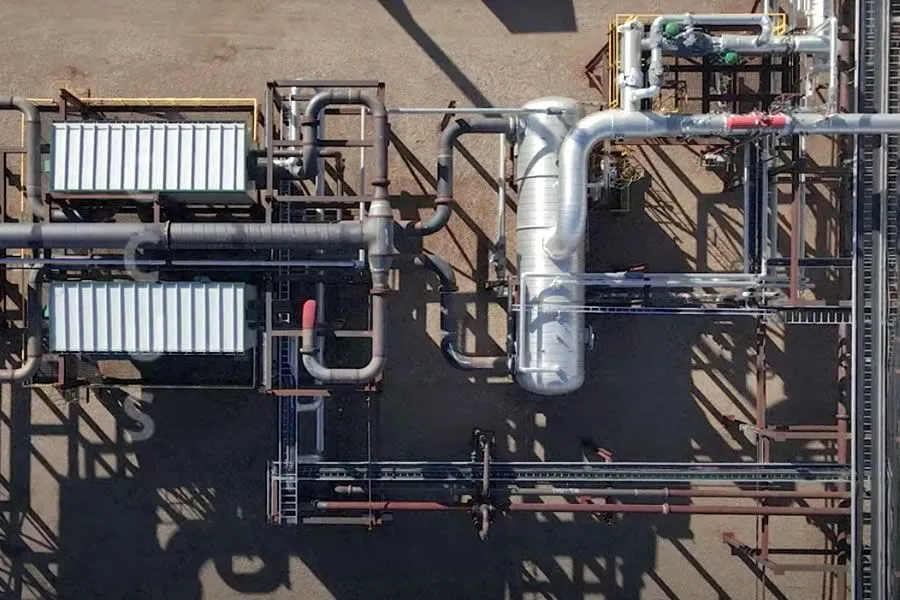
The new cogeneration plant will replace aging assets at Fort Saskatchewan. At up to 466 MW, it will provide reliable steam and power to the ethylene complex. Integrated post-combustion carbon capture will strip CO2 from the cogen's flue gas before release. That captured CO2 travels offsite through Wolf Midstream's Alberta Carbon Trunk Line. The ACTL is a 240 km CO2 pipeline operational since 2020, with capacity for up to 14.6 million metric tonnes per year.
Why the FEED Award Is the Real Signal
FEED is the phase where a project becomes a buildable facility. Every equipment specification, piping layout, and integration point is locked in before construction begins. Once FEED is awarded, procurement and construction follow directly.
Dow approved the $6.5 billion FID in November 2023 and began construction in 2024. The project is phased. An initial capacity addition targets startup around 2027. A second phase follows around 2029. The cogeneration and carbon capture unit, now in Worley's hands, targets operations by late 2030. Worley's contract is structured as an EPCM framework, with FEED delivered by Worley's Canada and India-based Global Integrated Delivery team.
"Dow's Path2Zero project is redefining what's possible for industrial decarbonization. By bringing together our project delivery and carbon capture expertise with Dow's vision, we're enabling one of the world's first fully integrated cogeneration and carbon capture facilities, demonstrating how collaboration can accelerate the shift to net zero operations at scale."
Chris Ashton, Chief Executive Officer, Worley
How Path2Zero Decarbonizes at Petrochemical Scale
Dow layers three integrated technologies. Linde's air separation and autothermal reformer technology converts cracker off-gas into hydrogen, which fuels the site's furnaces as a clean fuel. The new cogeneration plant delivers low-carbon power and steam. Post-combustion carbon capture at the cogen unit then moves CO2 offsite via the ACTL for permanent underground storage.
These technologies are designed to eliminate approximately 1 million metric tonnes of CO2 equivalent per year, per Dow's November 2023 FID announcement. At full run rates, Fort Saskatchewan will produce 3.2 million metric tonnes of certified low- to zero-carbon polyethylene and derivatives annually. Path2Zero will decarbonize 20% of Dow's global ethylene capacity.
>> RELATED: Alberta's First CCS Hub Just Started Injecting CO2
| Path2Zero Component | Technology / Partner | Function |
|---|---|---|
| Hydrogen-fueled furnaces | Linde autothermal reformer | Converts cracker off-gas to clean hydrogen for site furnaces |
| Cogeneration plant (up to 466 MW) | Worley FEED/EPCM | Low-carbon power and steam across the complex |
| Post-combustion carbon capture | Integrated with cogen (Worley FEED) | Captures CO2 from cogen flue gas before atmospheric release |
| CO2 transport and storage | Wolf Midstream ACTL (240 km) | Permanent underground sequestration of captured CO2 |
Alberta's CCS Infrastructure Makes Fort Saskatchewan the Right Site
Fort Saskatchewan sits inside Alberta's Industrial Heartland, a designated industrial zone northeast of Edmonton with more than 40 heavy-industry facilities. The ACTL currently operates at around 10% of its stated capacity, per Alberta's Industrial Heartland Association. Path2Zero can connect to existing CO2 transport infrastructure without new pipeline construction.

Alberta's Industrial Heartland subsurface is designated for up to six CCUS storage hubs. The first phase of the Atlas Carbon Storage Hub, a Shell and ATCO joint venture, is under construction and expected to be operational by 2028. Total Path2Zero investment reached approximately $8.9 billion, including an Alberta Petrochemicals Incentive Program contribution of approximately $1.8 billion and third-party contributions from partners including Linde, per the November 2023 government announcement.

"This landmark project with Dow reflects a shared commitment to advancing industrial decarbonization. Together, we're aiming to set new benchmarks for cogeneration and carbon capture facilities and support Dow's sustainability ambitions as Path2Zero progresses."
Tim Burnham, Senior Vice President, Worley Canada
Path2Zero Sets the Template for Petrochemical Decarbonization
Ethylene production requires sustained high-heat combustion. Integrating carbon capture with a live cogeneration system on an operating brownfield site is engineering the industry has not executed at this scale before.
If Dow and Worley execute it correctly, Fort Saskatchewan becomes the reference design for verified Scope 1 and Scope 2 elimination in a large petrochemical complex. The 3.2 million metric tonnes per year of certified low- to zero-carbon polyethylene gives buyers across packaging, automotive, and industrial markets a verified supply source at scale. That commercial pull creates the incentive for others to replicate the model. The engineering phase is now formally underway.
Explore Dow’s Path2Zero project in Fort Saskatchewan, Alberta. This official video highlights the utilities planning and infrastructure supporting the world’s first net-zero Scope 1 and Scope 2 emissions ethylene cracker complex, including the new cogeneration facility with integrated carbon capture.
Frequently Asked Questions
What is FEED and why does it matter for Path2Zero?
Front-end engineering design turns an approved concept into precise technical specifications ready for procurement and construction. Worley's FEED contract is the formal step between Dow's $6.5 billion investment decision and construction mobilization for the cogen and carbon capture unit.
How will captured CO₂ be stored permanently?
Captured CO₂ will be transported through Wolf Midstream's ACTL, a 240 km pipeline operational since 2020, to geological storage sites in central Alberta. The ACTL can handle up to 14.6 million metric tonnes of CO₂ per year and offers open-market access to new industrial emitters.
Does Path2Zero address Scope 3 emissions?
No. The net-zero claim applies specifically to Scope 1 and Scope 2 emissions. Scope 3 emissions from the upstream and downstream value chain are not included in the project's stated net-zero target.
For ongoing coverage of carbon removal, BECCS, and corporate CDR procurement, subscribe to Decarbonfuse.com.
Subscribe to the newsletter
Daily decarbonization data and news delivered to your inbox
Follow the money flow of climate, technology, and energy investments to uncover new opportunities and jobs.
Latest issues
-
113 CCS Projects: What's Driving the Surge?
Inside This Issue 🏭 Global CCS Hits 113 Projects as Americas Lead Capacity 💰 We're Moving $2M+ to Climate Solutions 💧 China Launches World's First Semi-submersible Offshore Wind-to-hydrogen Platfo...
-
Why Is Wyoming Giving 650,000 Acres to Carbon Storage?
Inside This Issue 🪨 Inside Blm's 650,000-Acre Bet on Wyoming Carbon Storage 🏭 California Advances Carbon Capture and Removal Regulations Under SB 905 ⚡ Why a Japanese Power Giant Is Betting on Den...
-
Colorado Joins the 7-State CCS Permit Fast Lane
Inside This Issue ⚖️ Colorado Takes Over Class VI Permits: What Changes for CCS? 🏭 Hebei Shoulang Facility Using LanzaTech Technology Achieves World’s First ISCC EU RCF Certification for Ethanol P...
Company Announcements
-
China Launches World's First Semi-Submersible Offshore Wind-to-Hydrogen Platform
The world's first semi-submersible offshore wind-to-hydrogen platform has floated in Jiangmen, south China's Guangdong Province, opening a new avenue for the development and utilization of clean ma...
-
We’re Moving $2M+ to Climate Solutions
New companies, new ways to back existing ones, and every purchase built to pull in more capital We’re adding new companies to our portfolio and getting creative with how we put more money behind e...
-
Citi Closes $72 Million Carbon Removal-Linked Note to Support Applied Carbon Biochar Project
HIGHLIGHTS Citi structured an innovative $72 million carbon removal-linked note to provide upfront capital for Applied Carbon's biochar project, marking a first-of-its-kind "outcome bond" for ver...
-
New platform opens access to the same rigorous project evaluations trusted by the world's leading carbon removal procurement programs Today, Relae (formerly Carbon Direct) launched The Diligence C...